Lace and wedding dresses became synonymous more recently than you’d think. If you guessed the original bridal influencer, Queen Victoria, had a hand in it, you’d be right.
When she married Prince Albert in February 1840, she wore a white satin gown with handmade Honiton lace. The lewk was widely copied and has come to represent romance and the ultimate in bridal luxury.
What Is a Lace Wedding Dress?
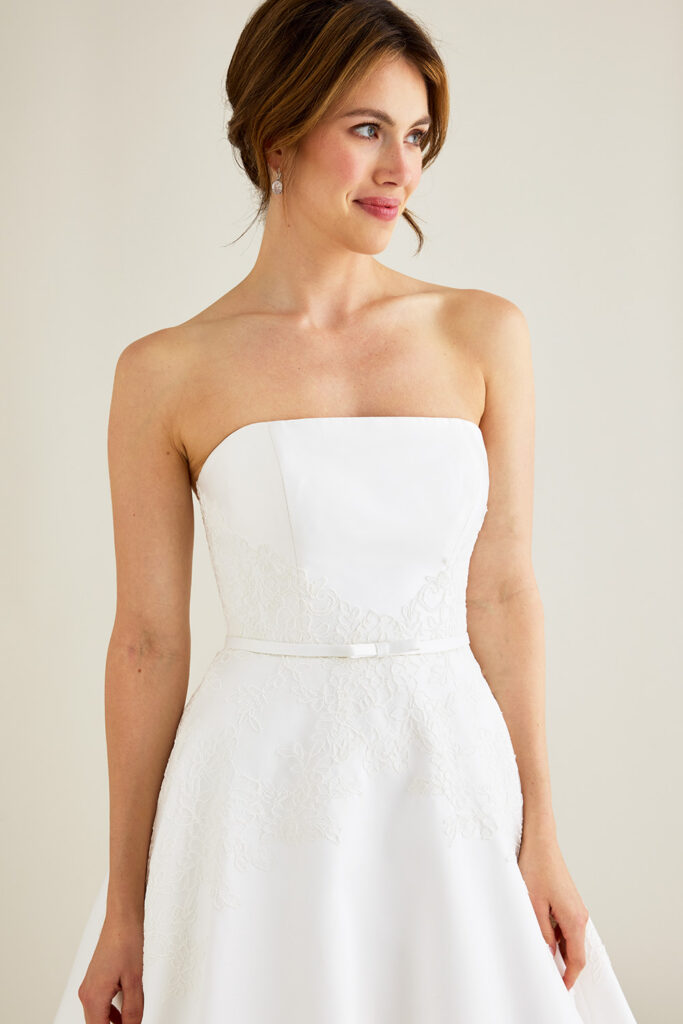
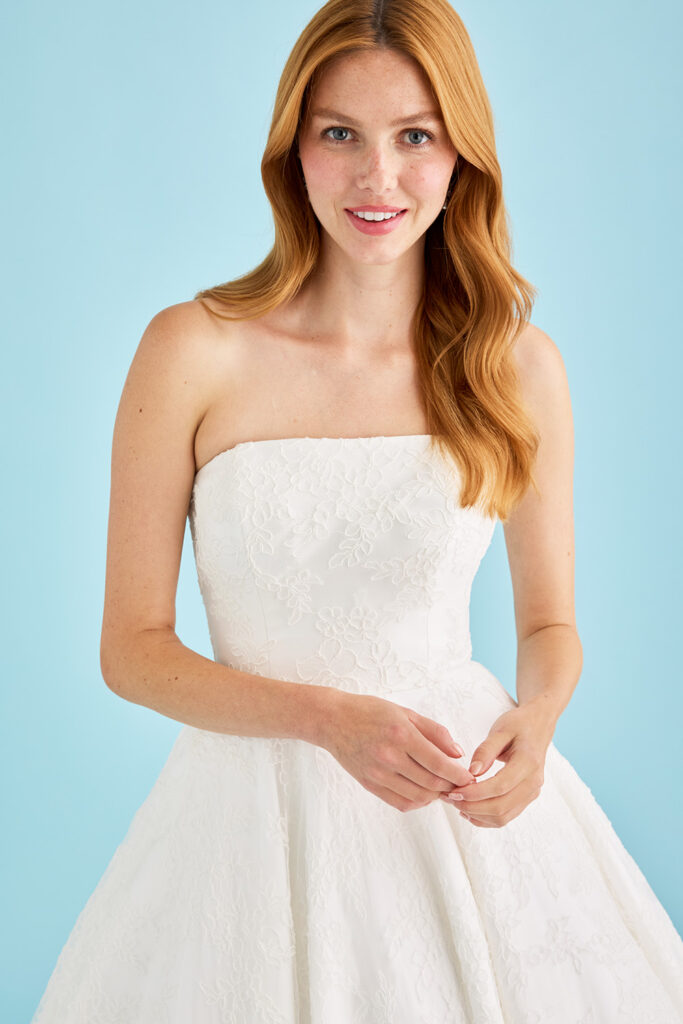
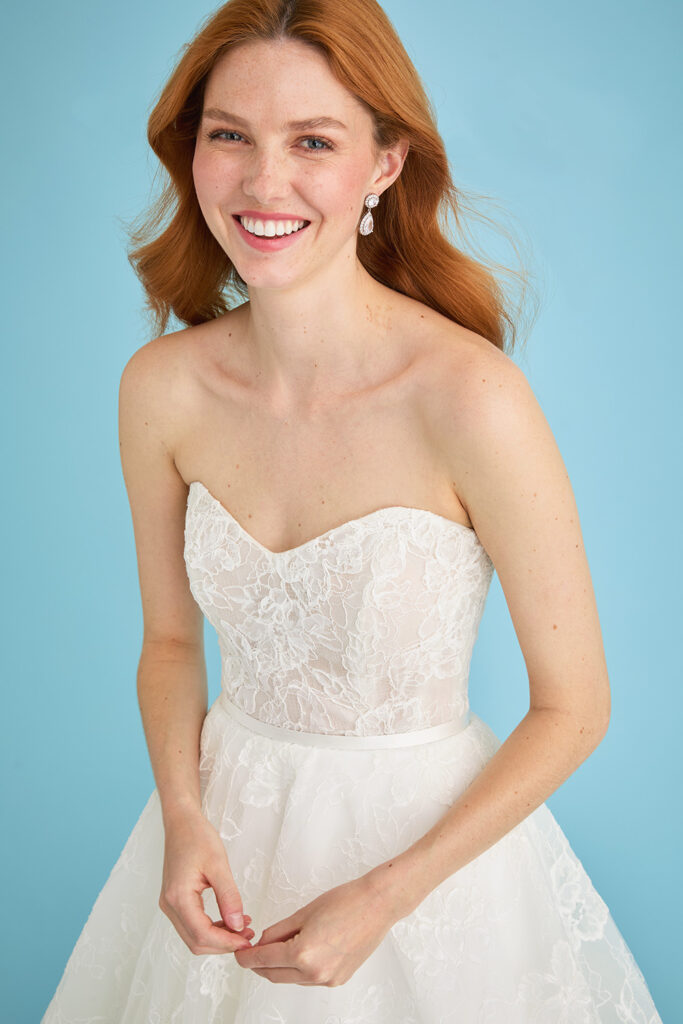
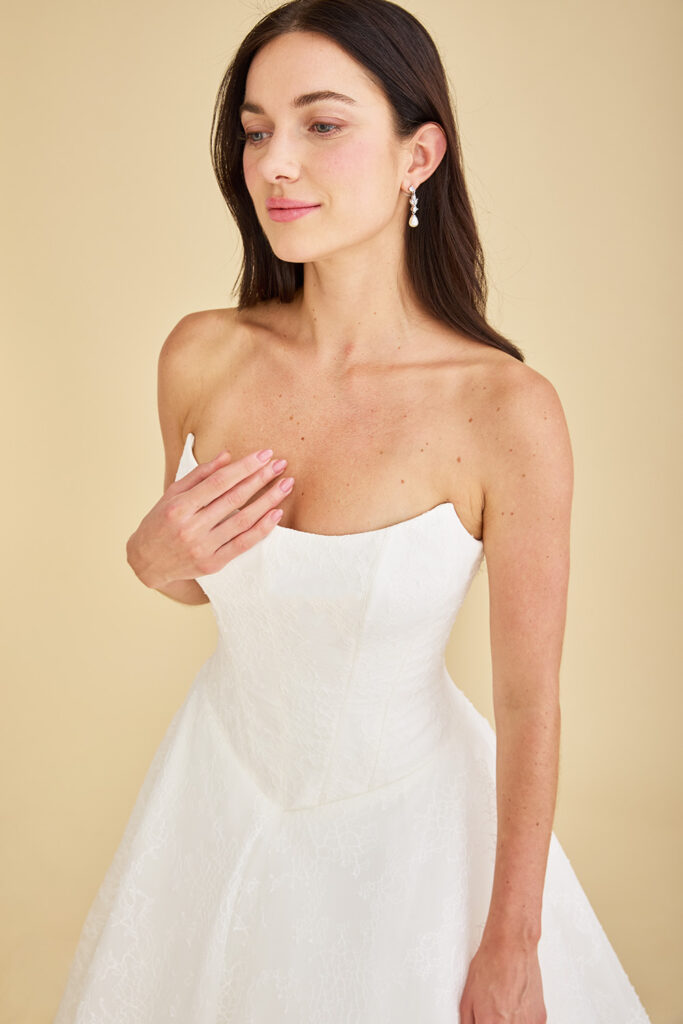
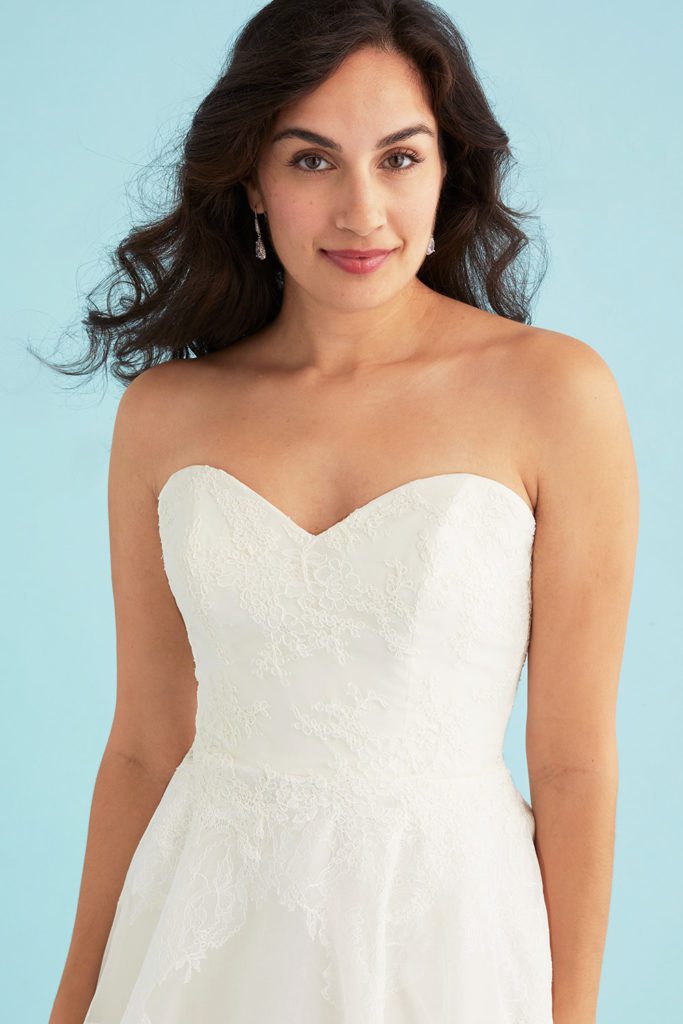
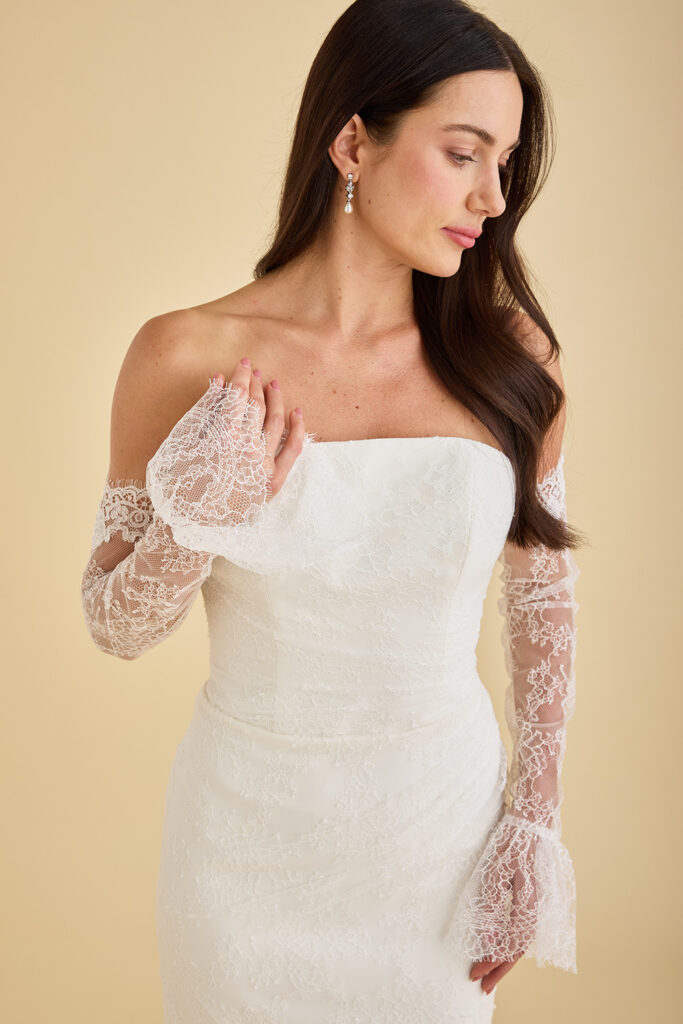
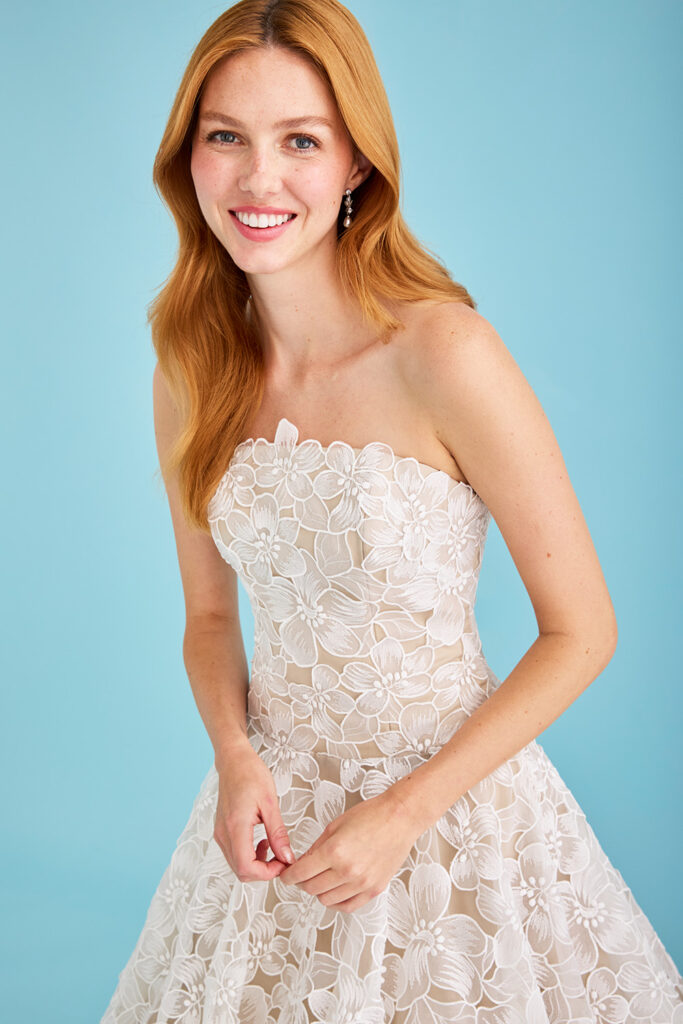
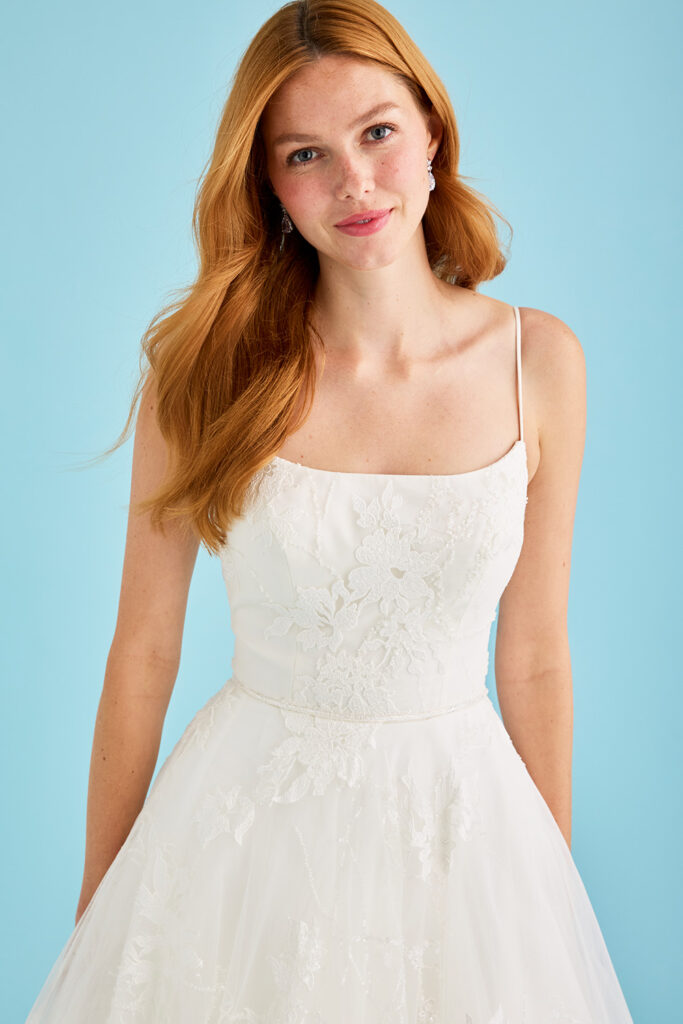
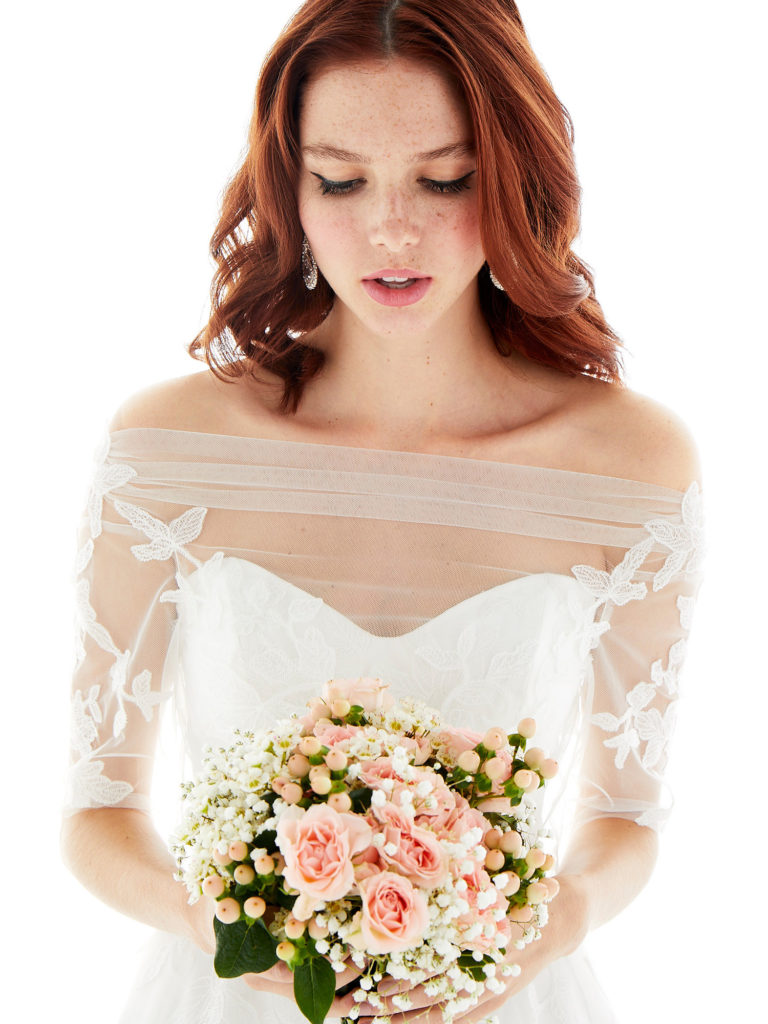
A lace wedding dress is any bridal gown where lace is used as a primary fabric. The term also encompasses dresses in which the textile is an element, such as an all-over lace bodice, lace appliqué, or a hem and train edged with lace.
Due to its sheer nature, lace is often combined with a layer of a more opaque fabric, such as mikado, dupioni, satin, charmeuse, or crepe. Alternatively, sheer fabrics, such as organza, net, and tulle, are layered atop a lining.
Because lace is a textile that can also be cut and used as appliqué, it isn’t tied to a single style. Instead, think of lace as a design detail that, depending on how it’s incorporated, can express any number of style aesthetics. A lace wedding dress can be a ball gown, an A-line, a fit-and-flare, or a sleek sheath.
Why Are We Obsessed with Lace?
Outside of the fact that it is beautiful, lace is special. It’s not often encountered in everyday clothing, and has a near-magical ability to make whatever it’s paired with extraordinary.
Lace has also occupied space in our collective subconscious as something precious for centuries. Its connection with elegance and luxury dates back to the early 16th century. Lacemaking is the evolution of cutwork and embroidery, with a fascinating history! It was also extremely expensive and worn only by royalty and the aristocracy. Though lace became more accessible thanks to the Industrial Revolution, its connection to luxury and the elite endures today.
Types of Lace Used in Wedding Dresses
Lace is an old textile, and the Lace Guild recognizes a vast array of regional and historical types. As such, the laces you’ll find adorning gowns vary, too! However, there are a few styles of lace you’ll come across in bridal.
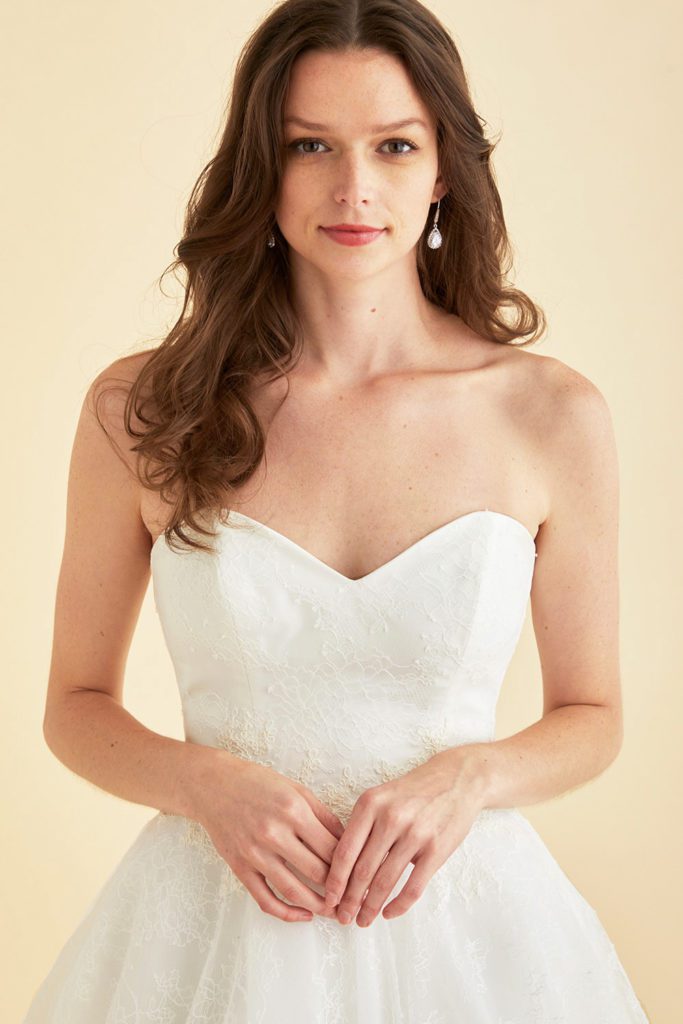
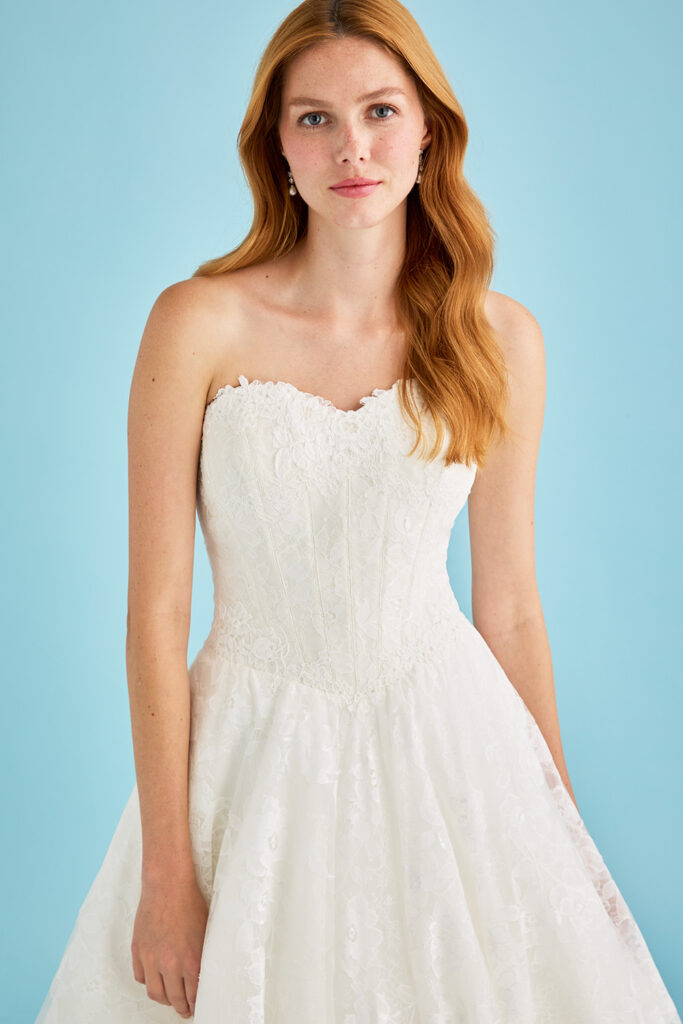
Chantilly lace is a bobbin lace with a fine mesh background and flat, intricate floral motifs. It reads romantic and airy, as evidenced by Evangeline, one of our A-line wedding dresses.
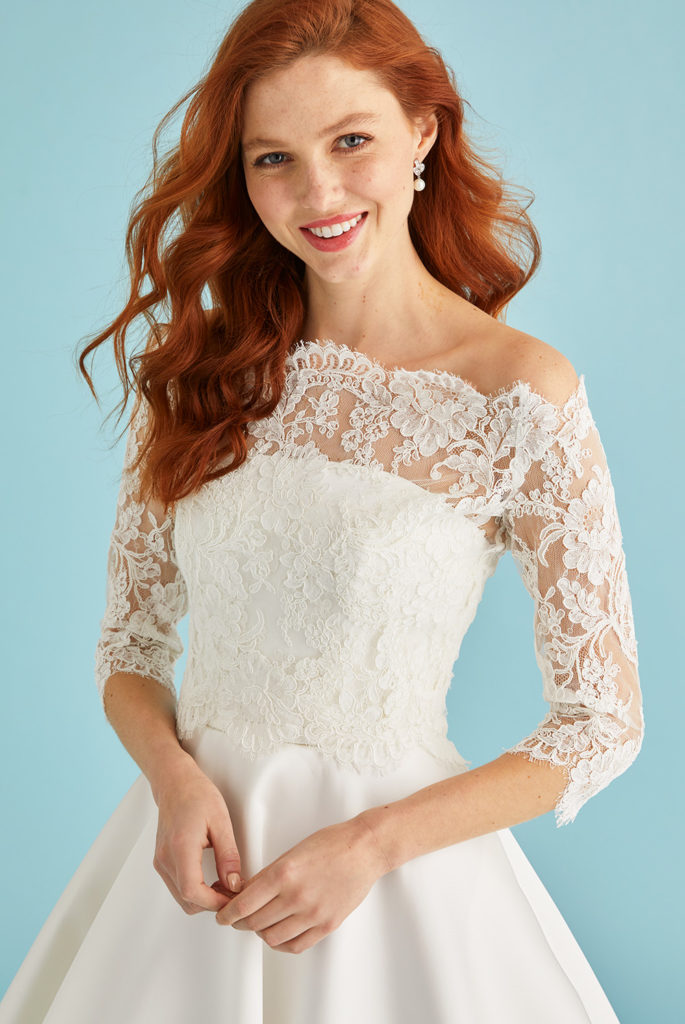
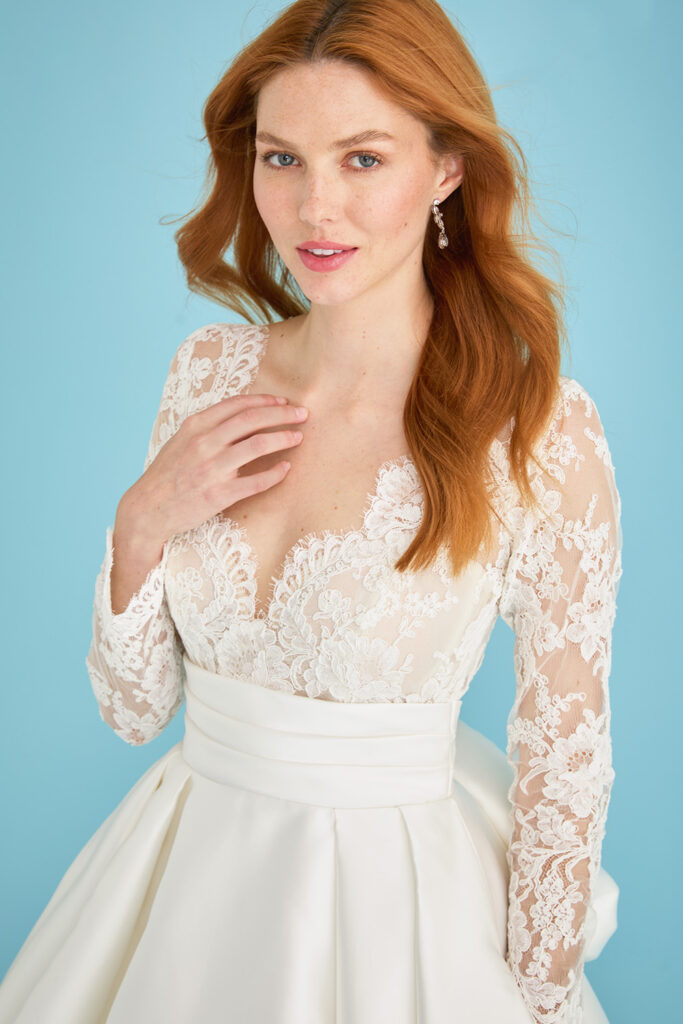
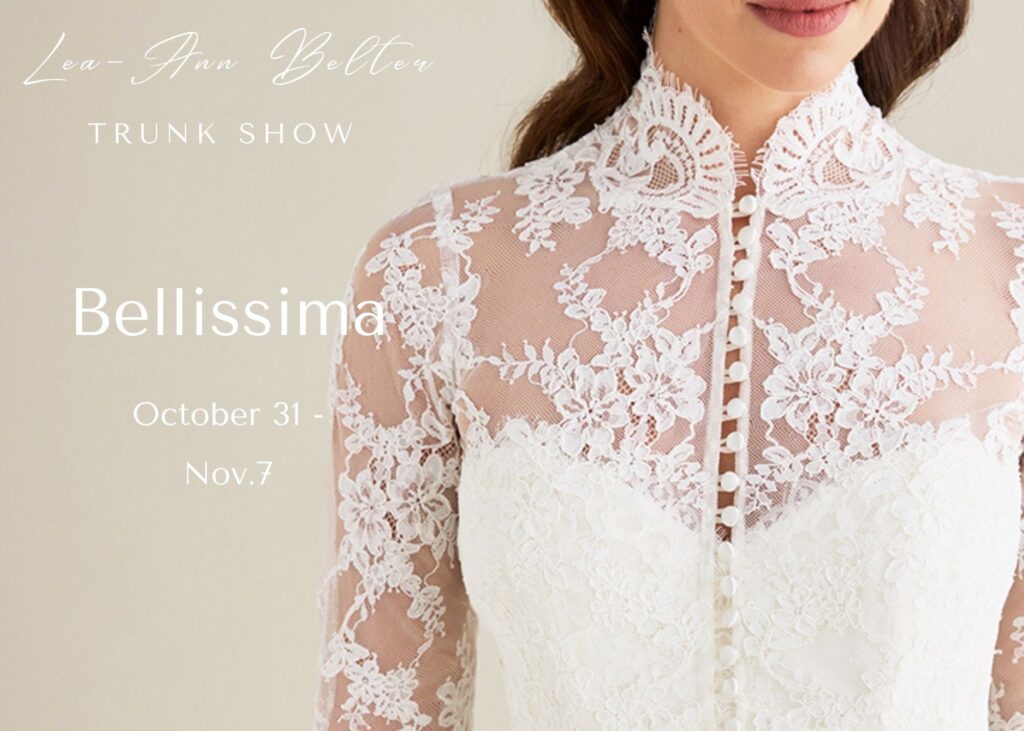
Alençon lace, also called The Queen of Lace, has little more structure and weight. Its floral design is outlined by a raised cord that adds visual depth and dimension. Corded lace is a wonderful as a sleeved bodice (as on our Eliza gown) overlay, and we often hand-cut its flowers for appliqué.
Guipure & Venetian Lace lack the net background present in Chantilly or Alençon laces, making them denser and thicker. They’re fabulous with a contrast underlay and often convey a more bohemian aesthetic.
Beaded and embroidered lace incorporates crystals, pearls, or additional embroidery over a lace base for extra shimmer and dimension. A lovely example of beaded Chantilly lace is our high-halter gown, Amalia.
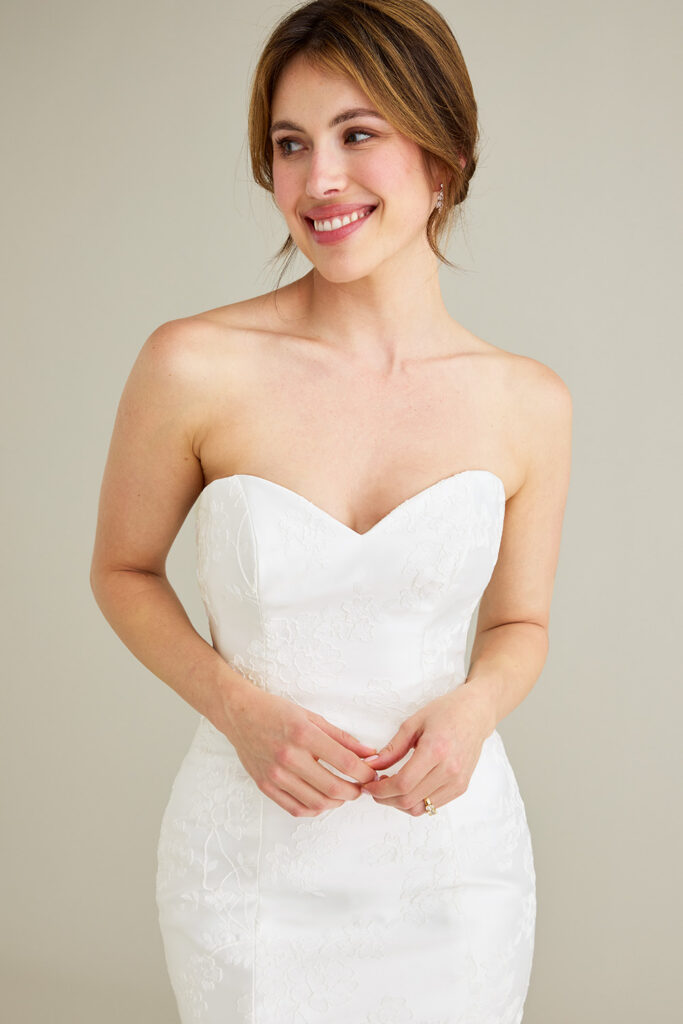
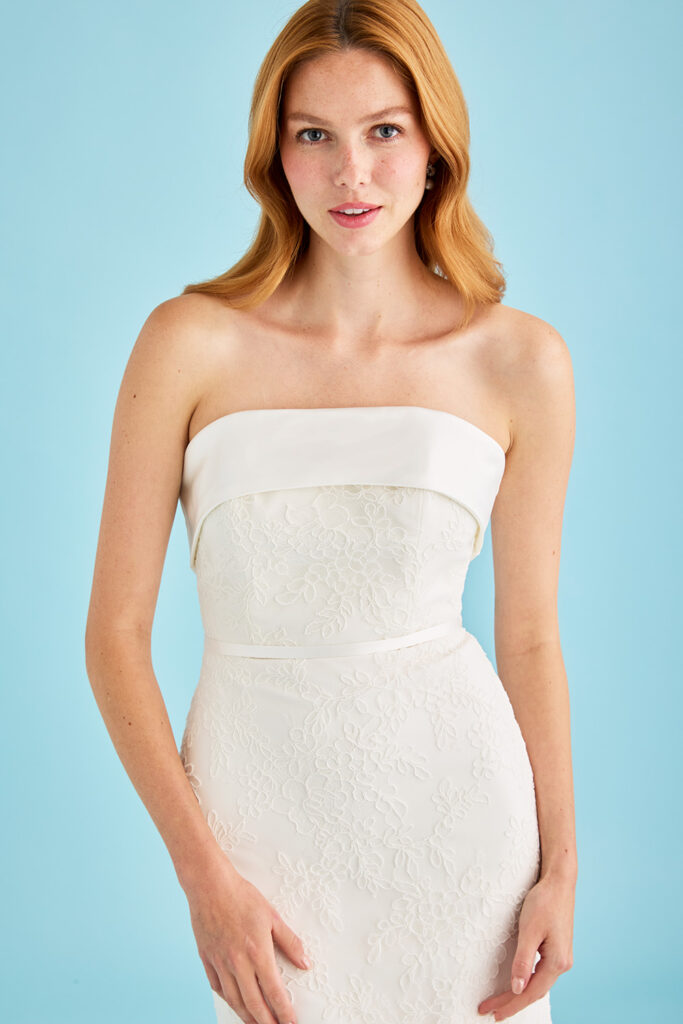
Floral appliqué lace involves hand-cutting lace motifs and placing them onto a gown. The technique adds depth and visual interest and is also an effective way to enhance the overall silhouette. An example of how we use lace appliqué in this way is with our Nicole gown. We hand-place lace appliqué along her fit-and-flare silhouette to emphasize an hourglass shape.
If you love more than one lace type, do not despair that you must choose! A wedding dress does not have to be composed of only one lace type. We regularly mix corded lace and Chantilly lace to create beautiful wedding dresses, such as our full-lace gown, Jane.

Lace Wedding Dresses
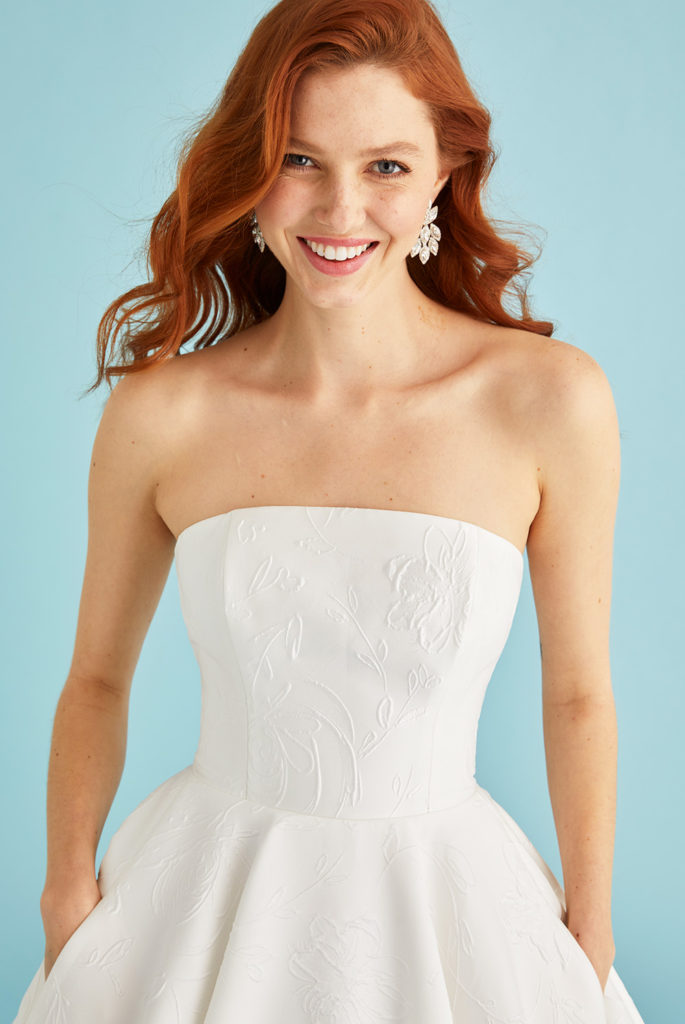
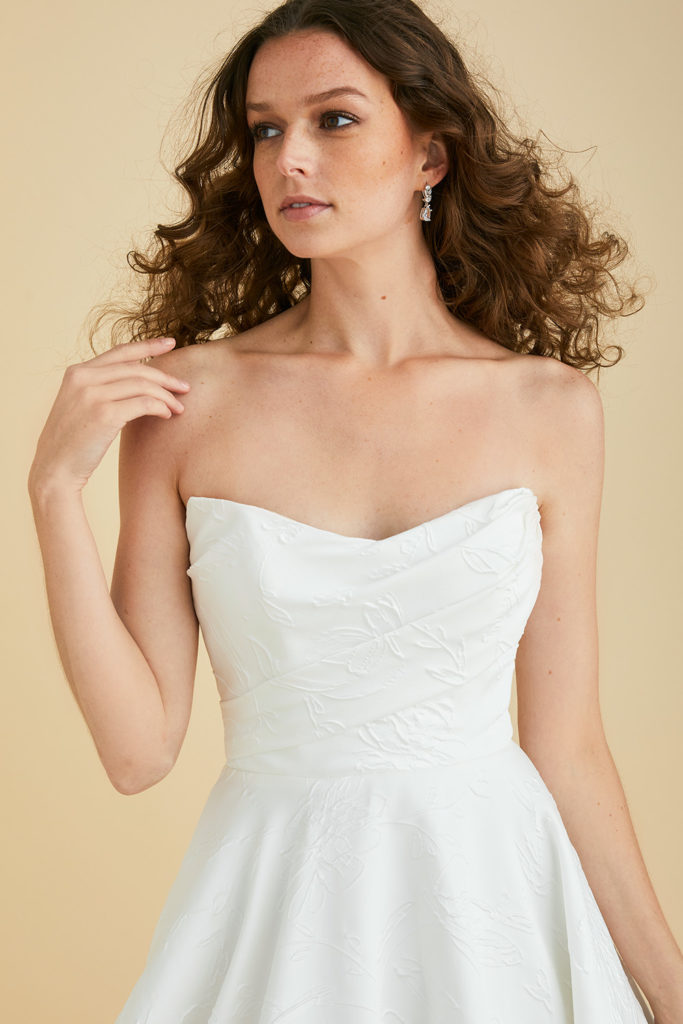
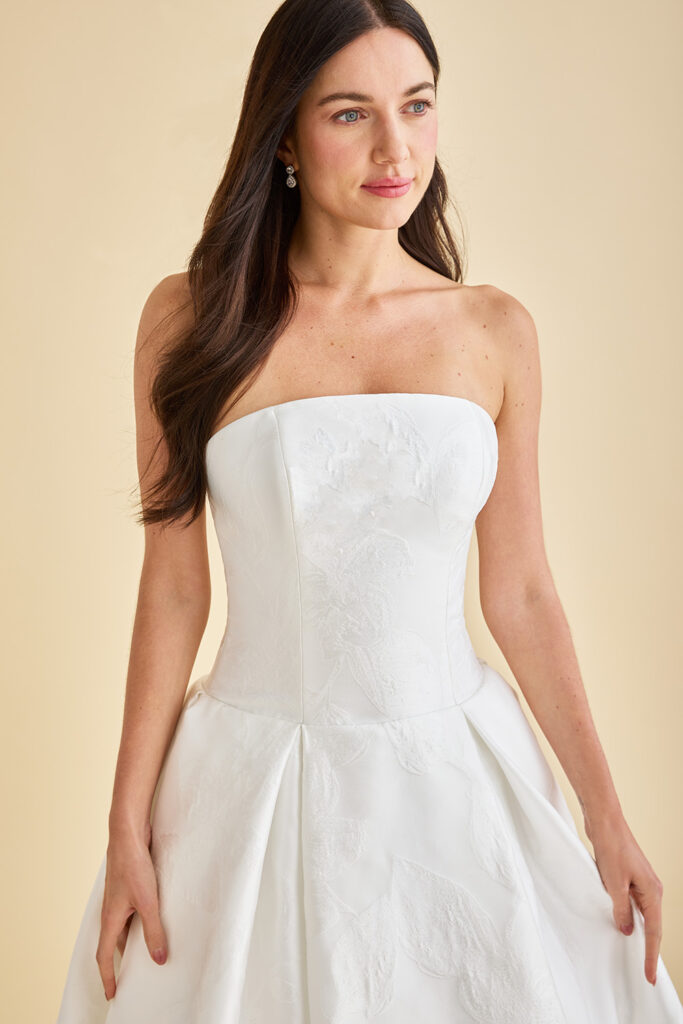
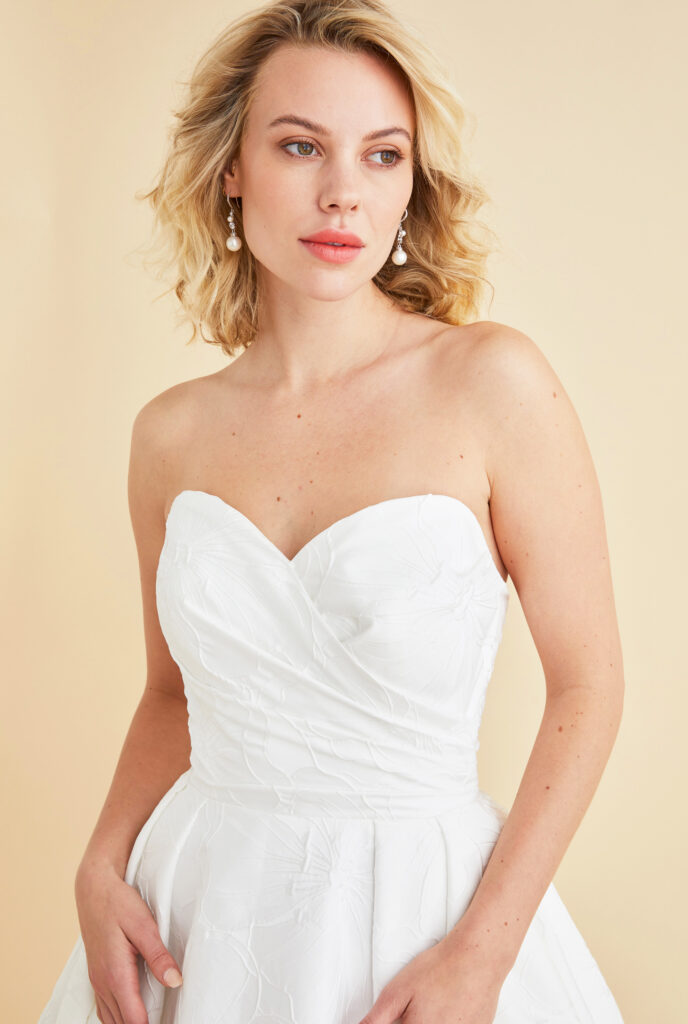
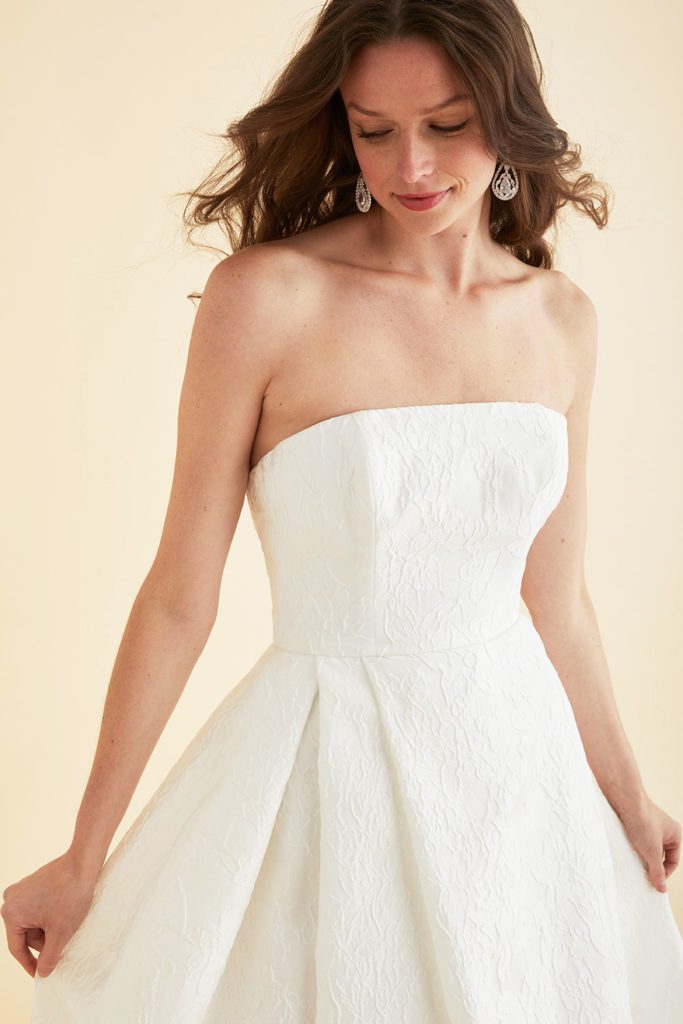
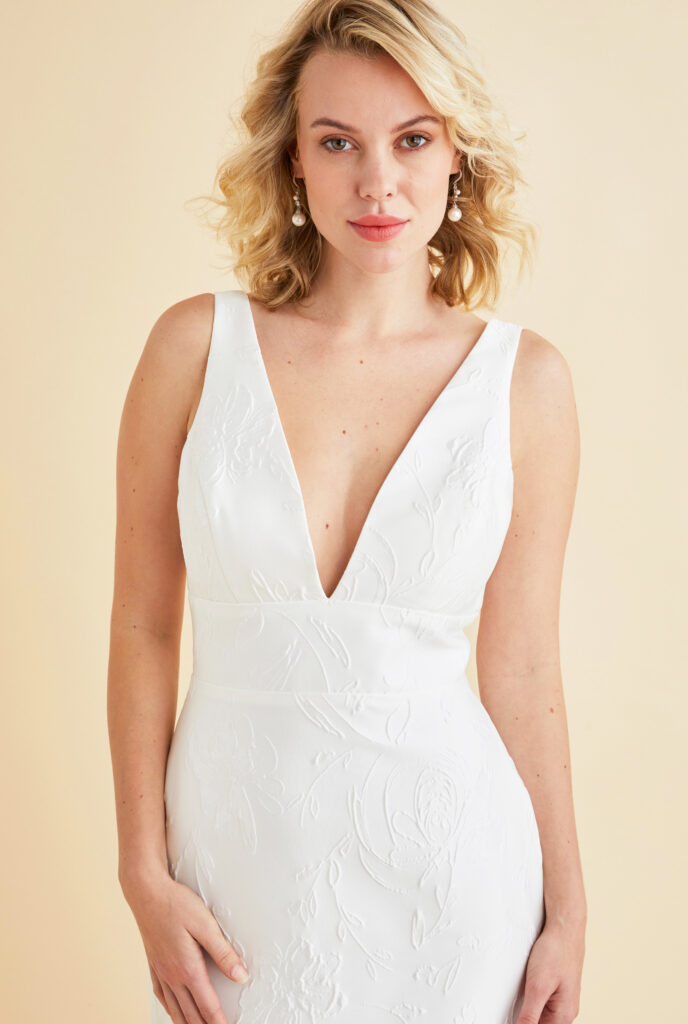
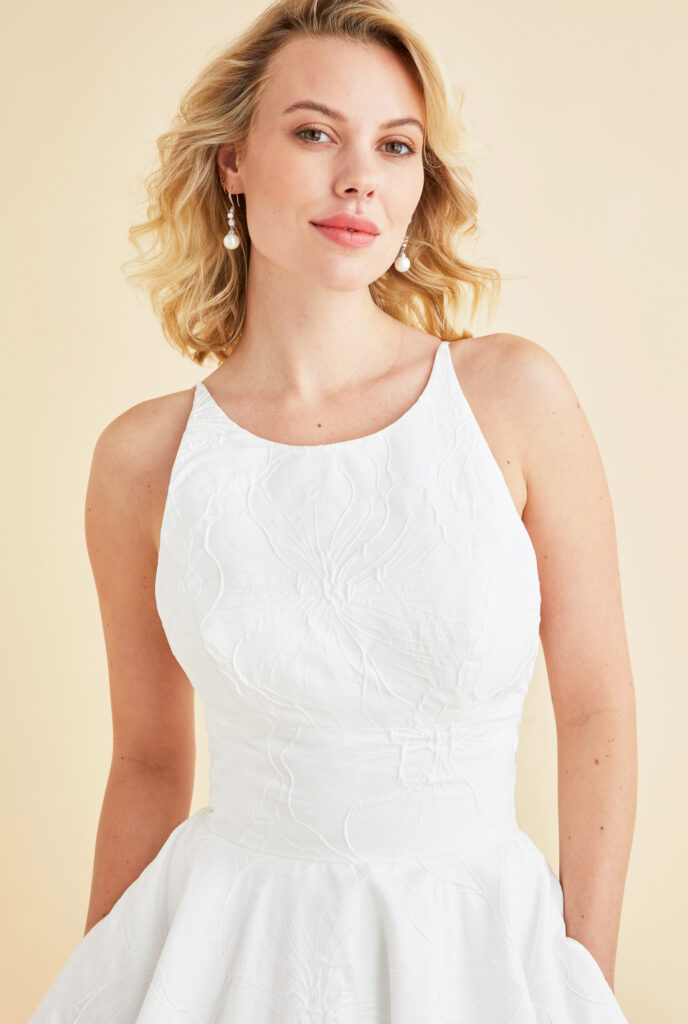
Lace-Adjacent Fabrics: Floral Jacquard & Laser-Cut Organza
Take Our Lace Bridal Gowns for a Twirl
Book your appointment at our Toronto wedding dress shop, or at our Lea-Ann Belter Bridal partner boutiques!