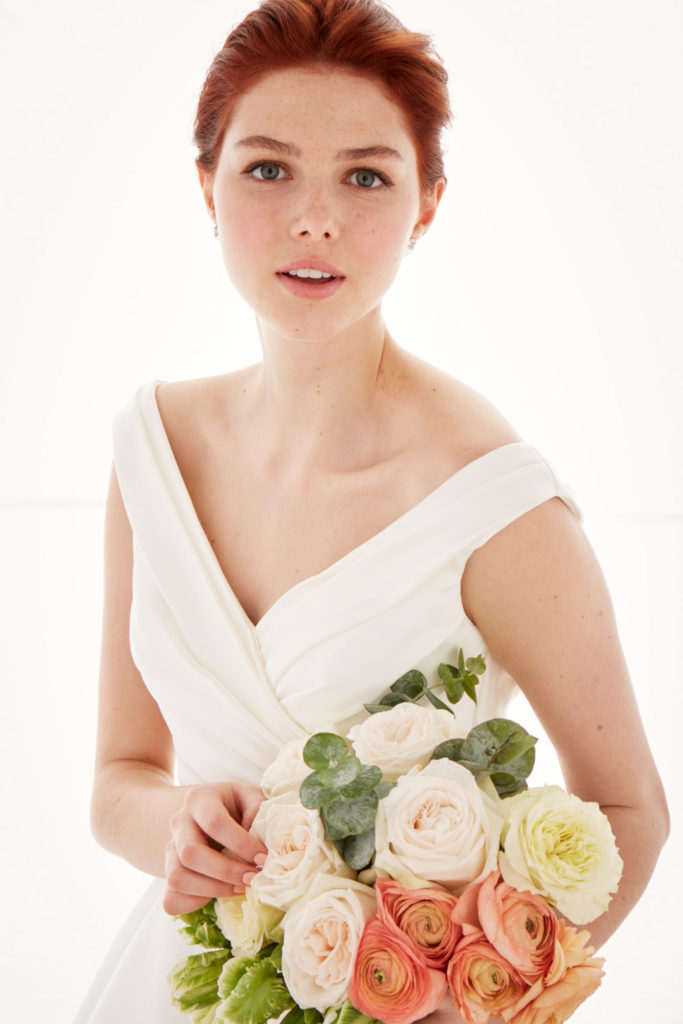
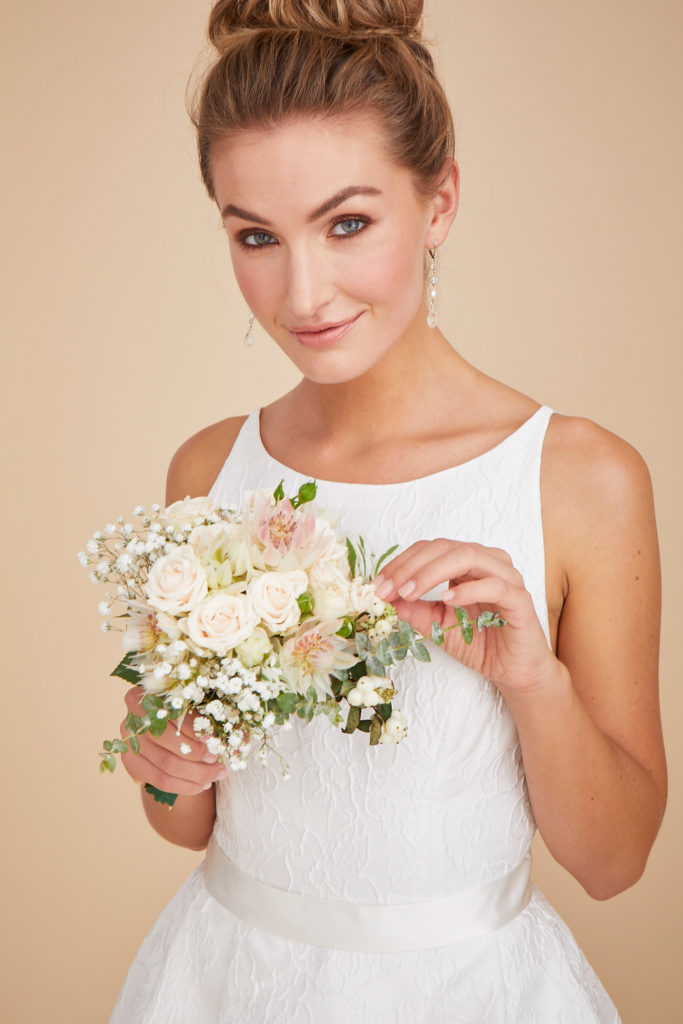
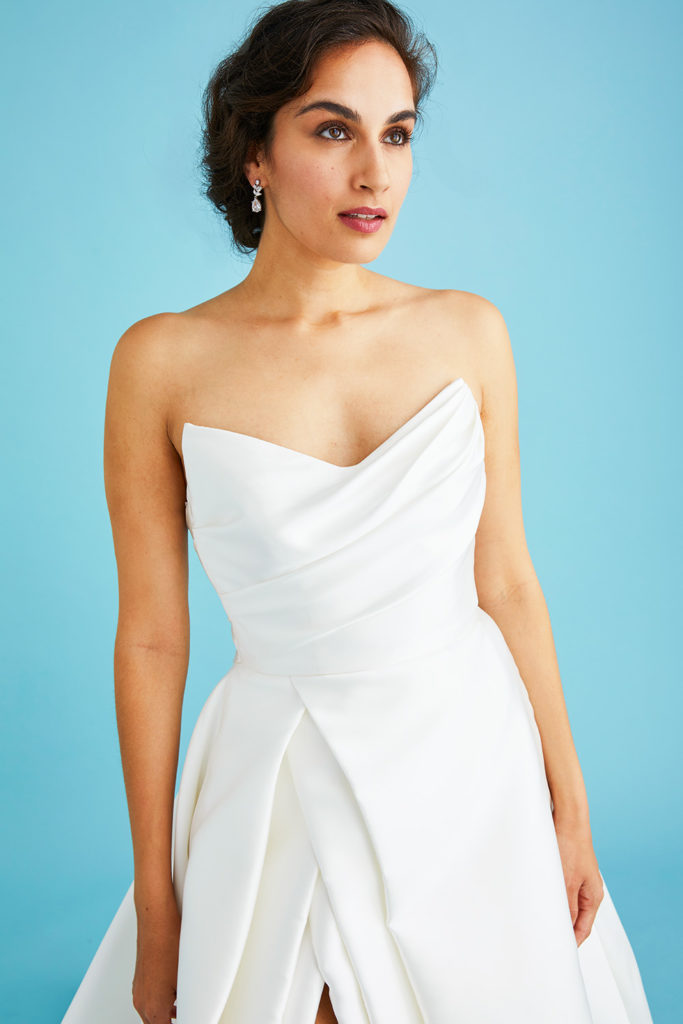
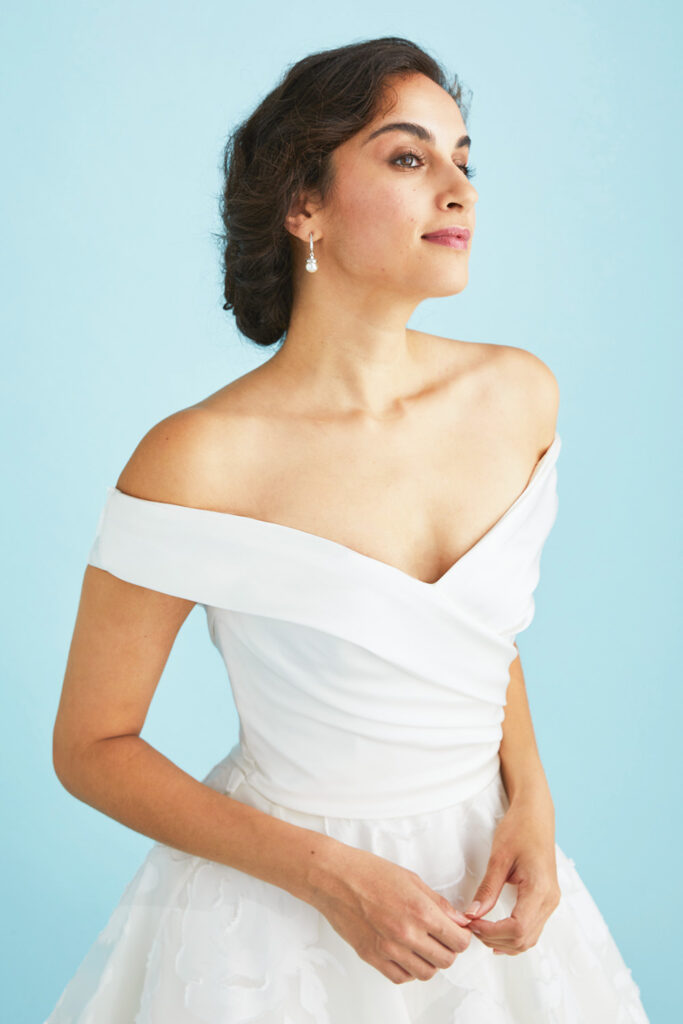
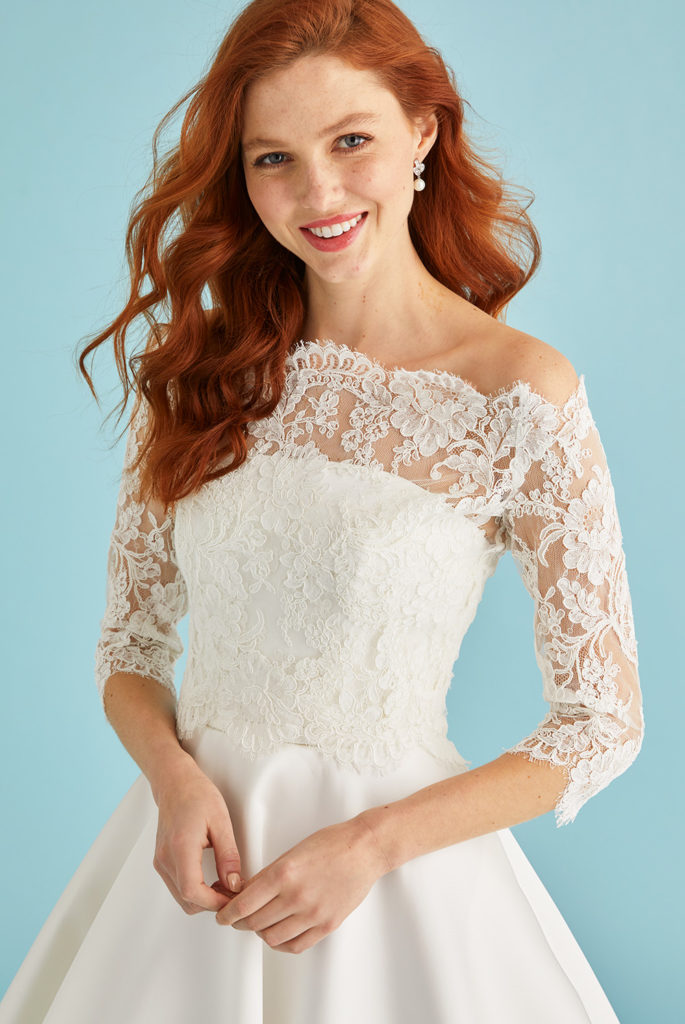
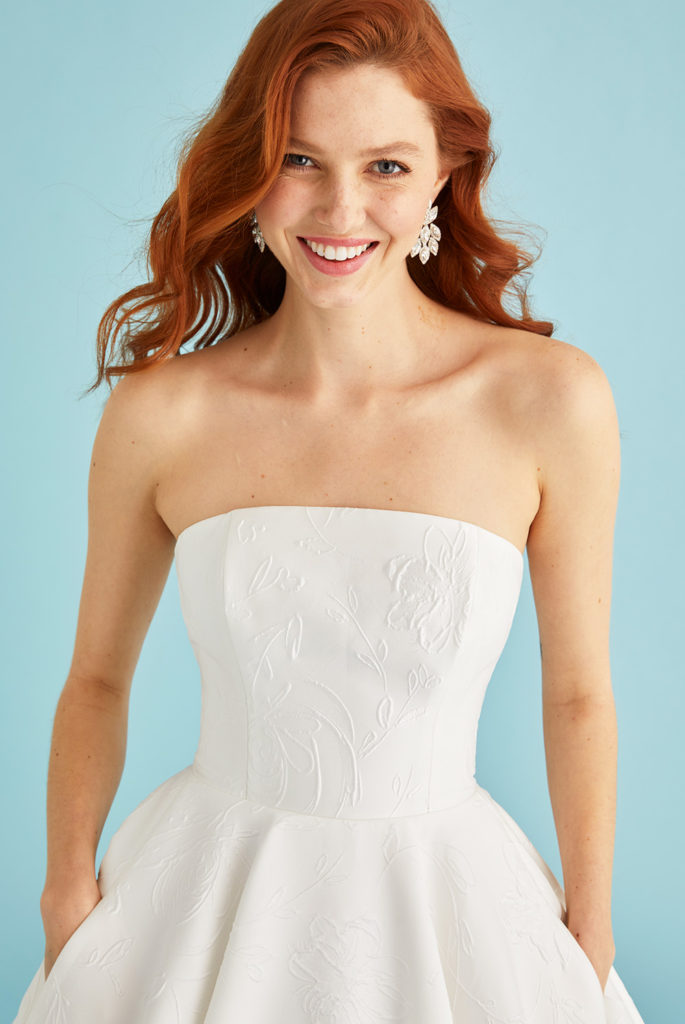
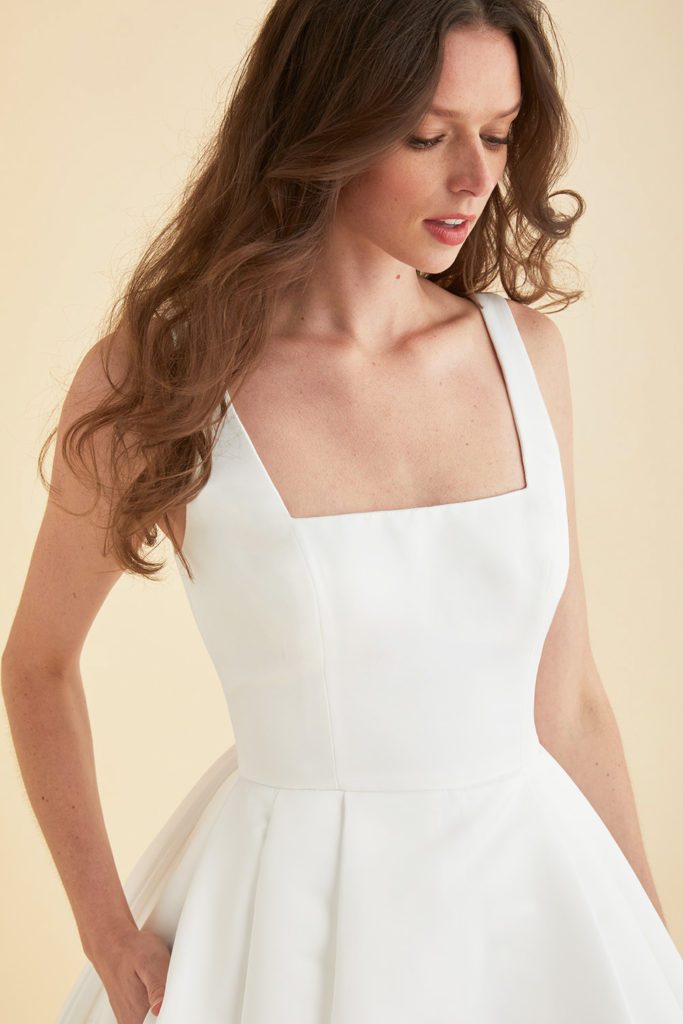
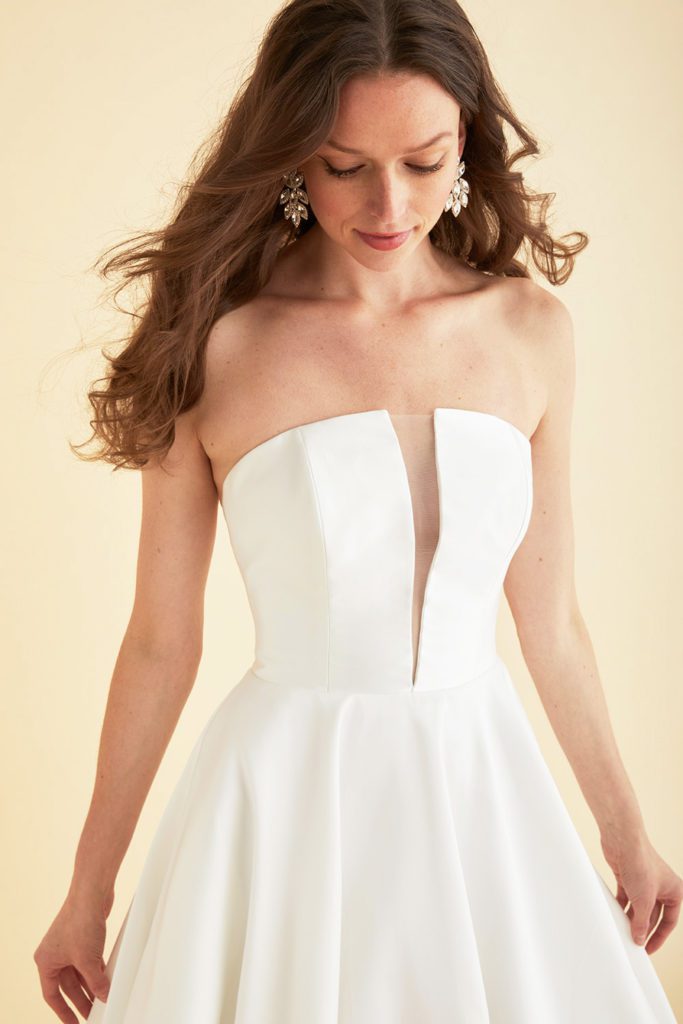
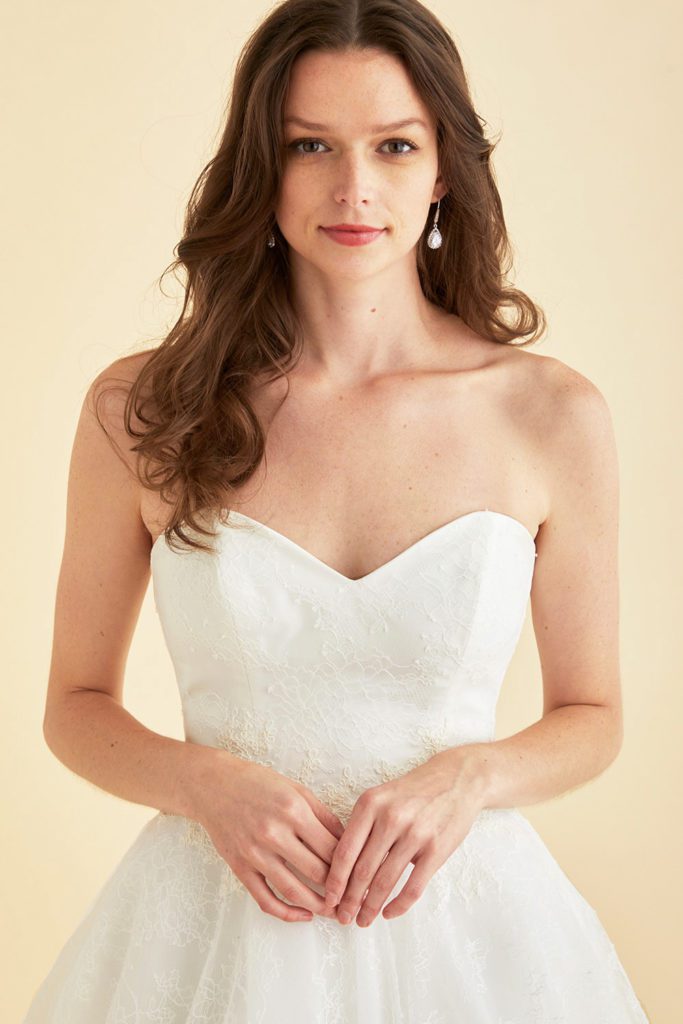
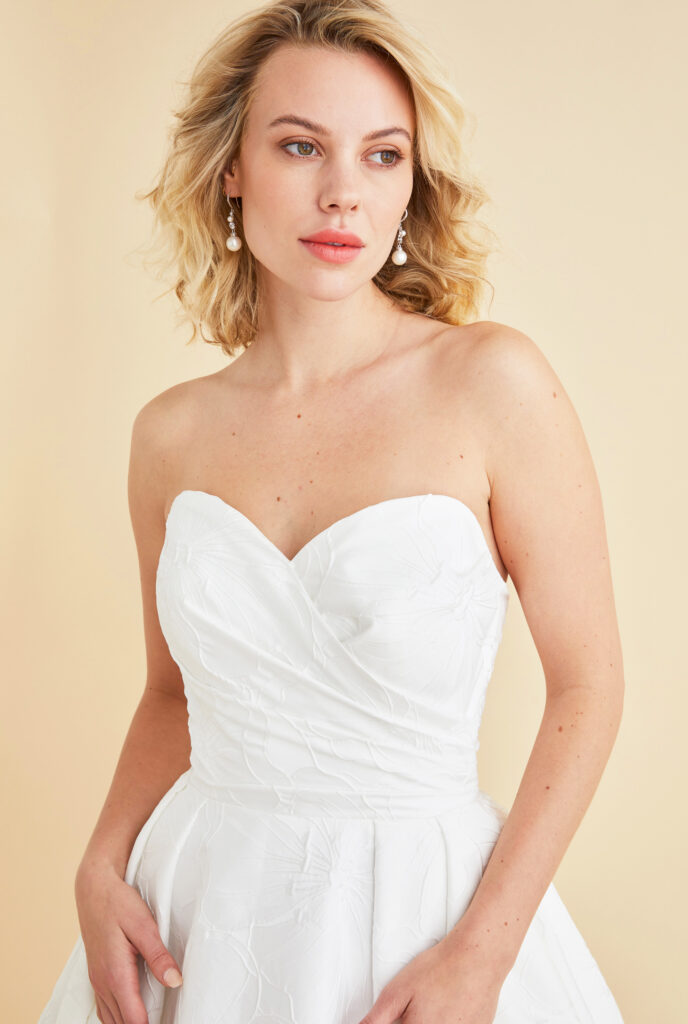
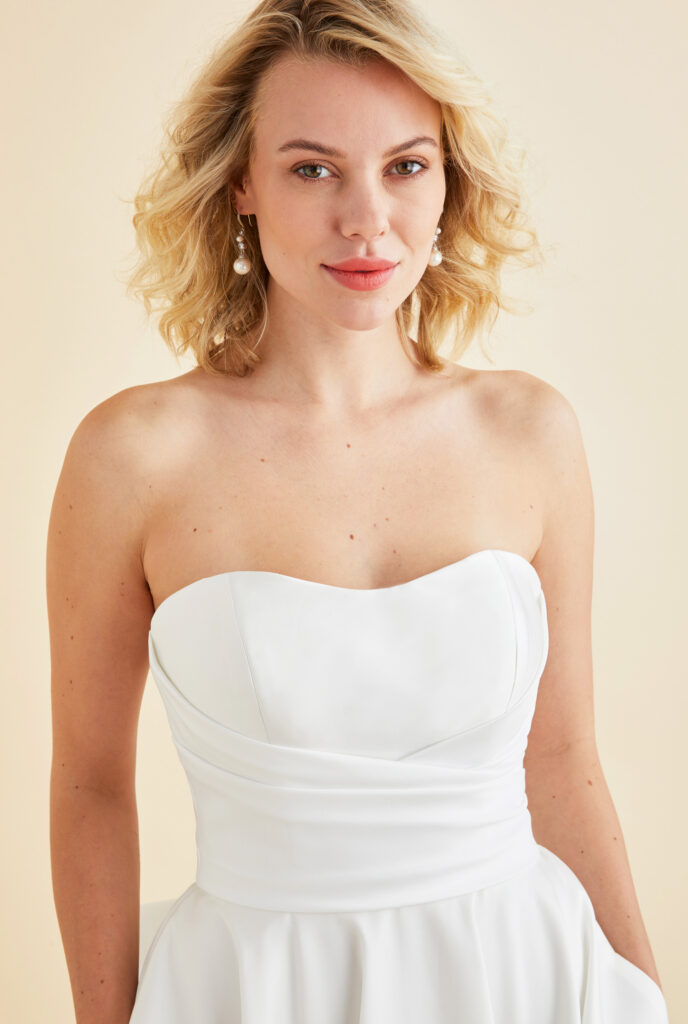
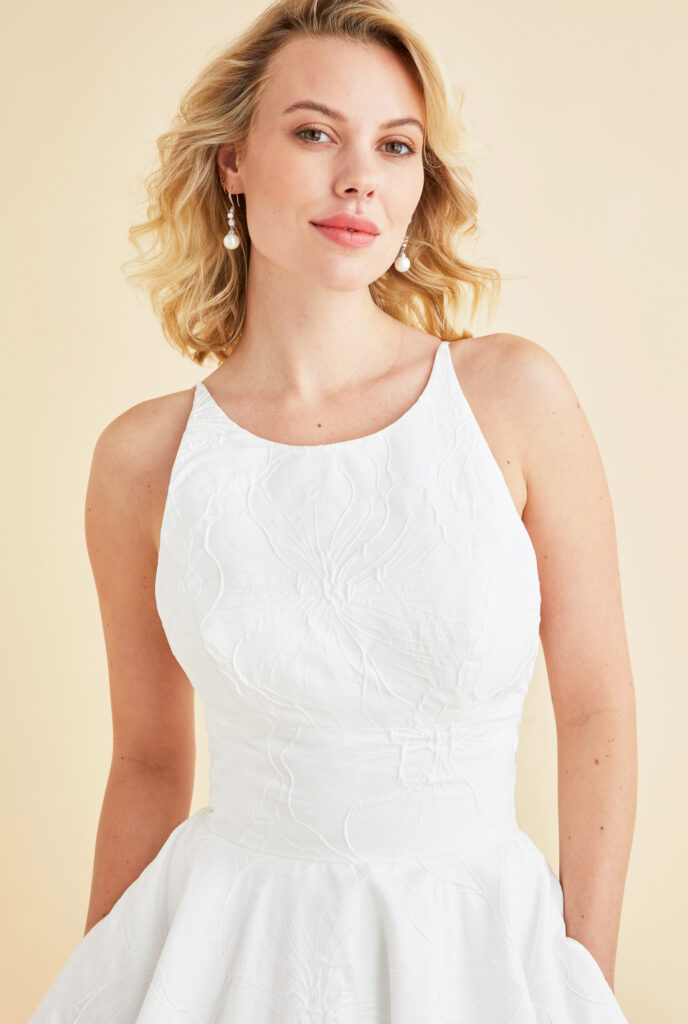
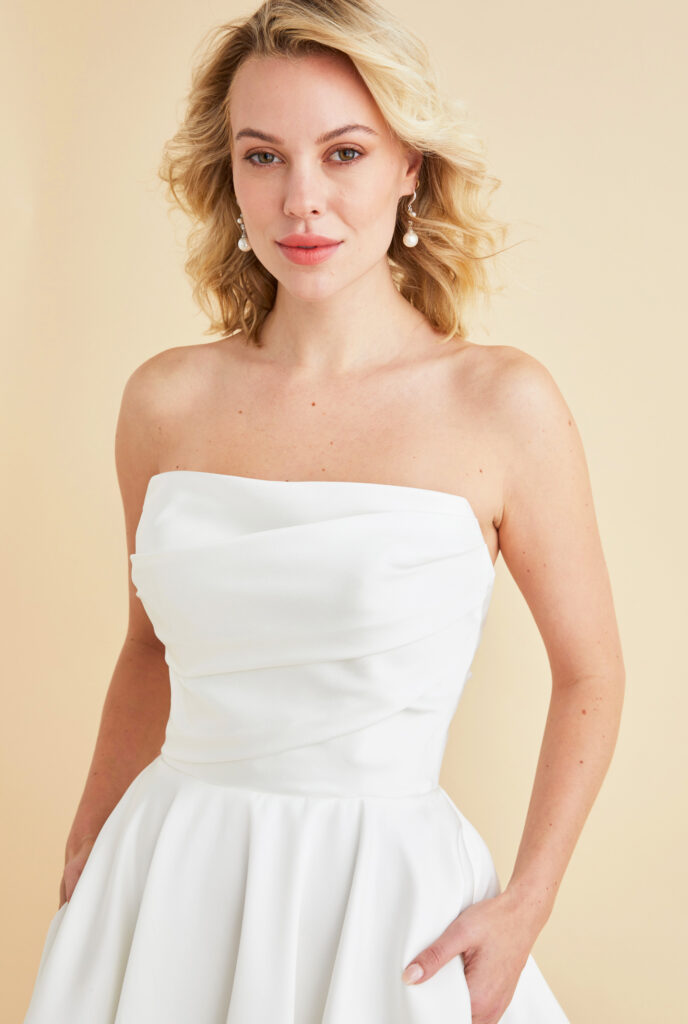
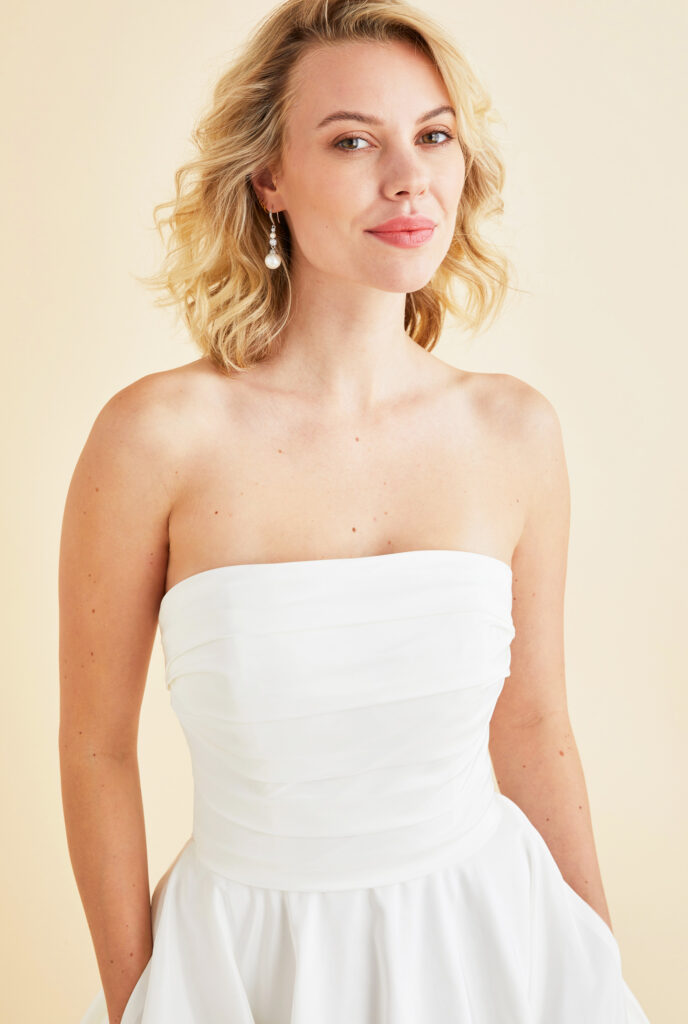
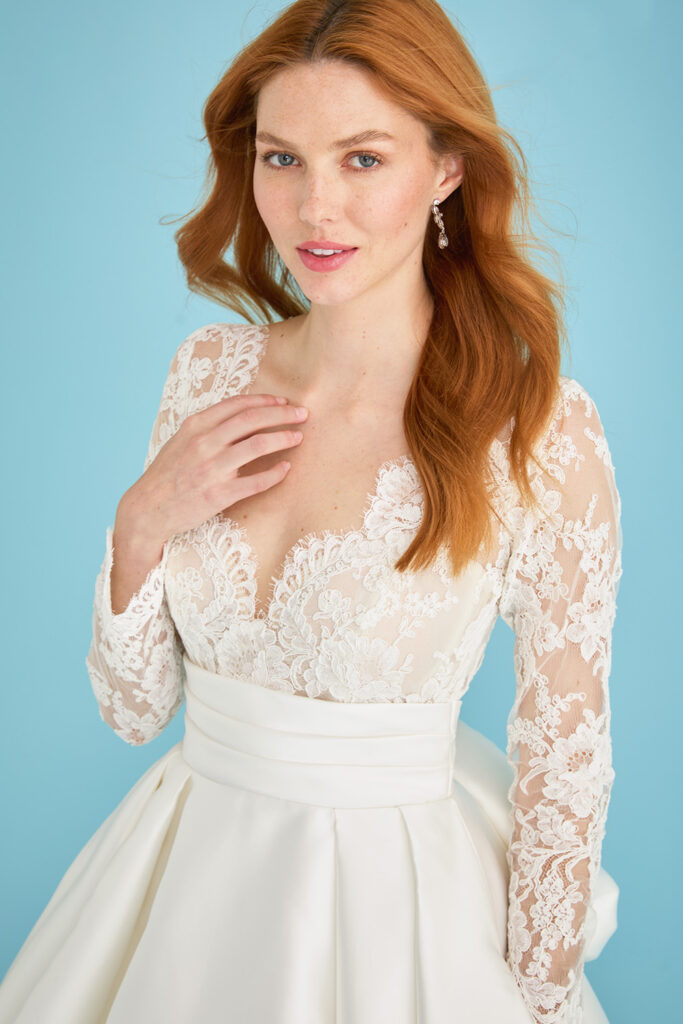
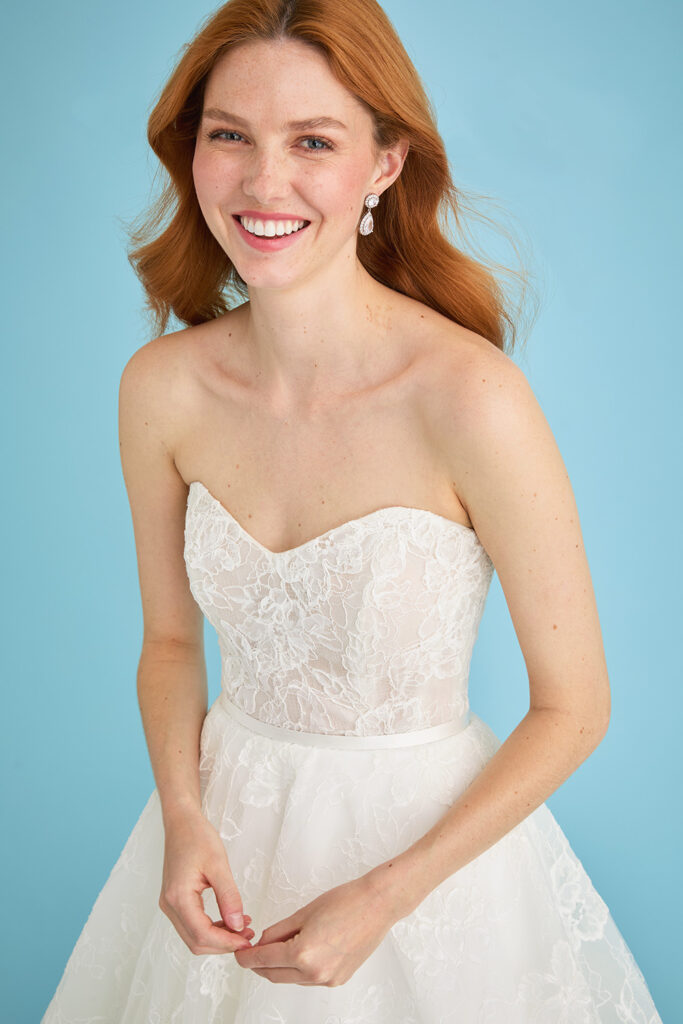
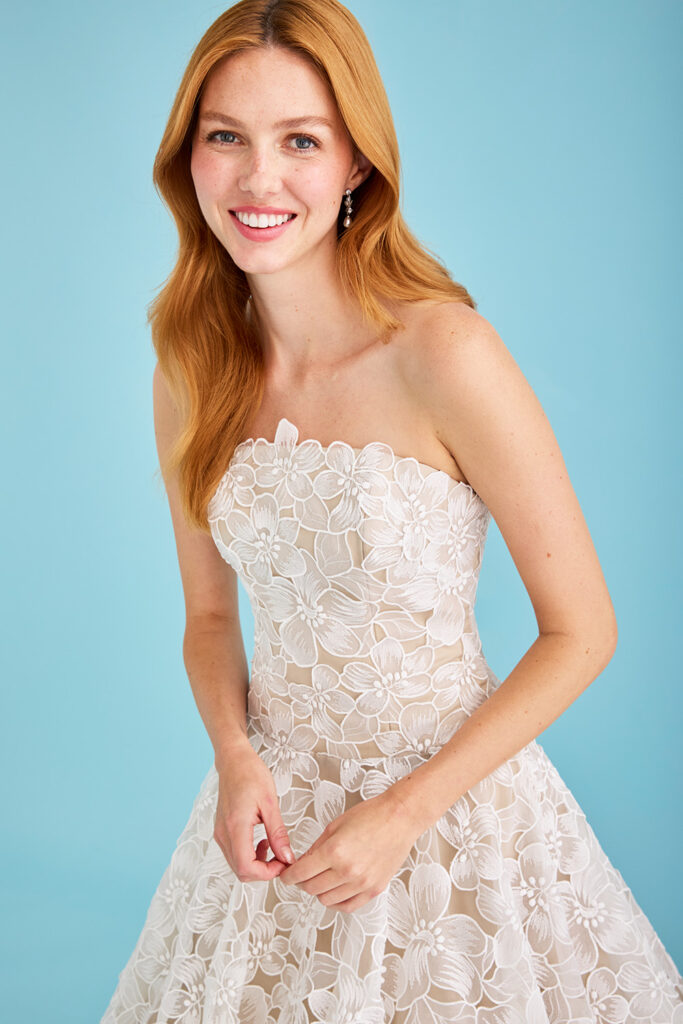
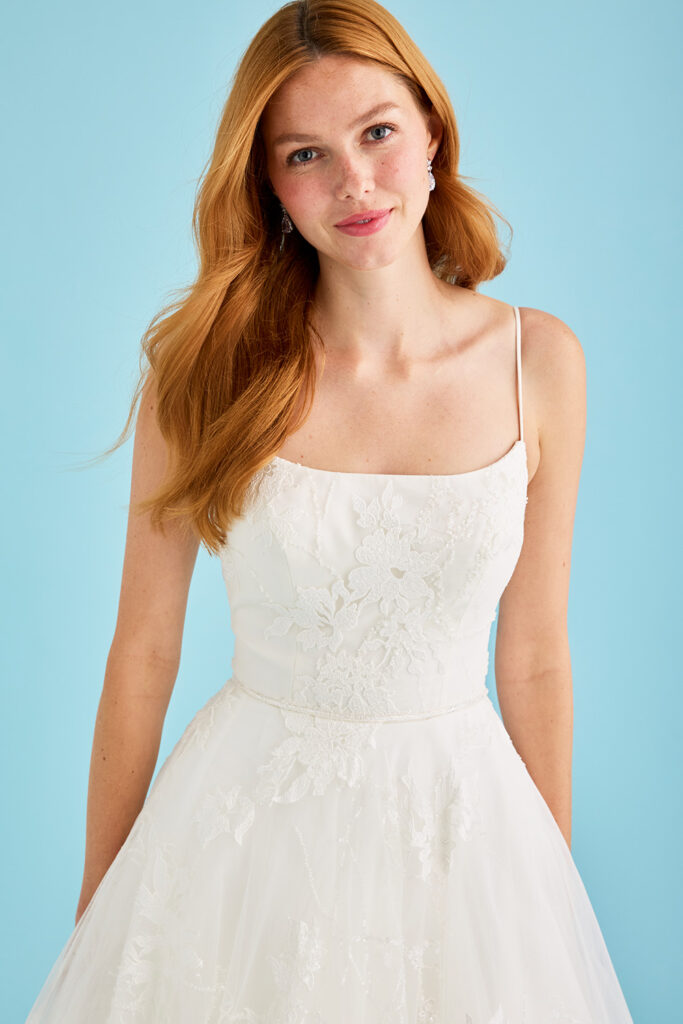
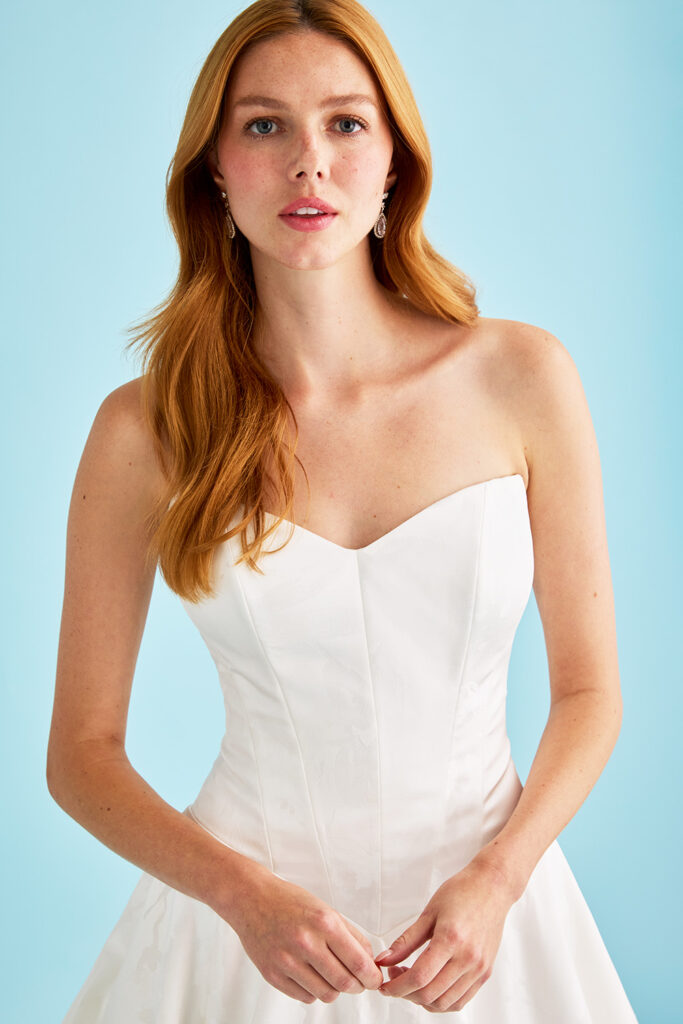
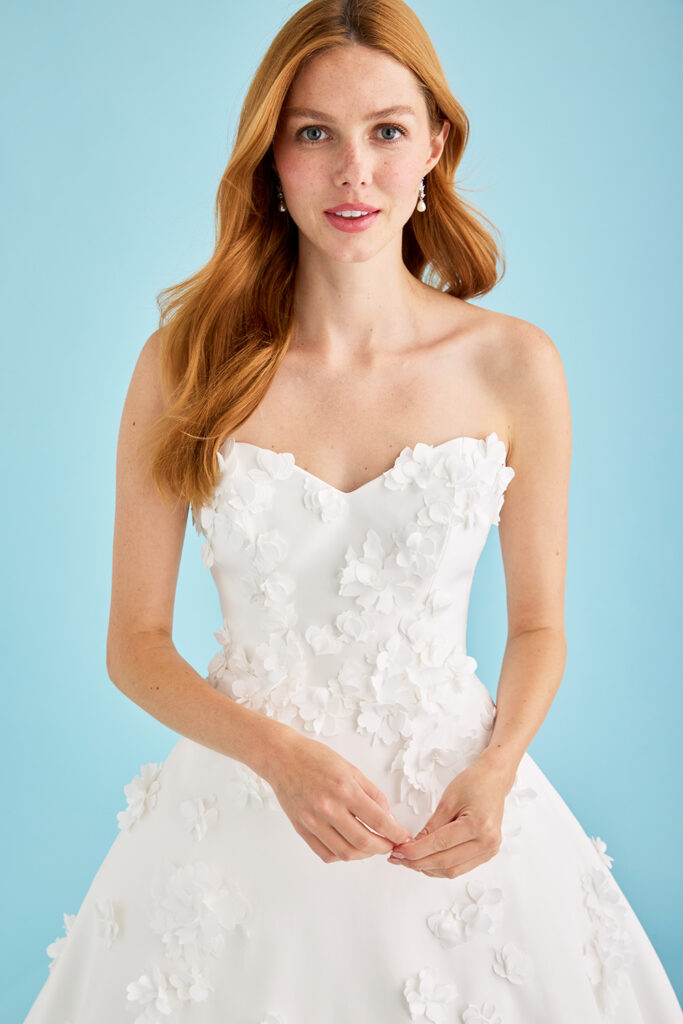
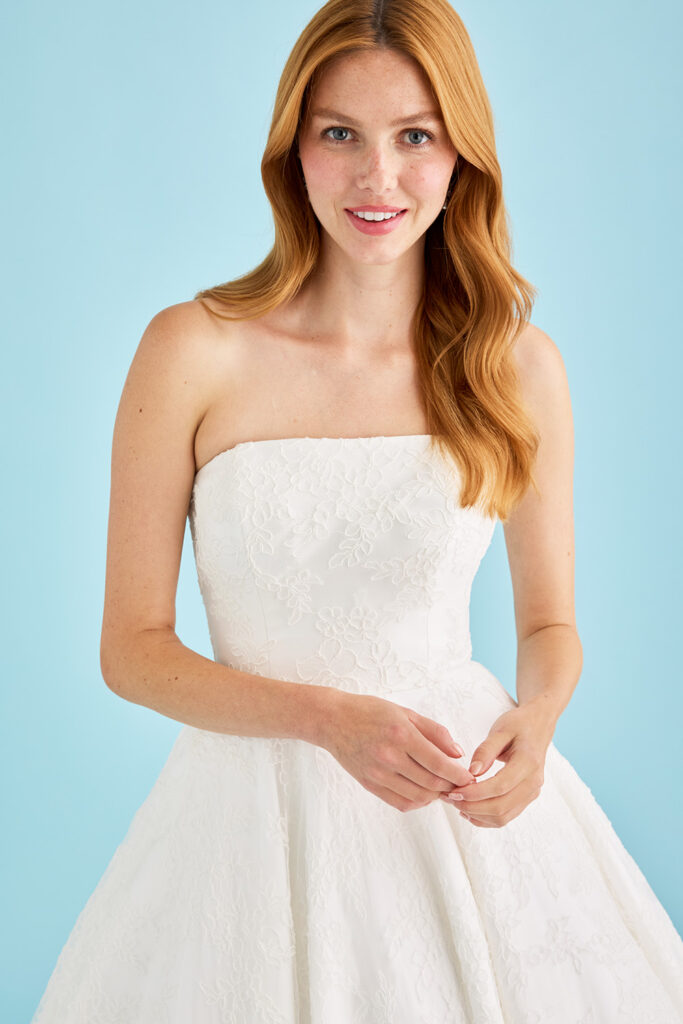
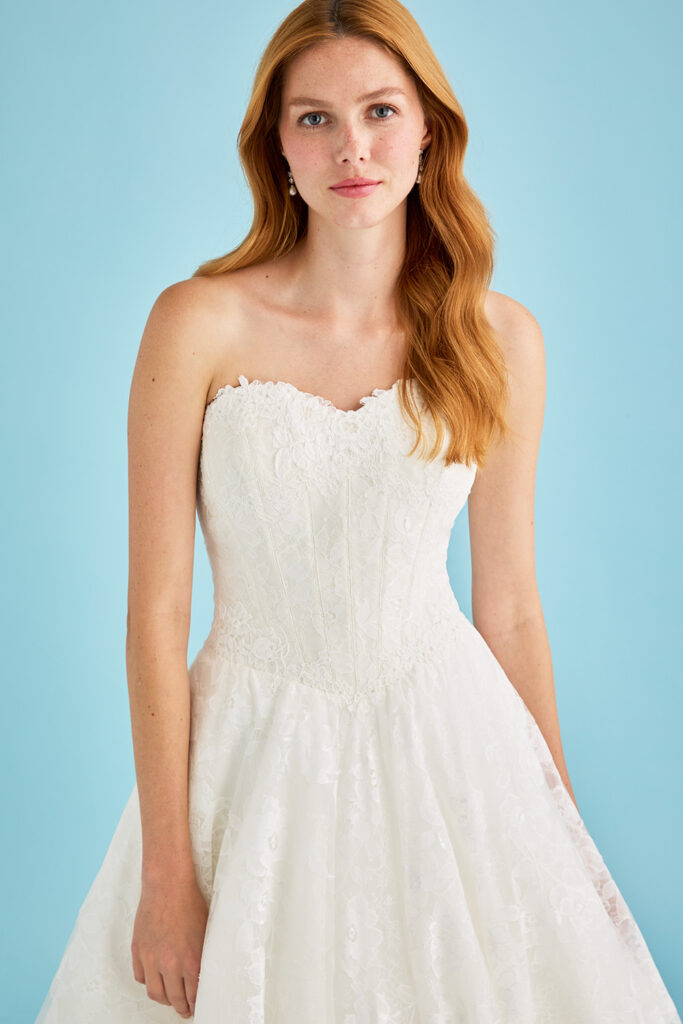
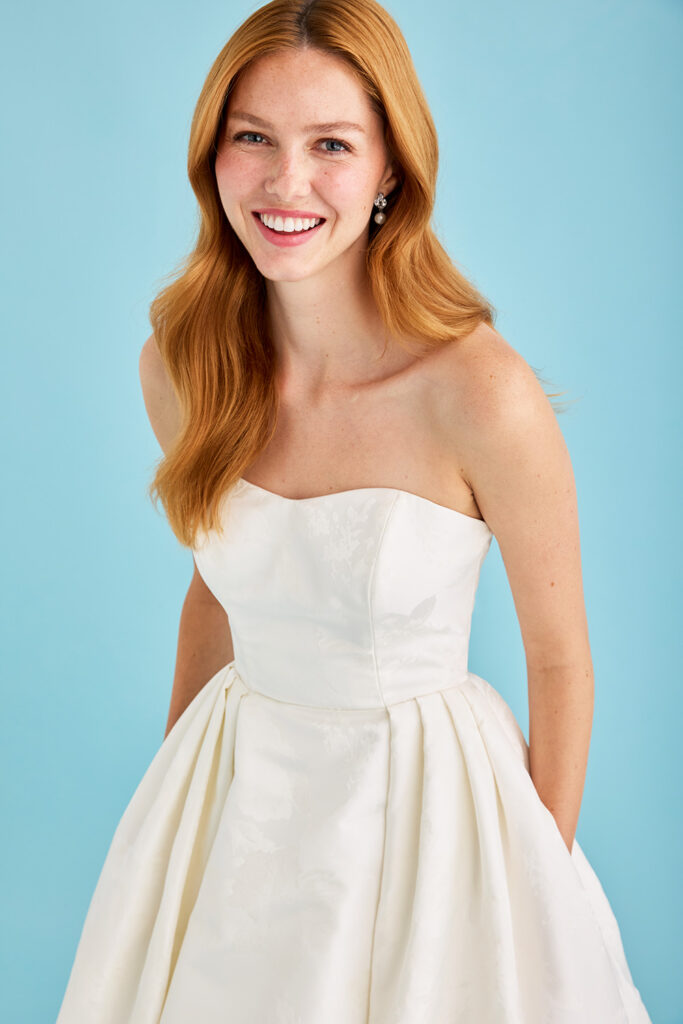
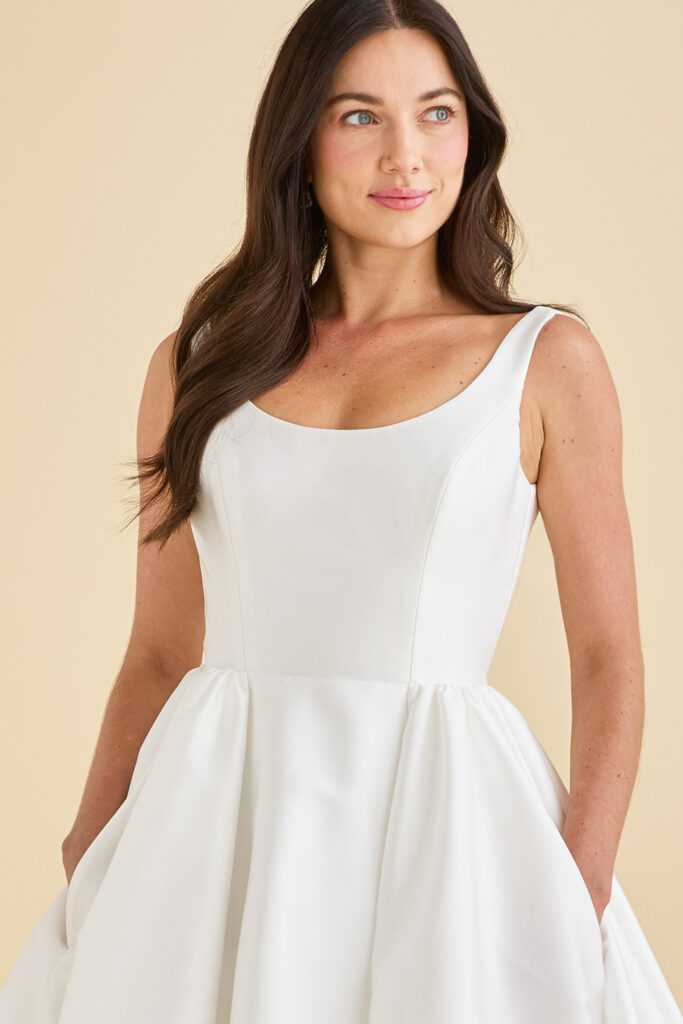
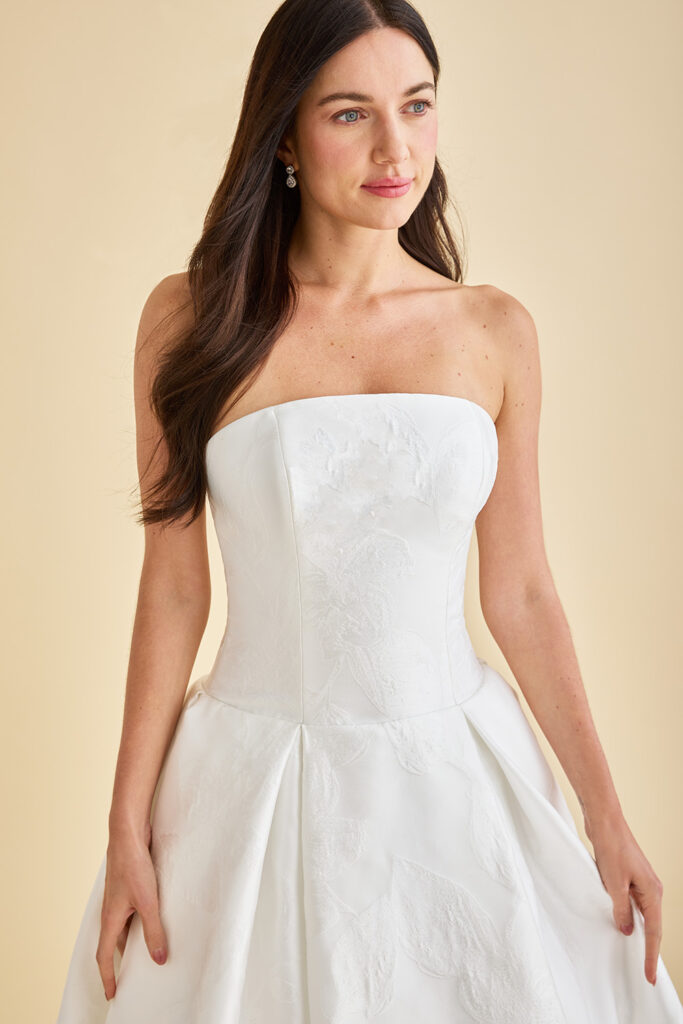
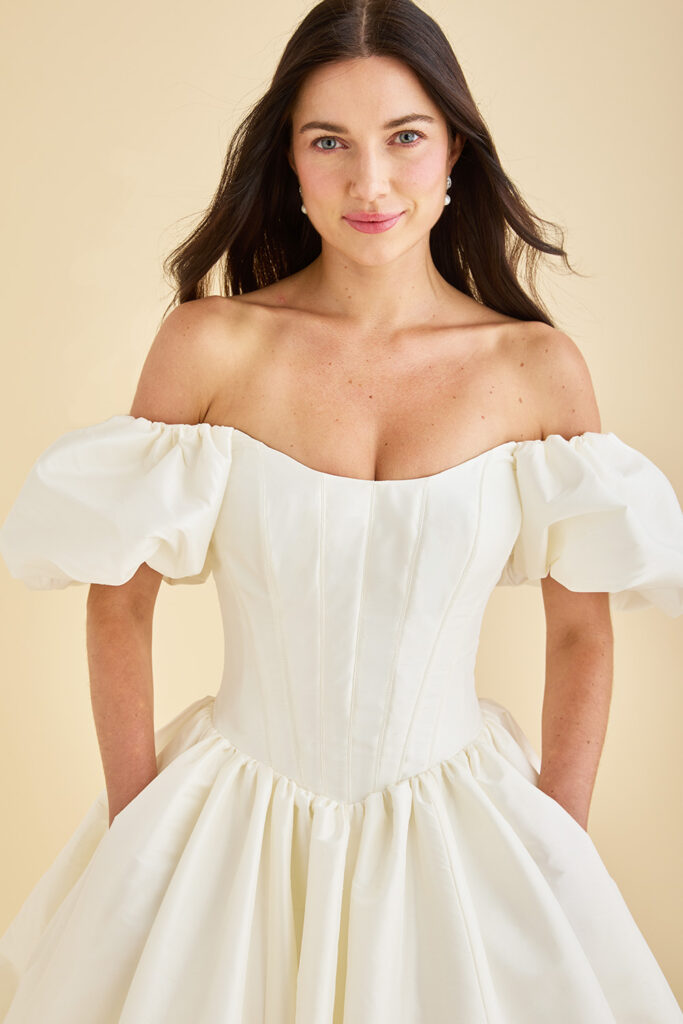
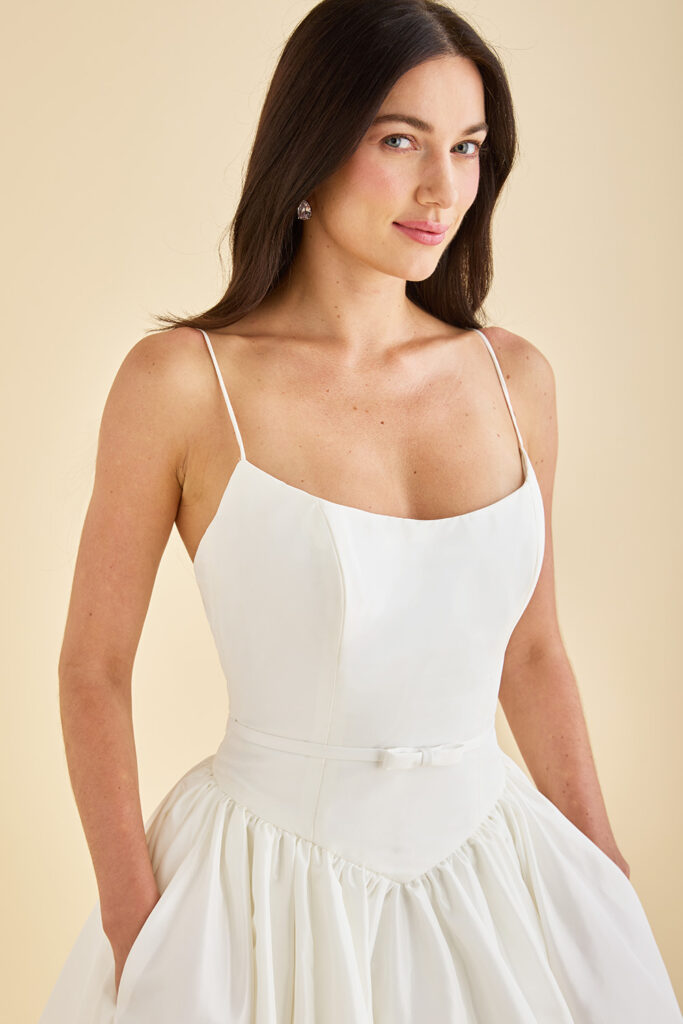
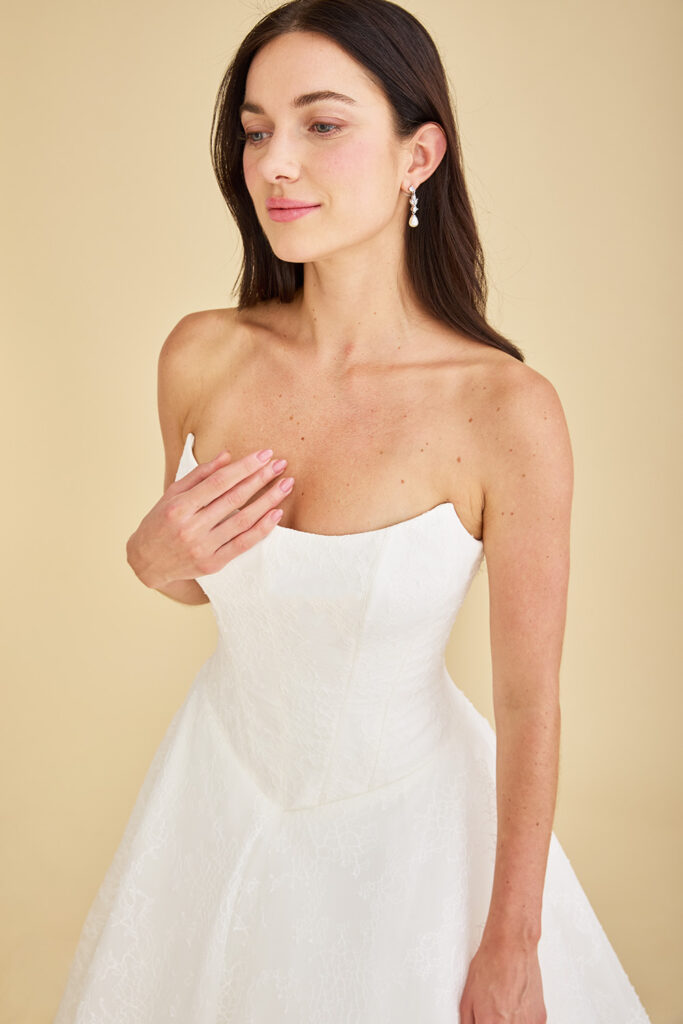
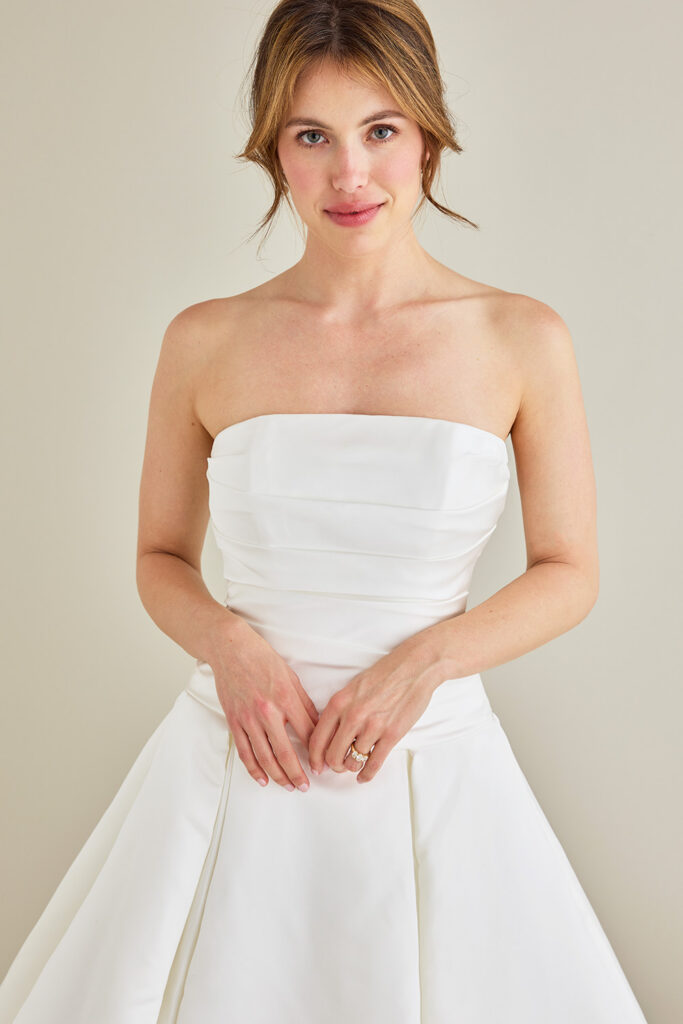
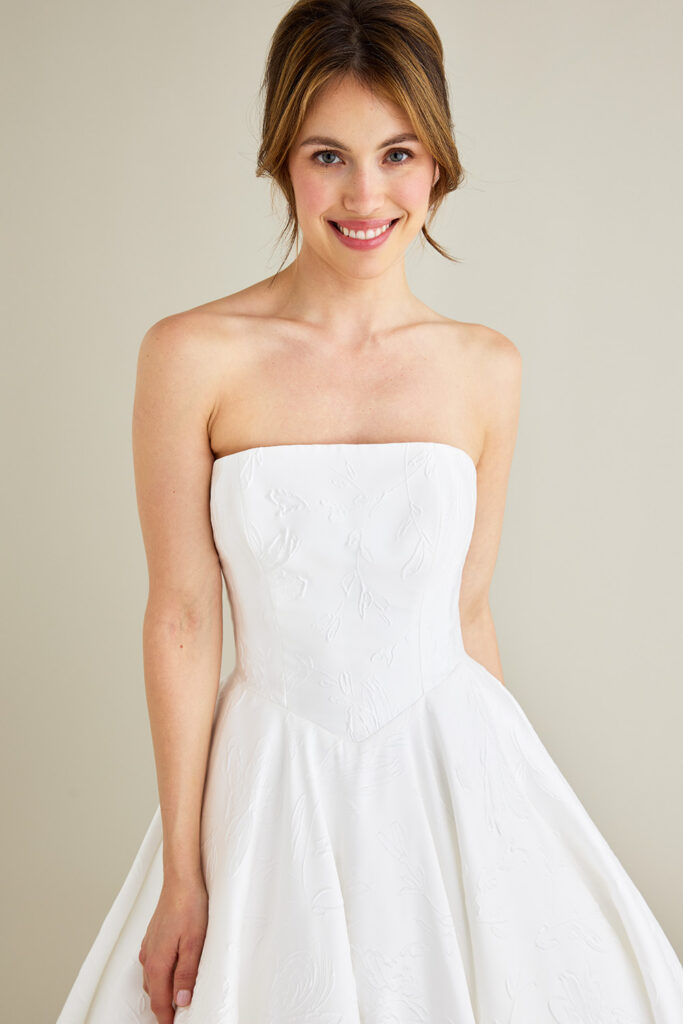
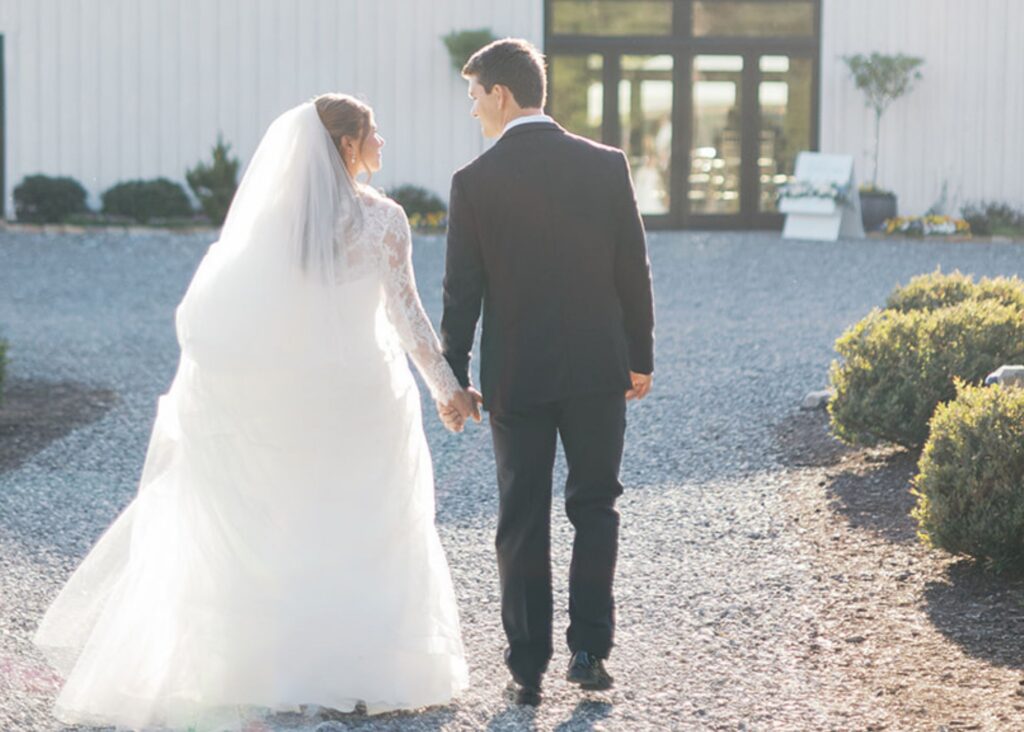
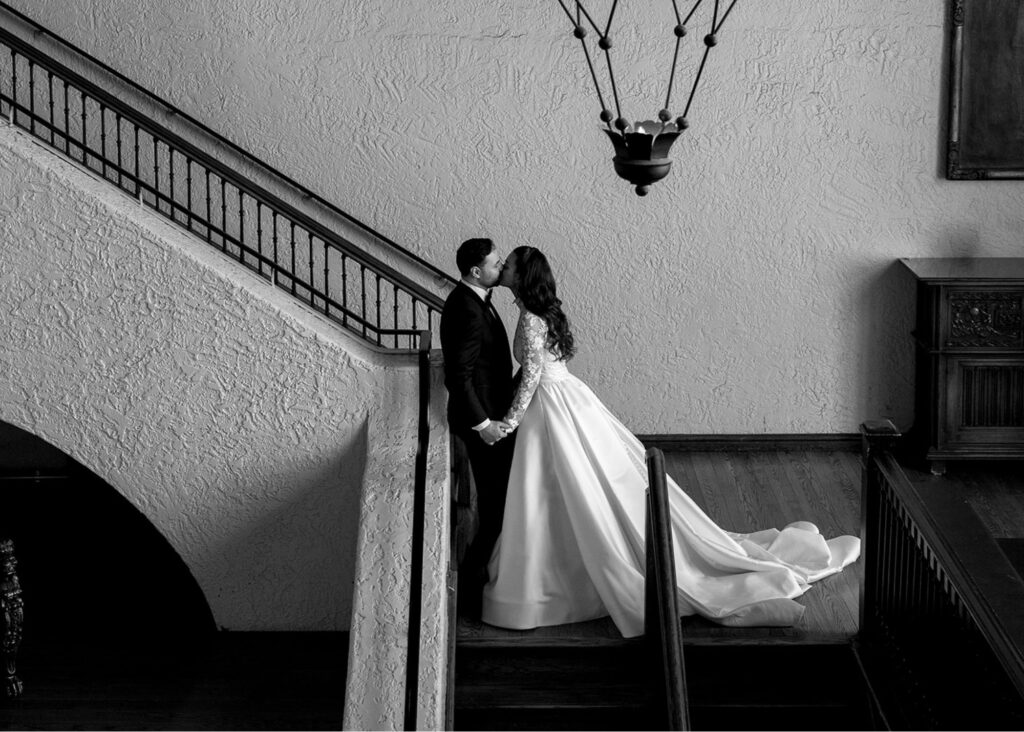
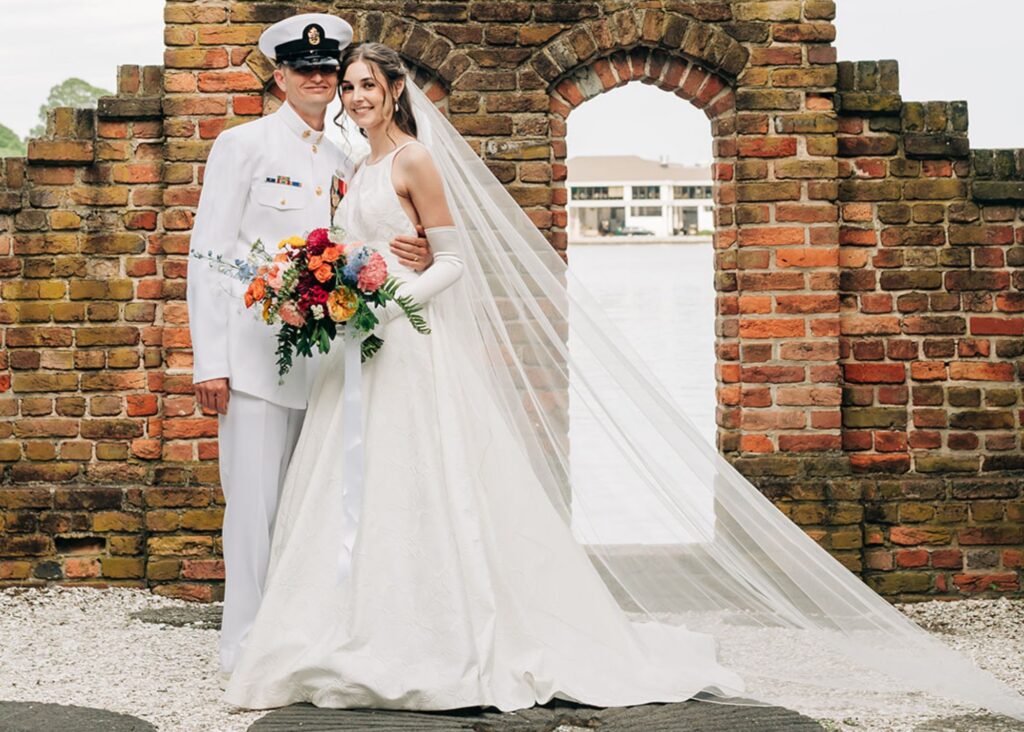
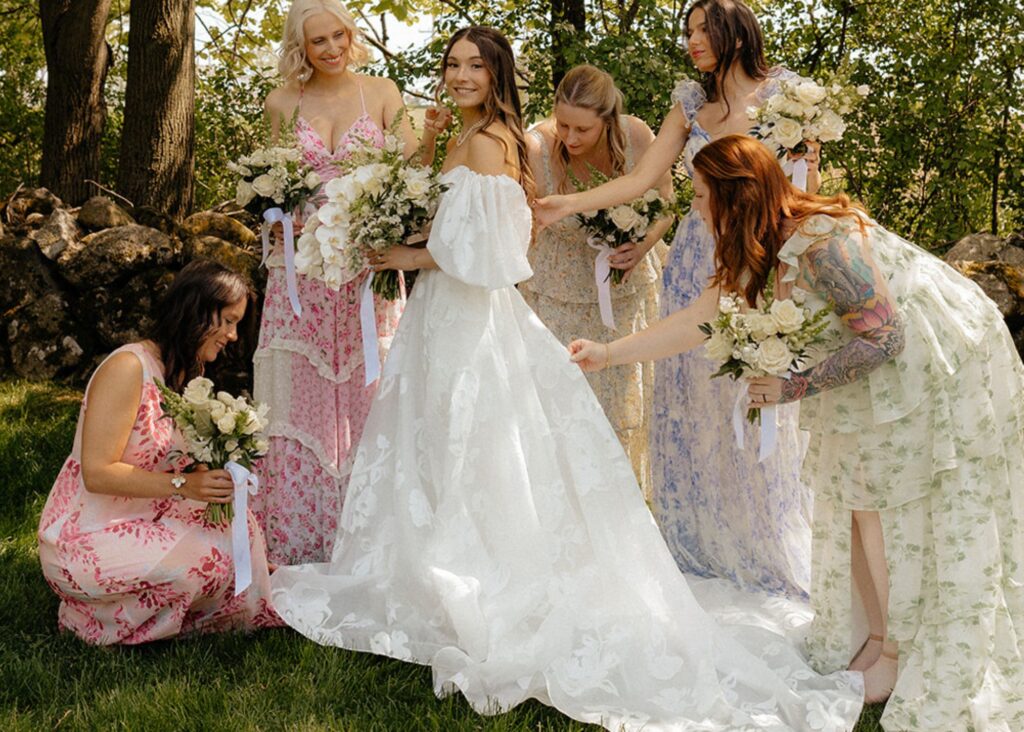
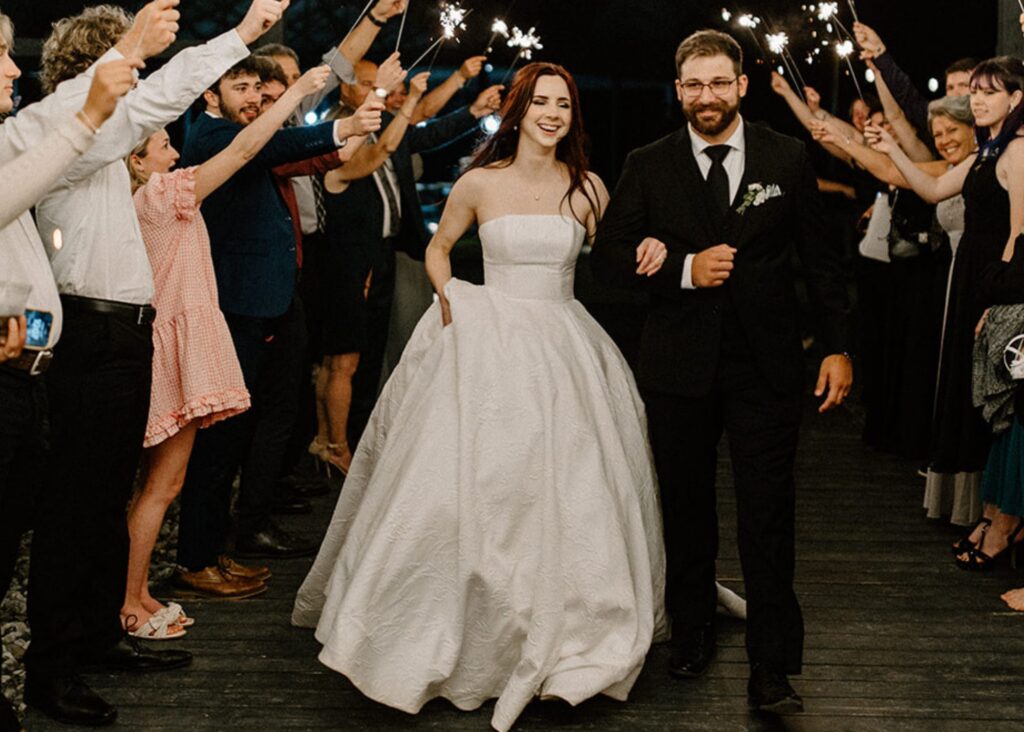
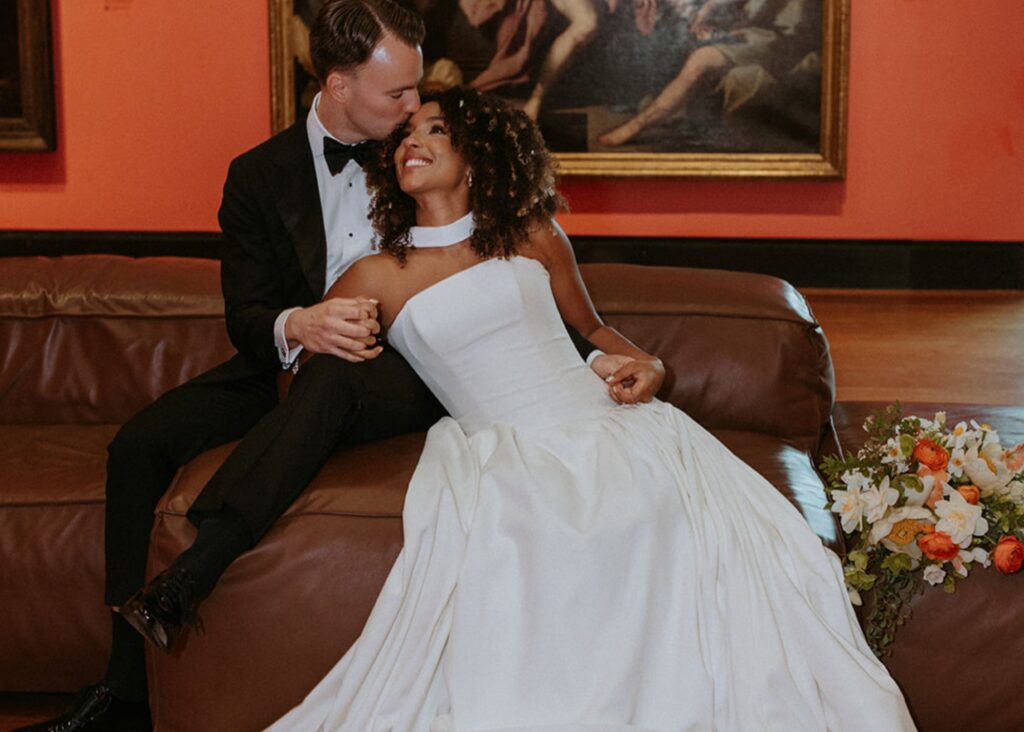
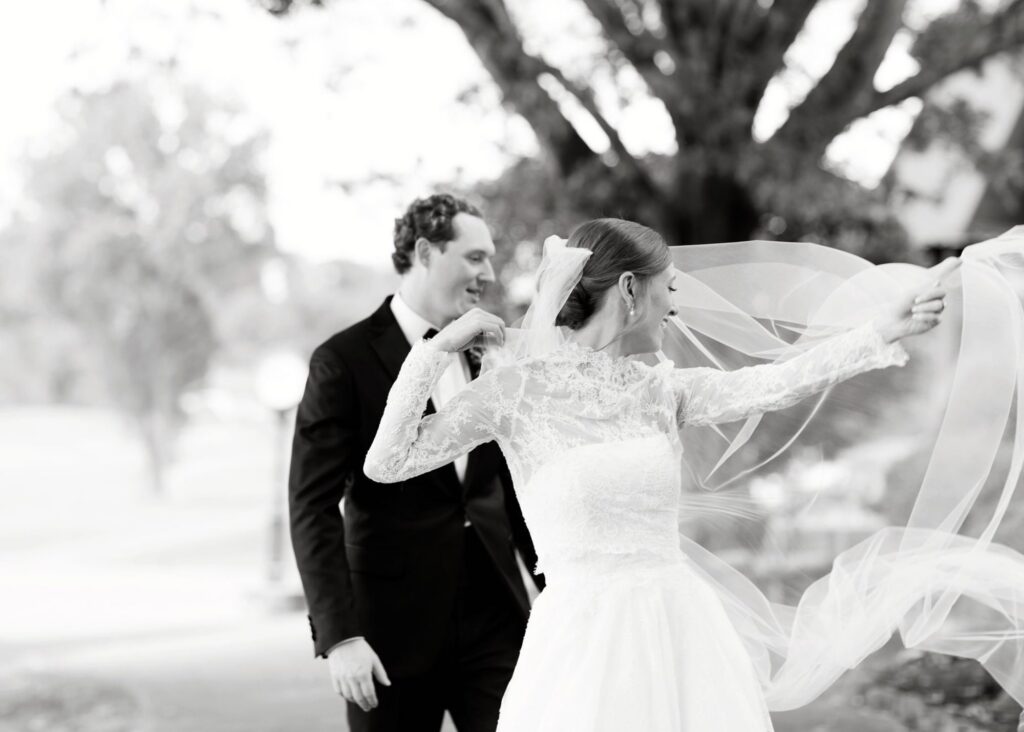
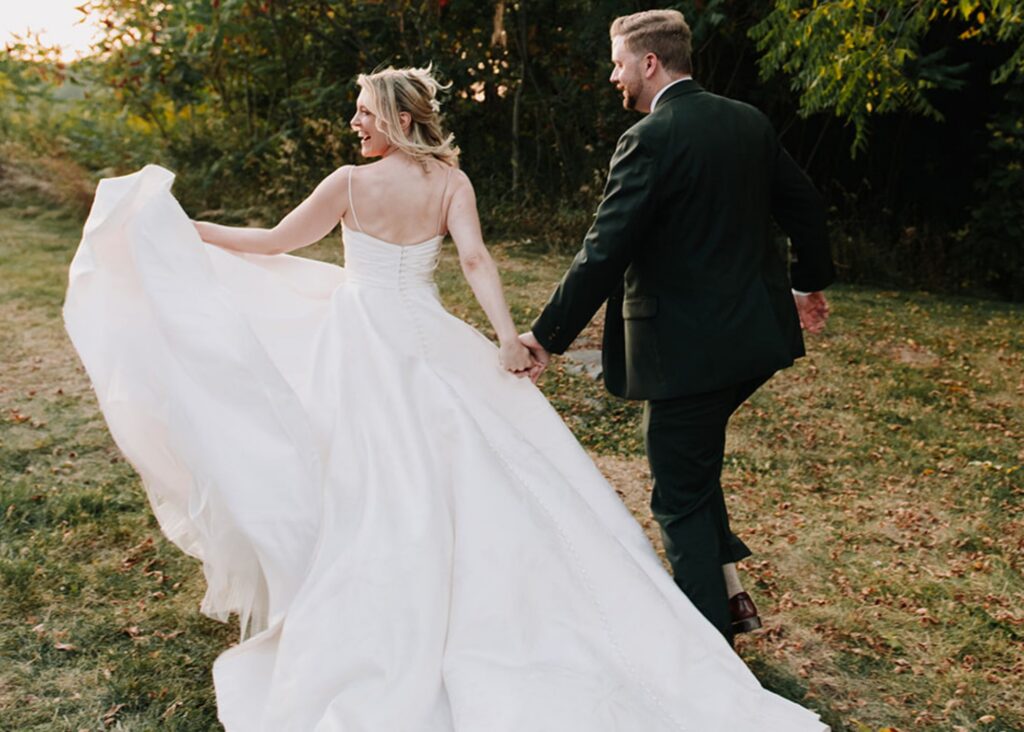
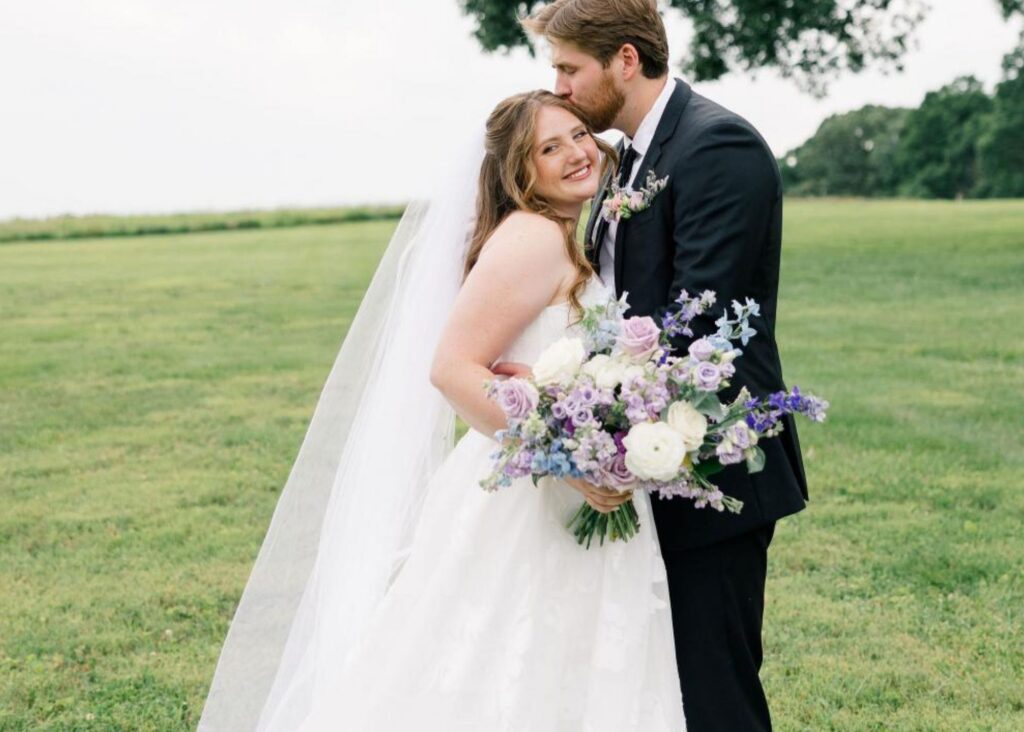
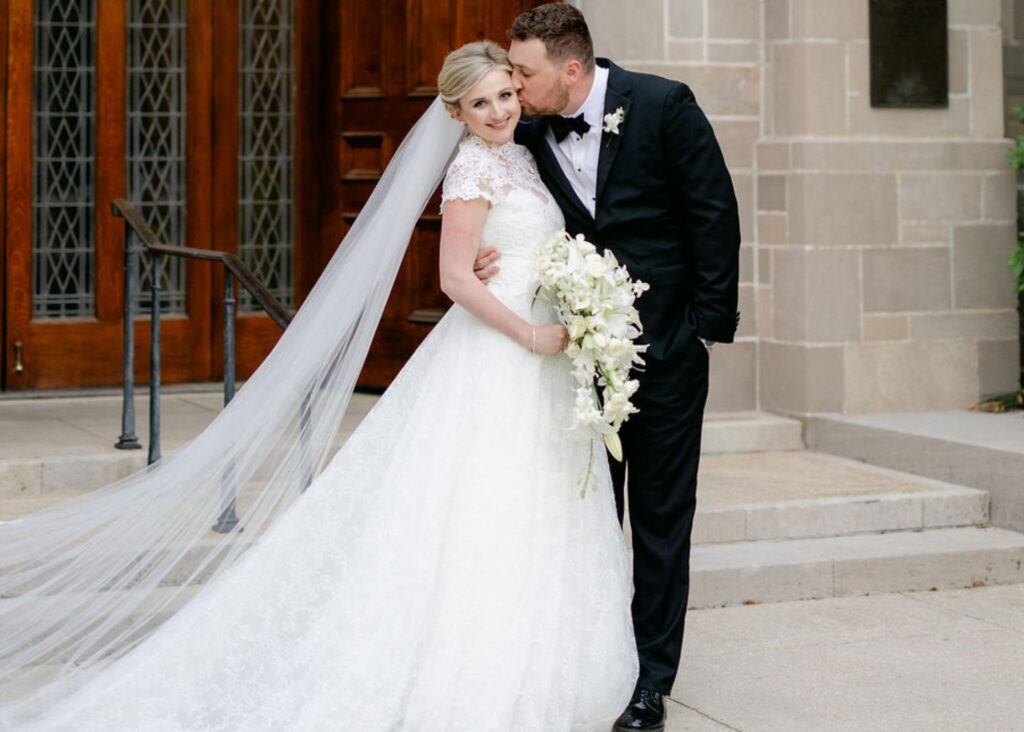
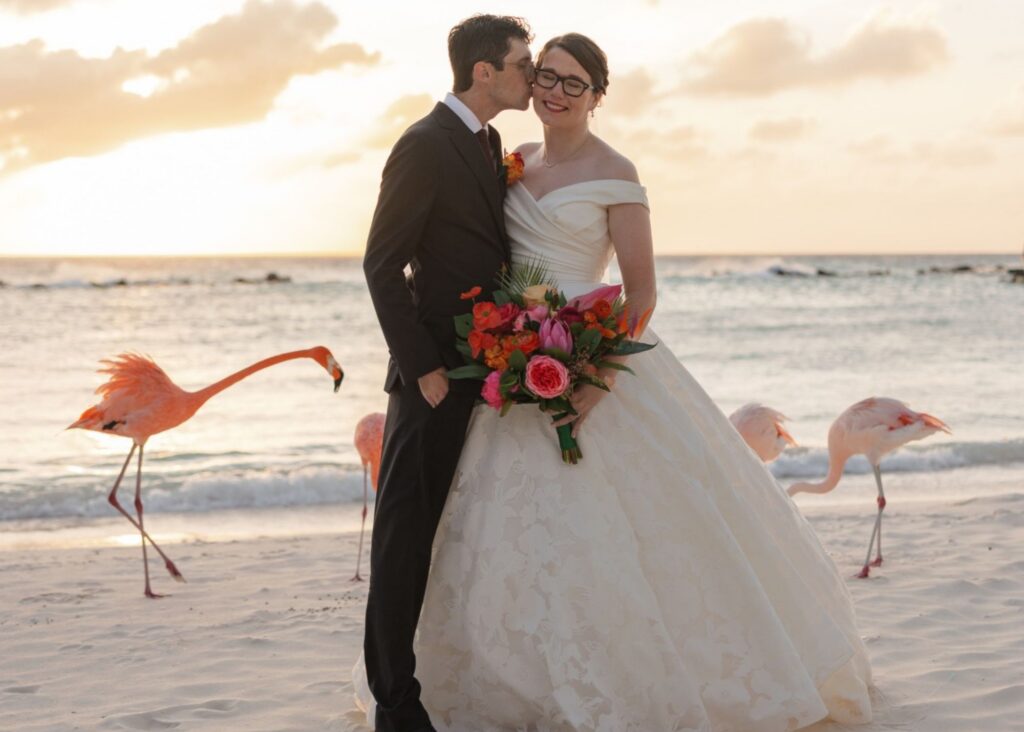
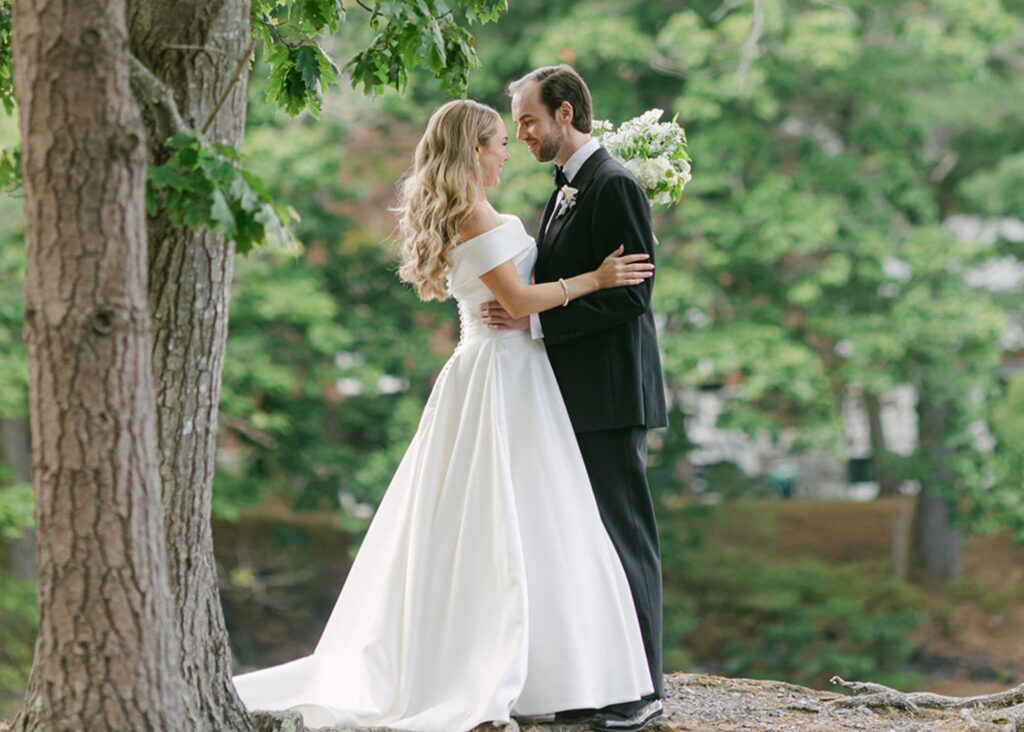
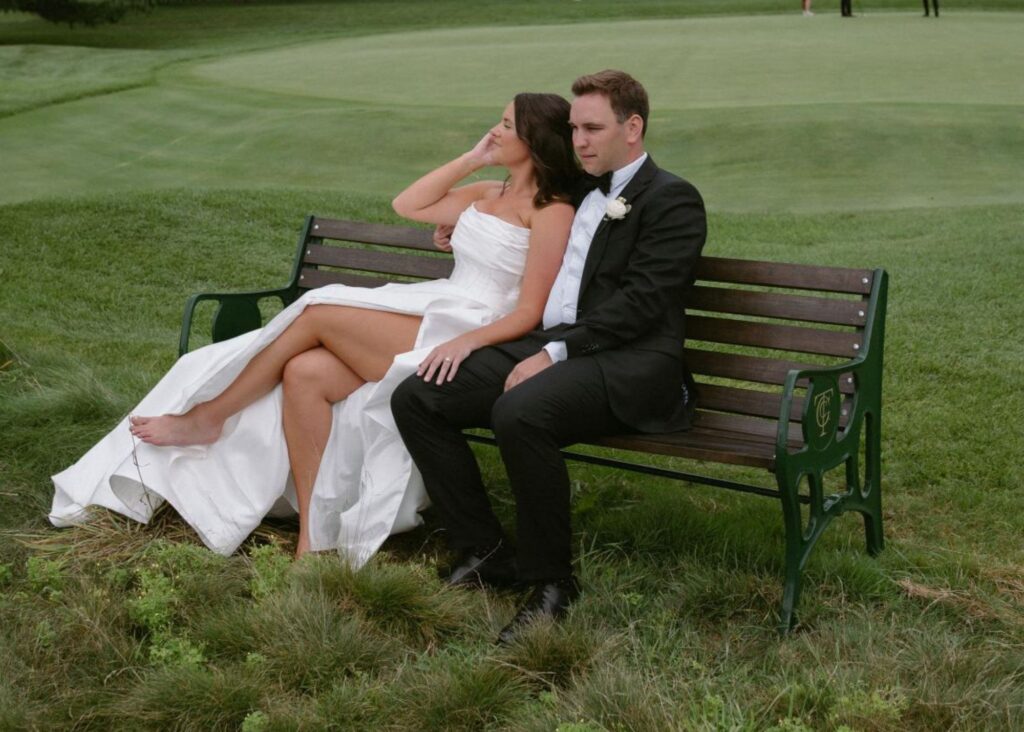
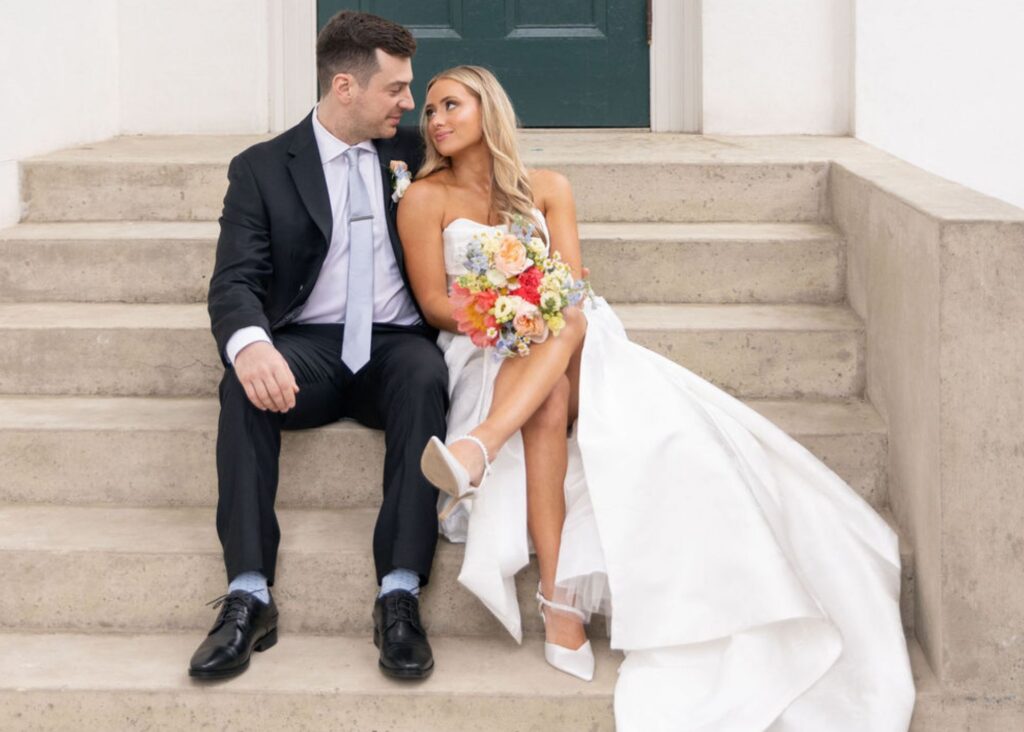
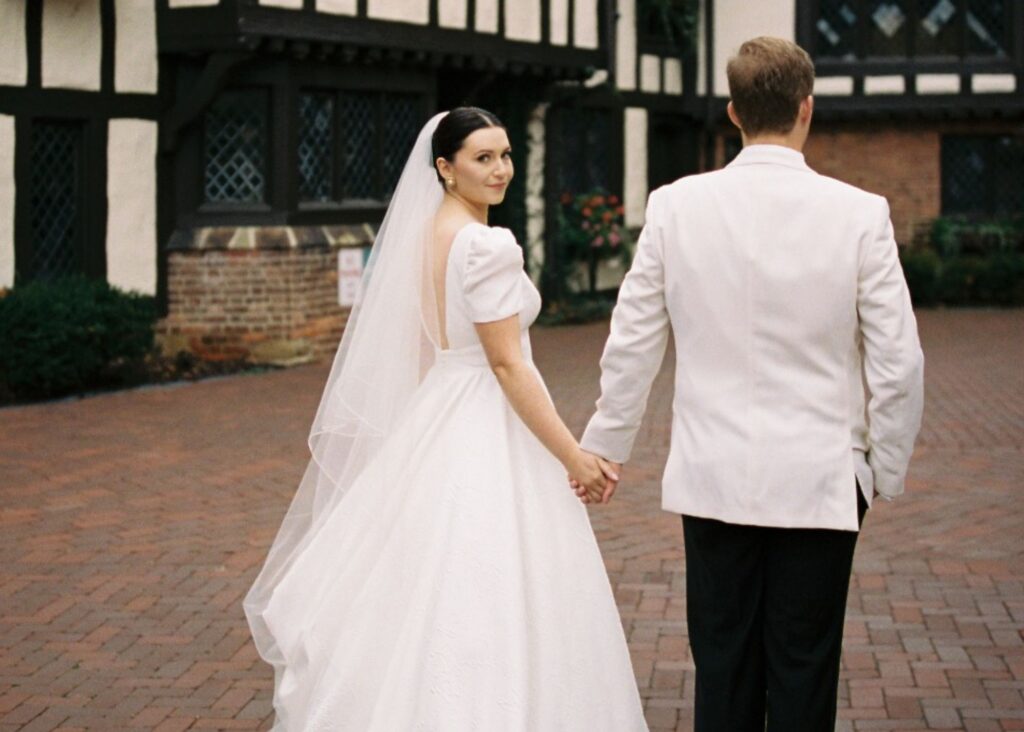
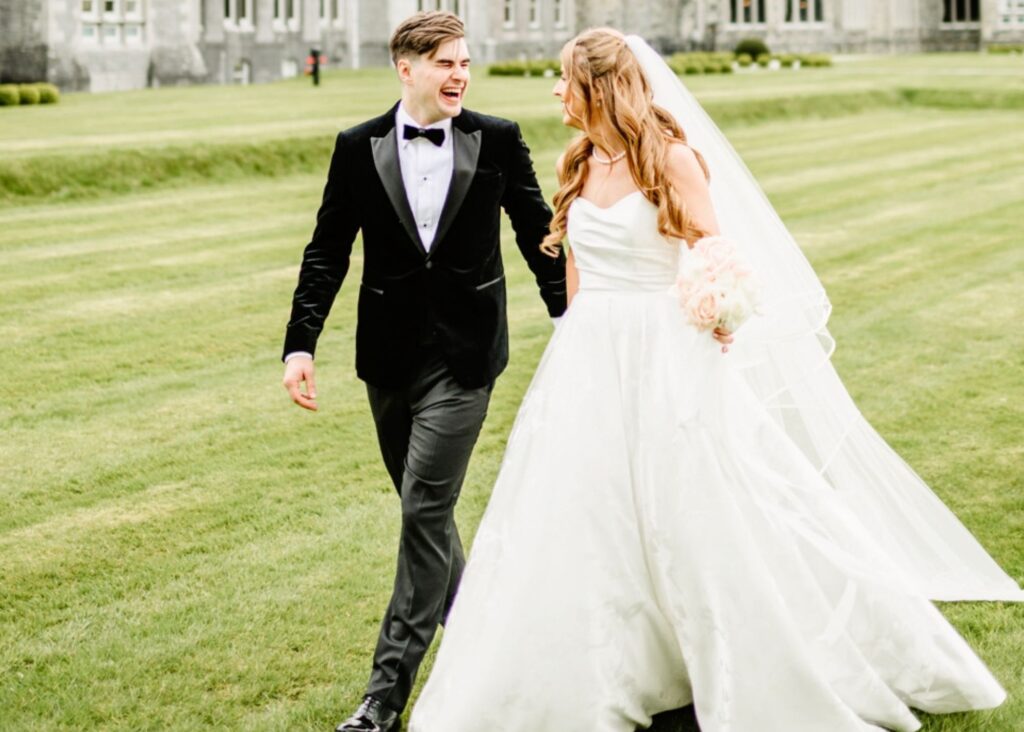
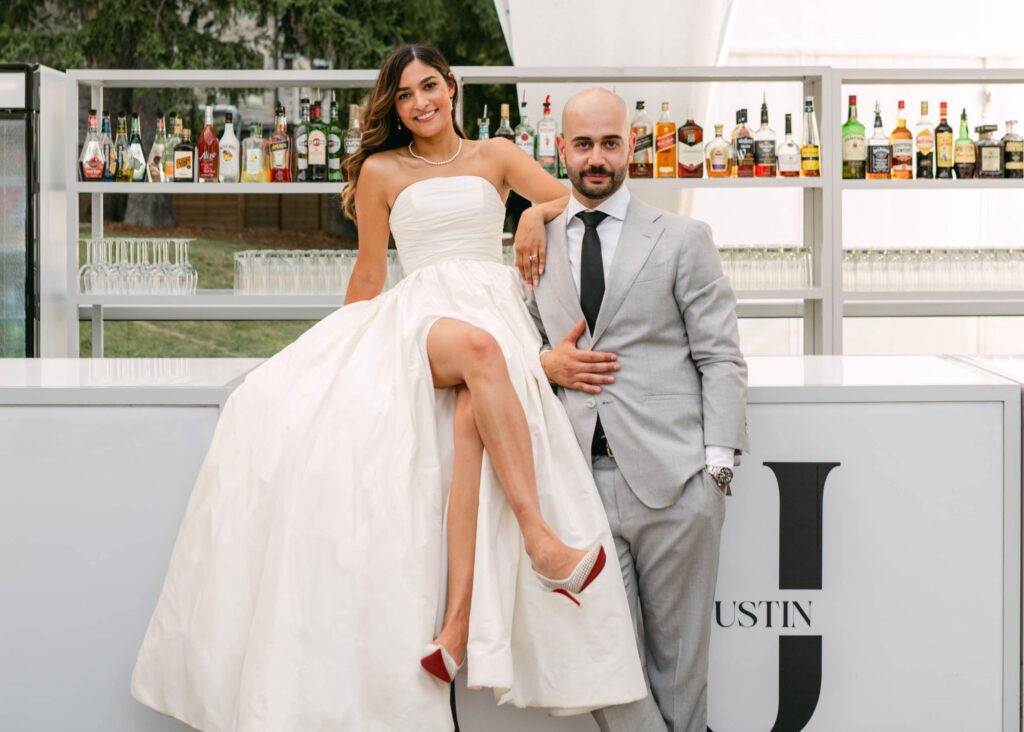
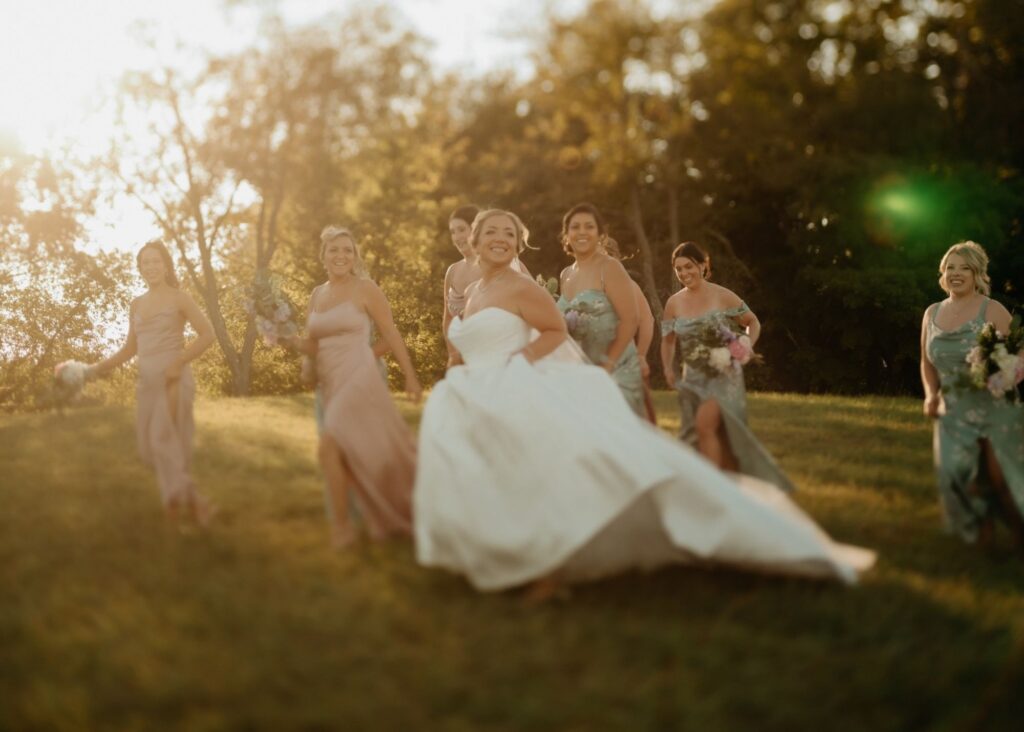
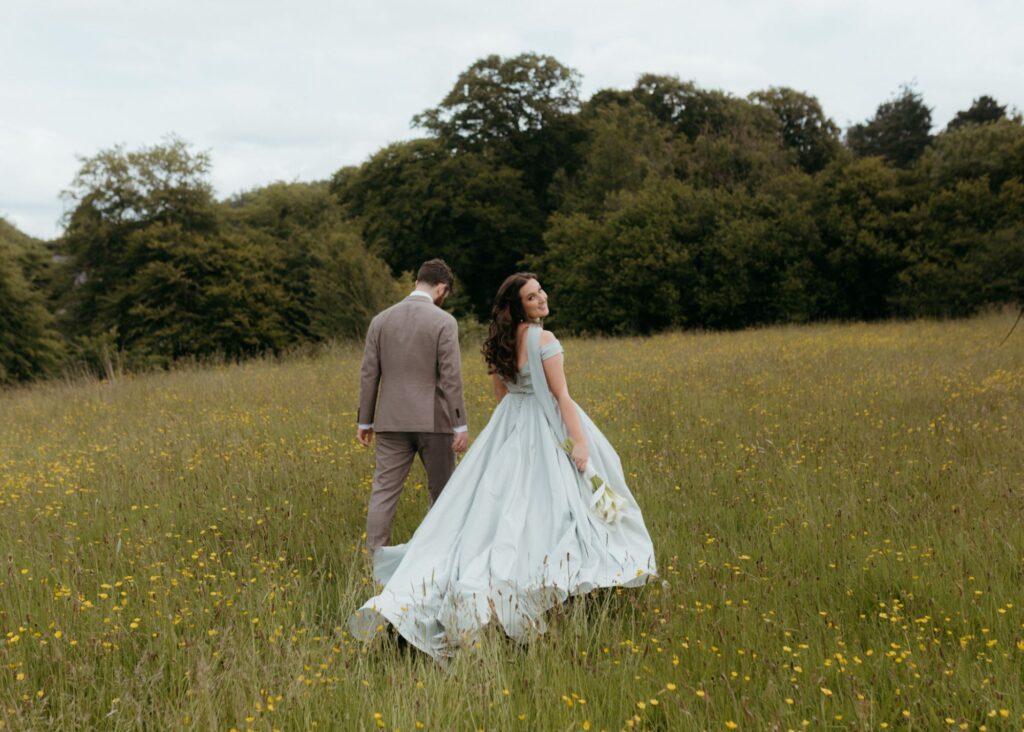
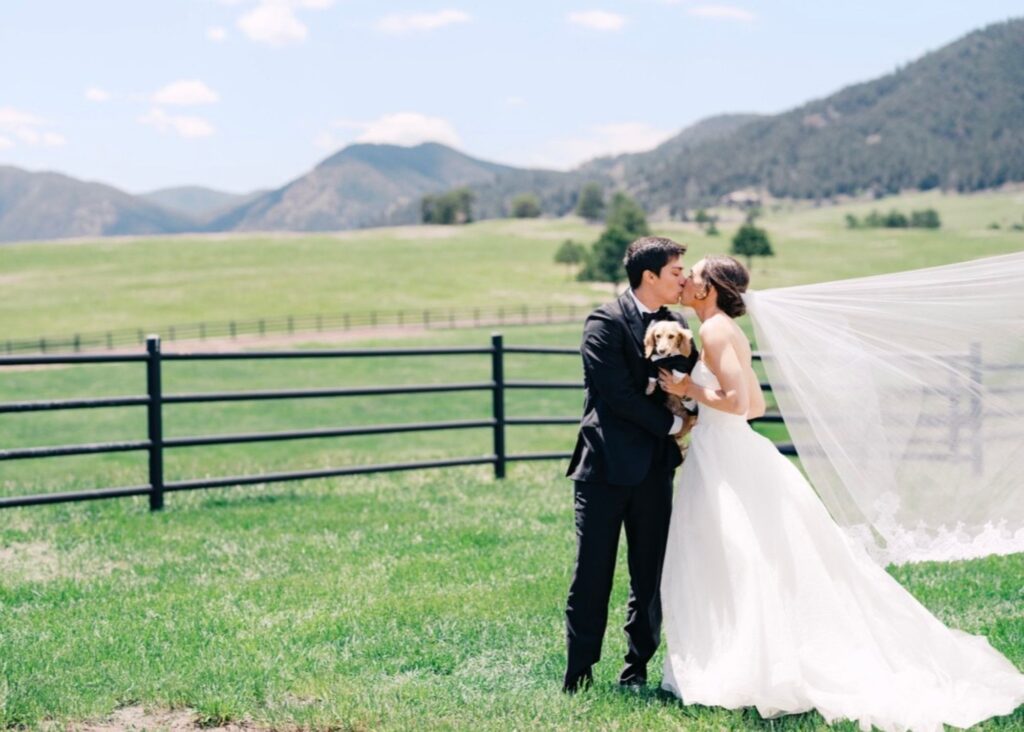
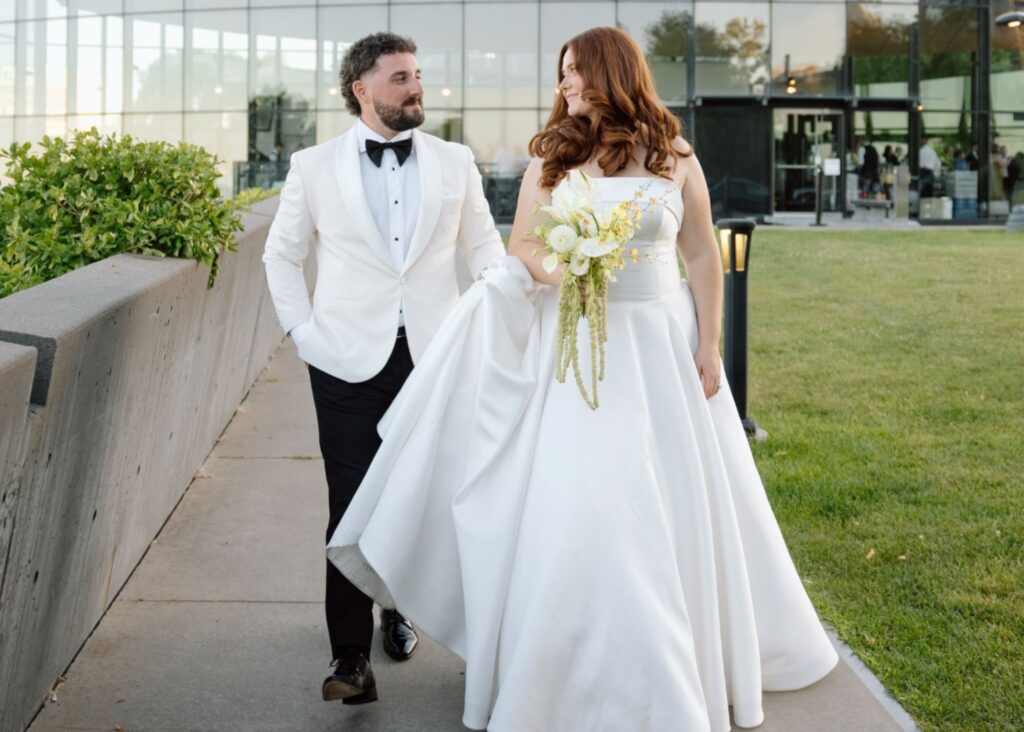
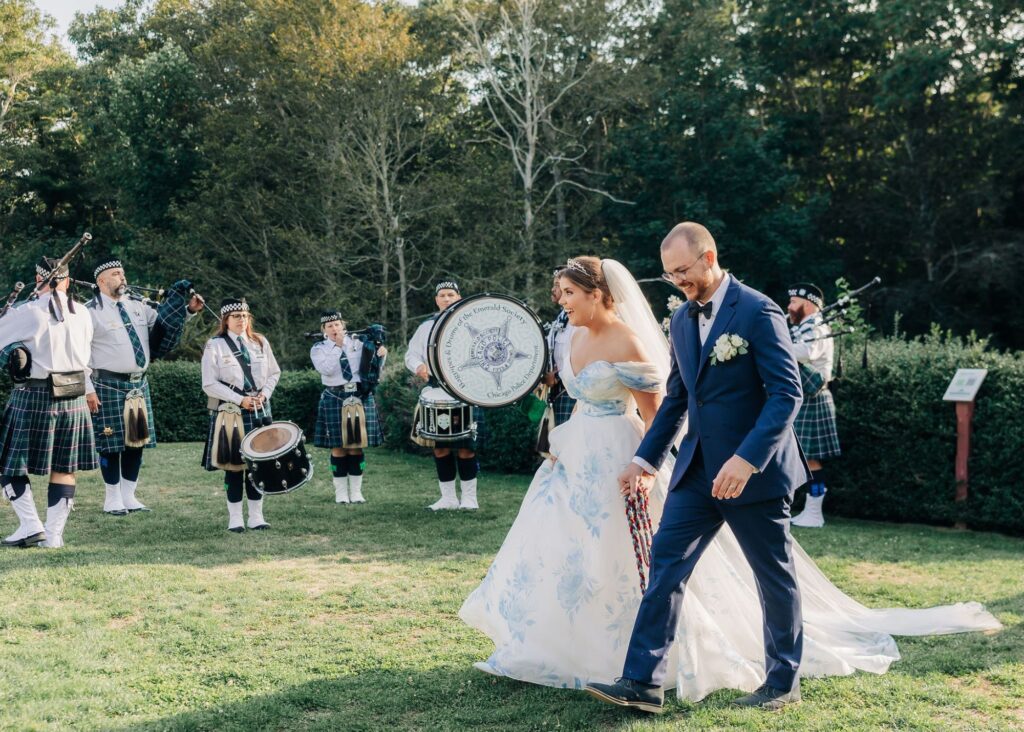
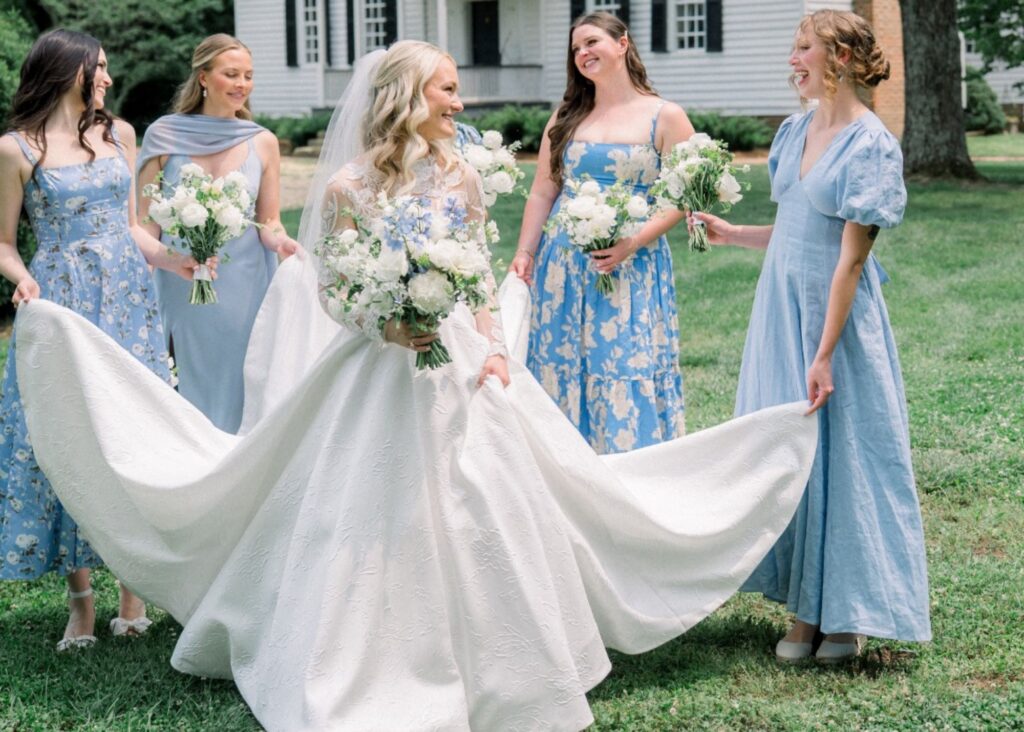
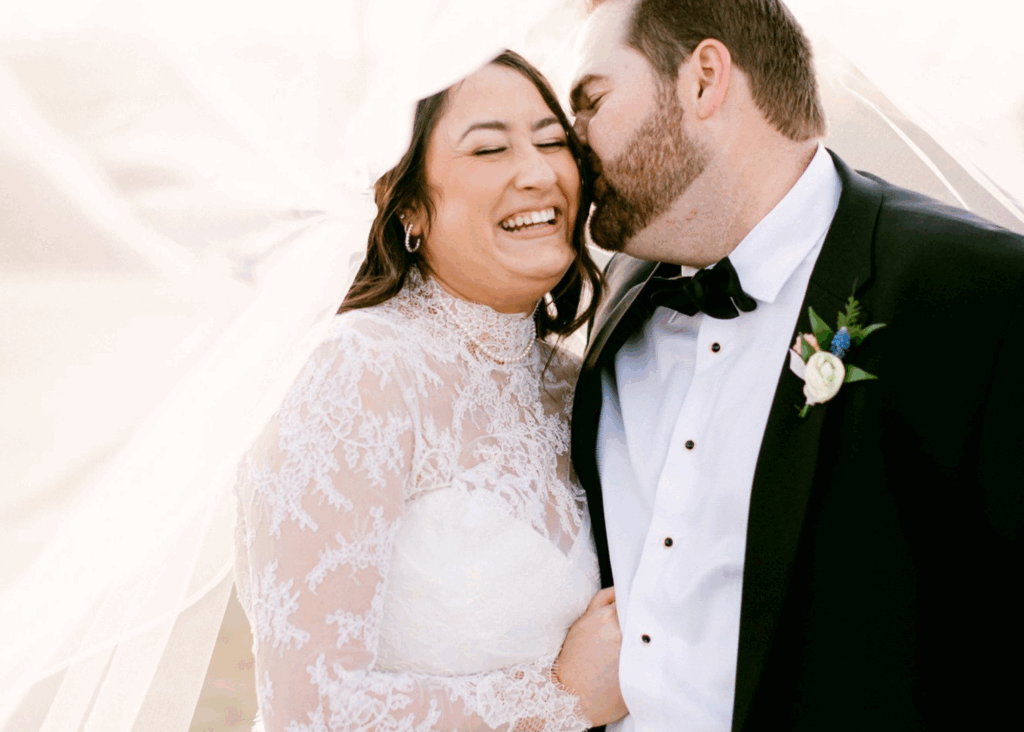
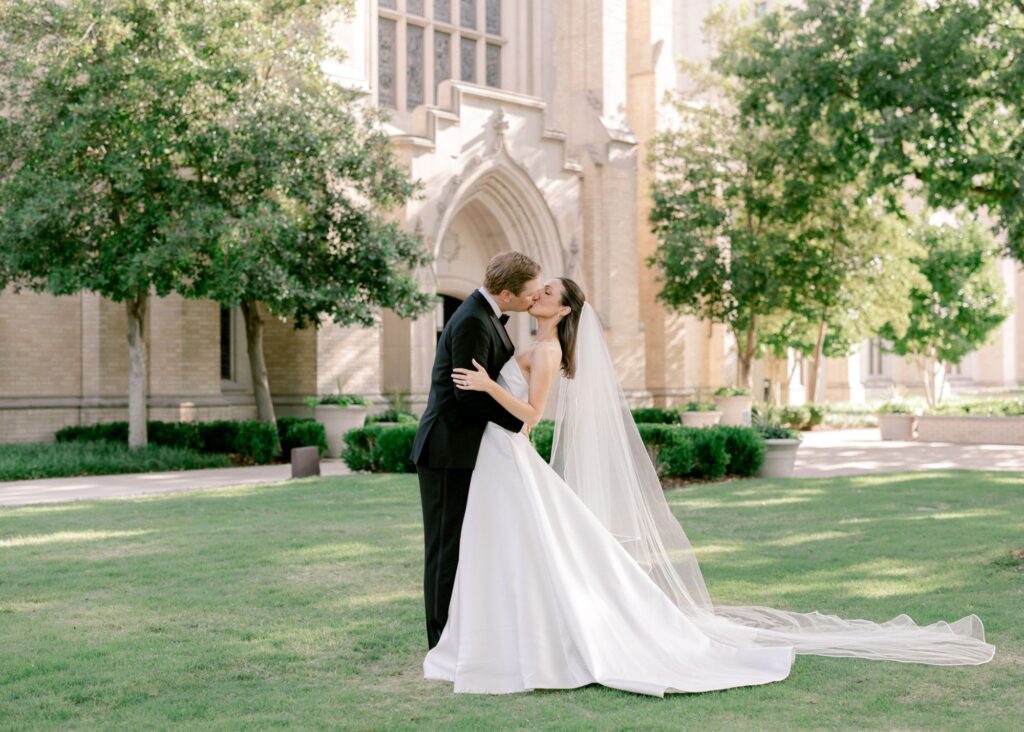
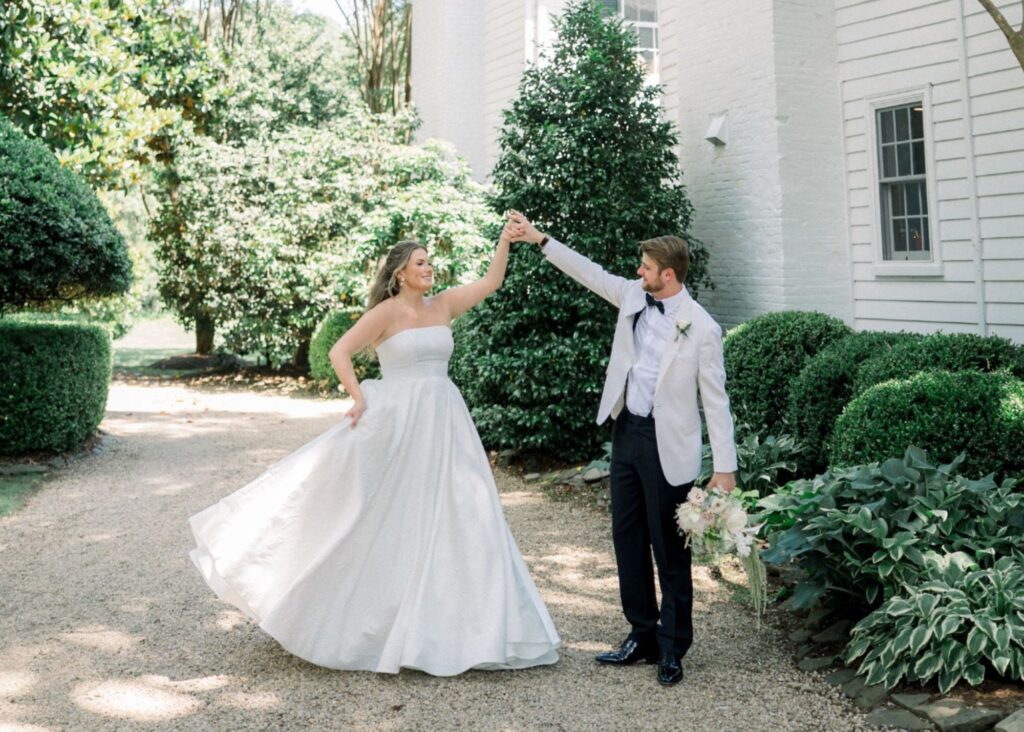
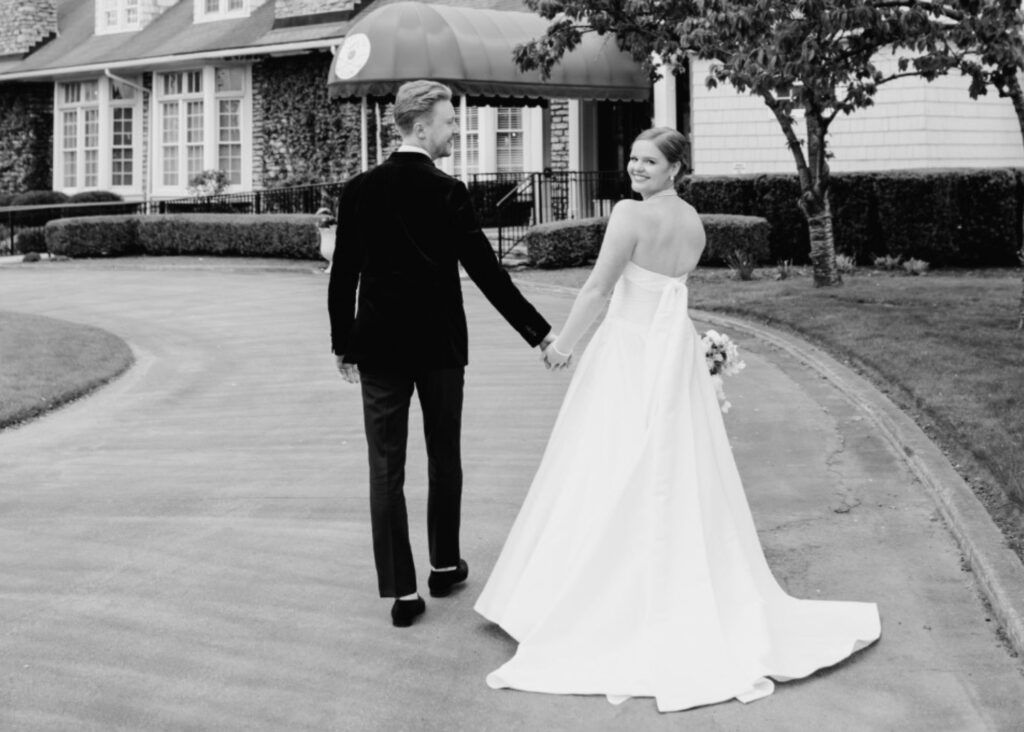
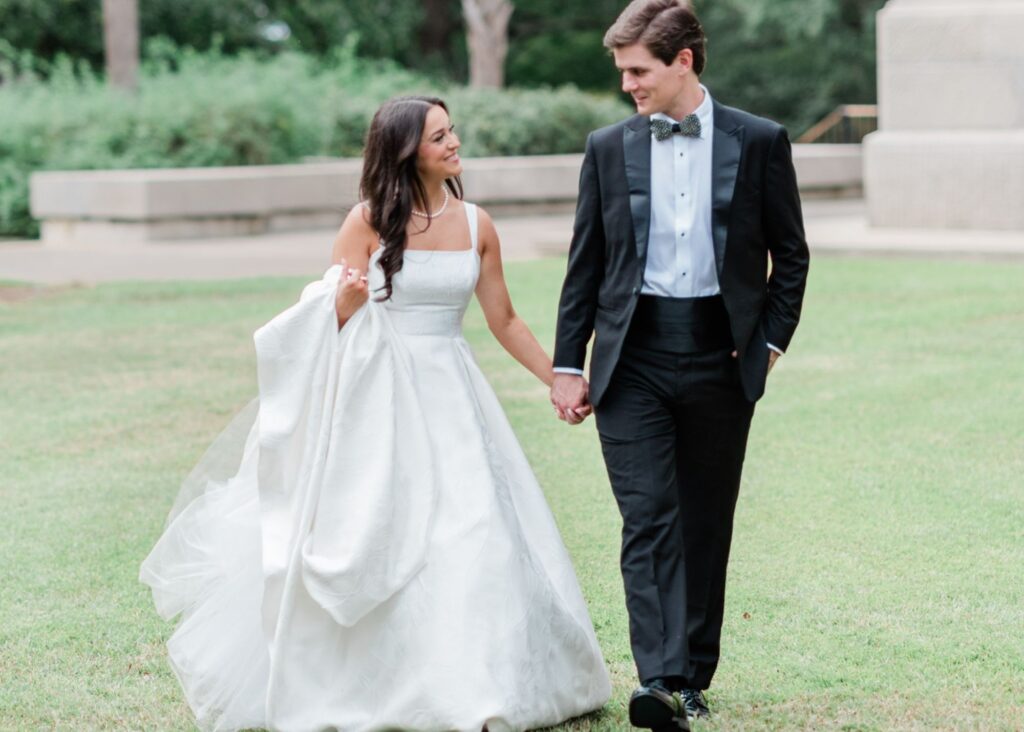
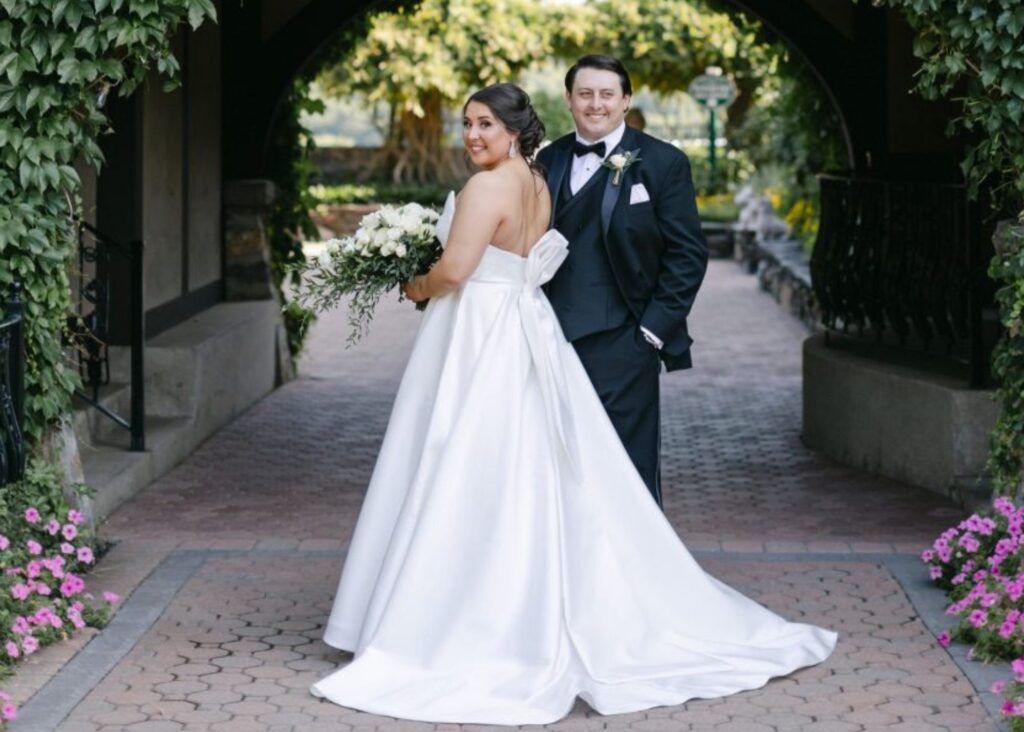
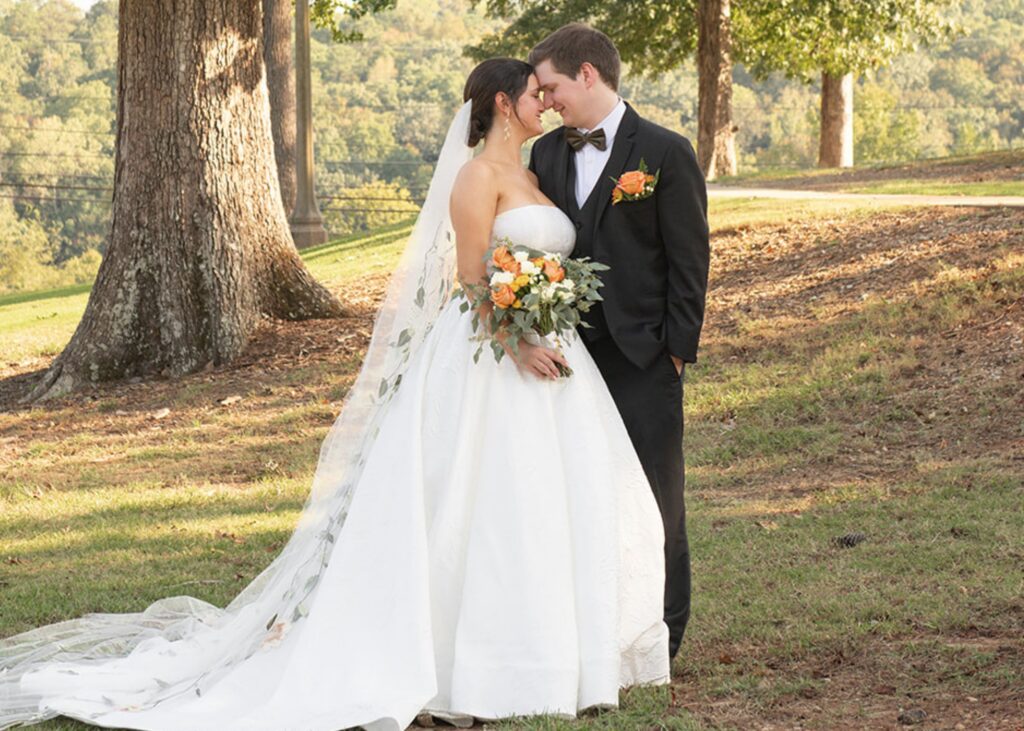
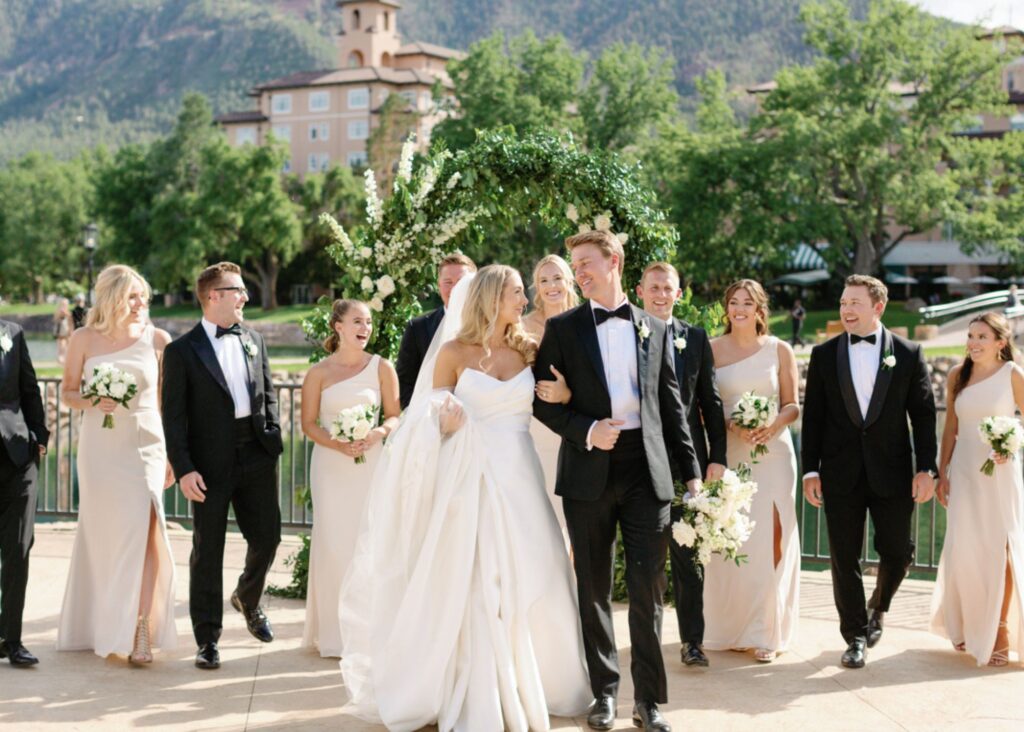
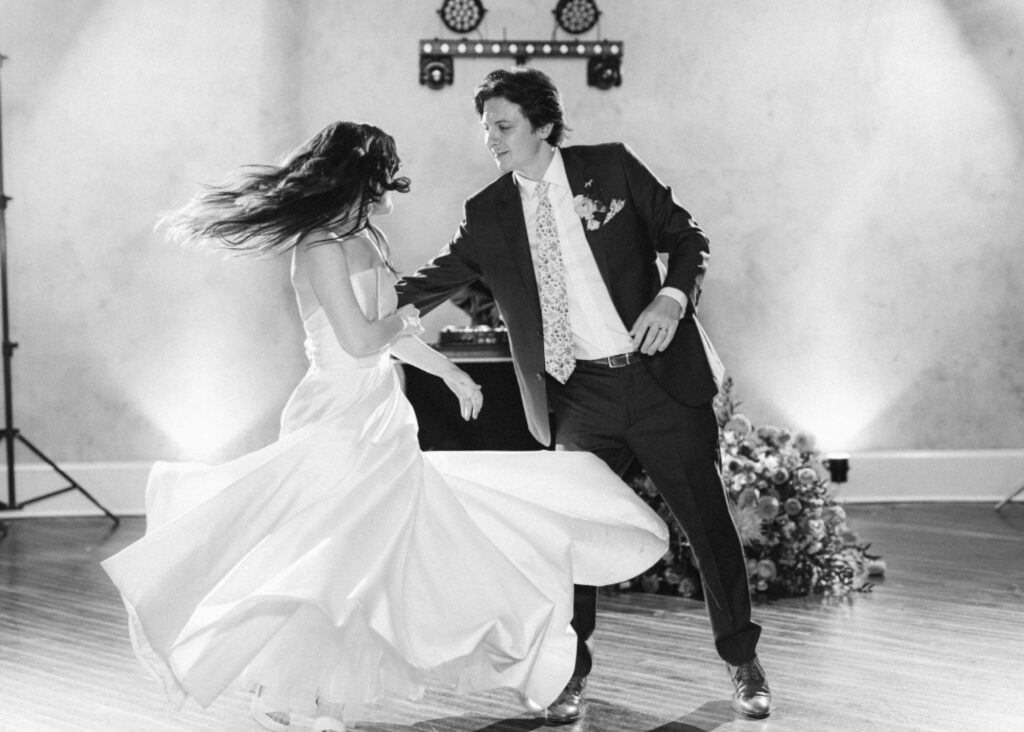
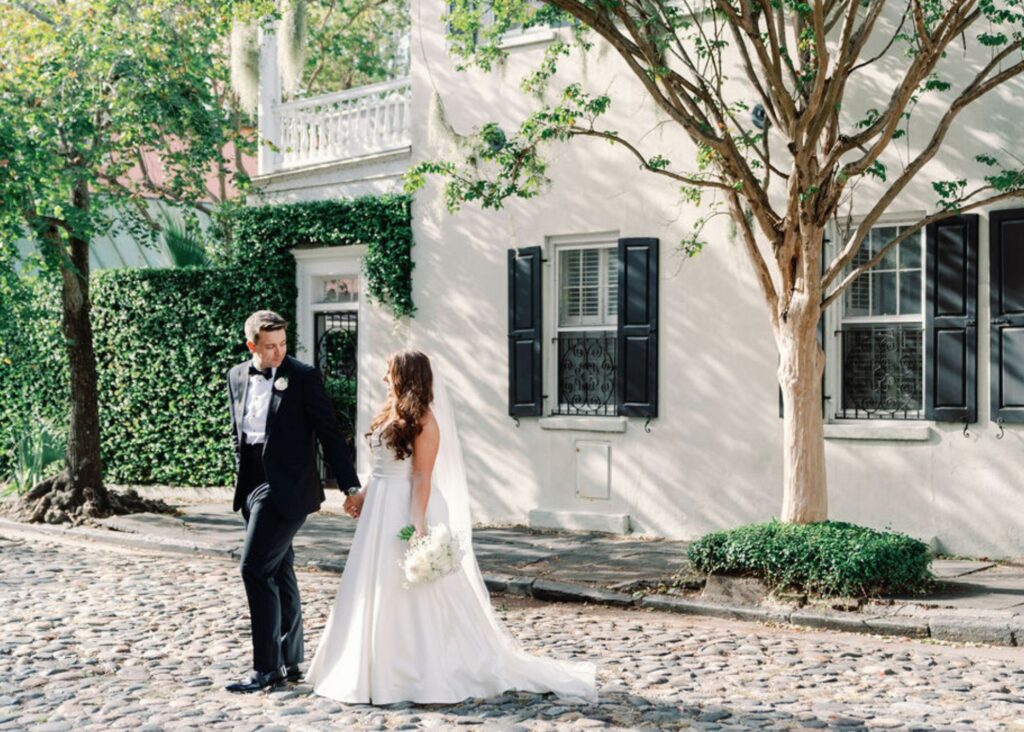
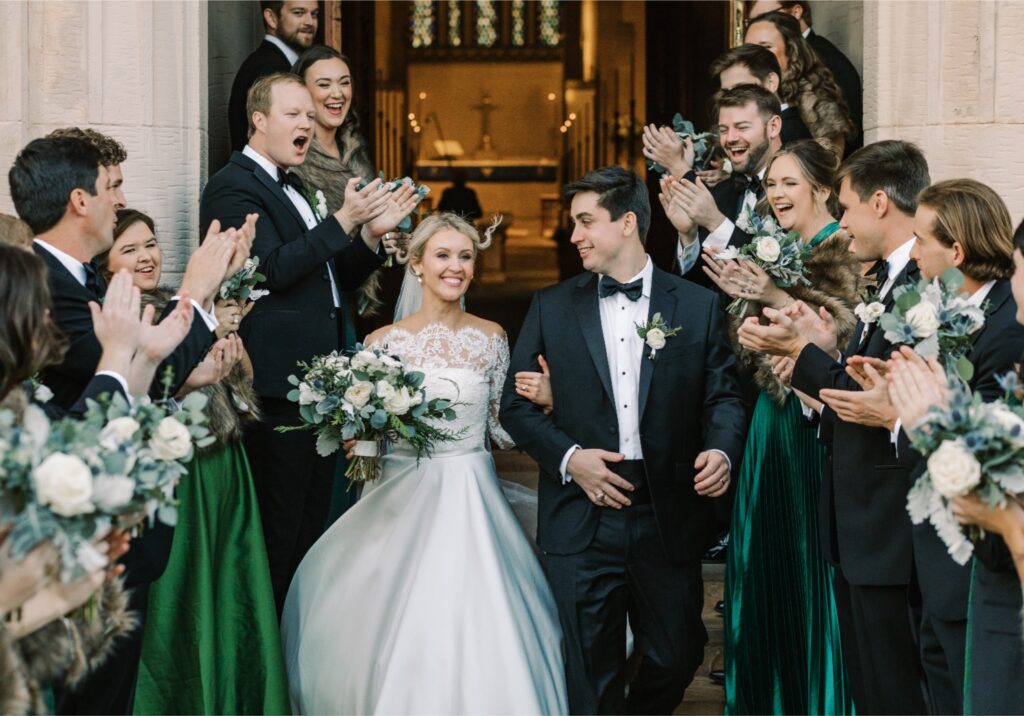
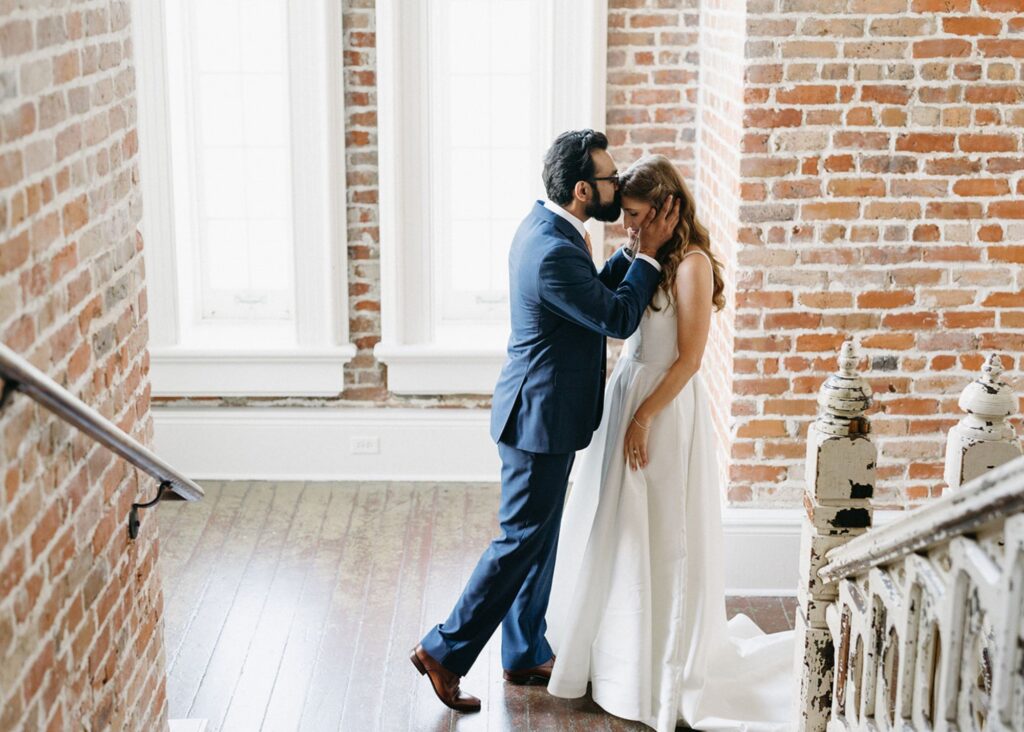
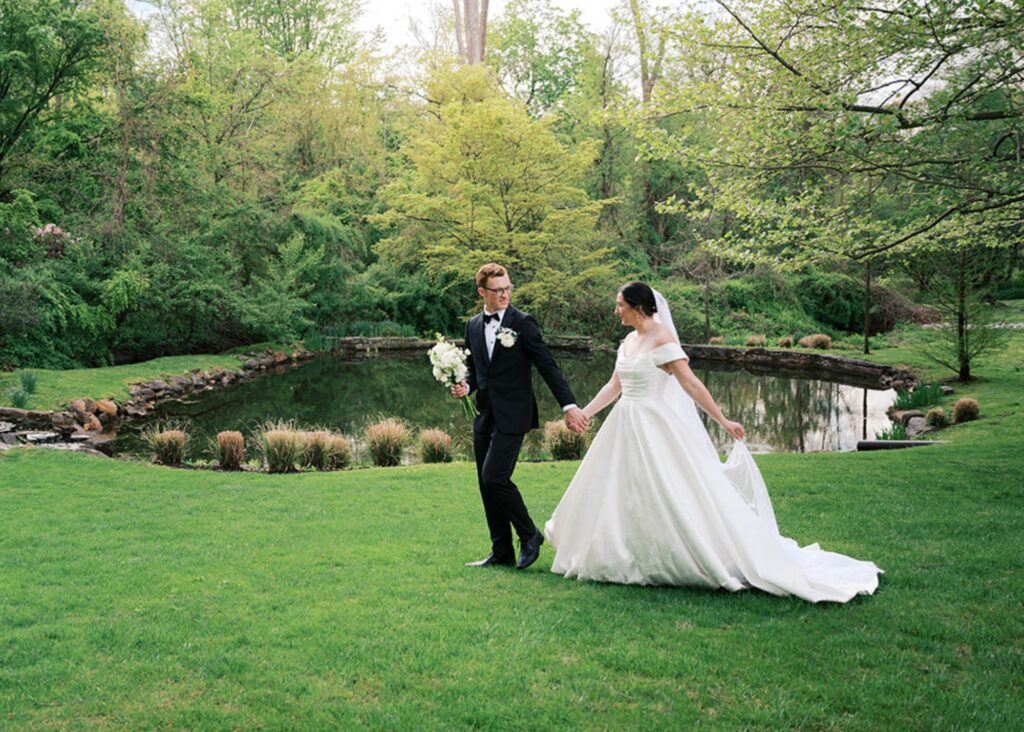
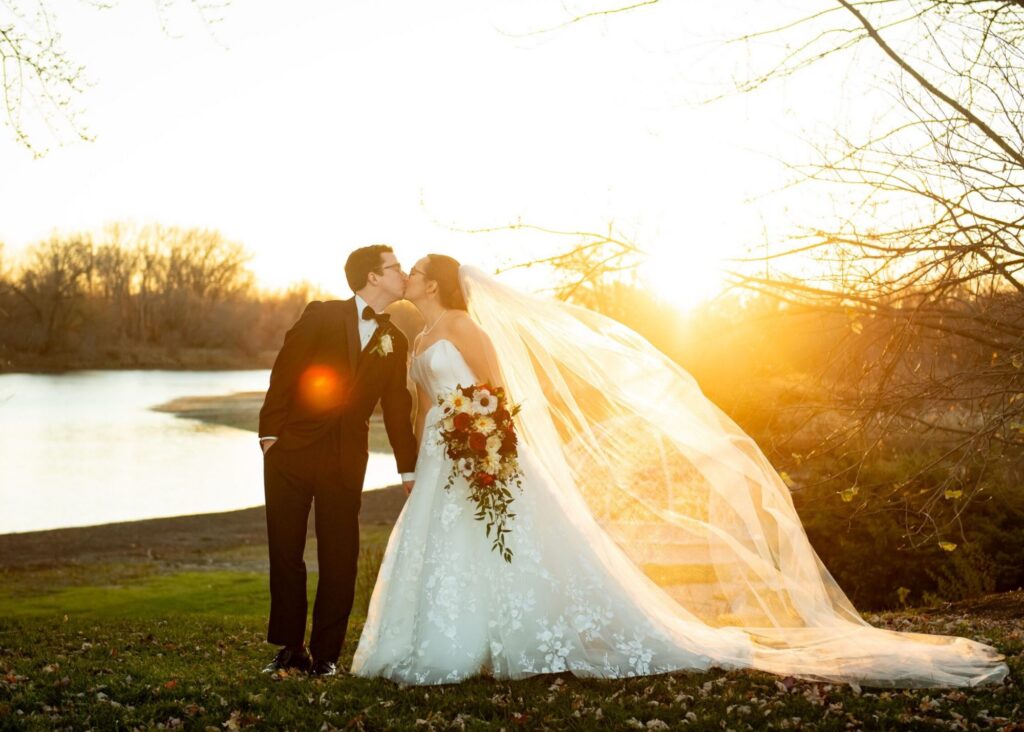
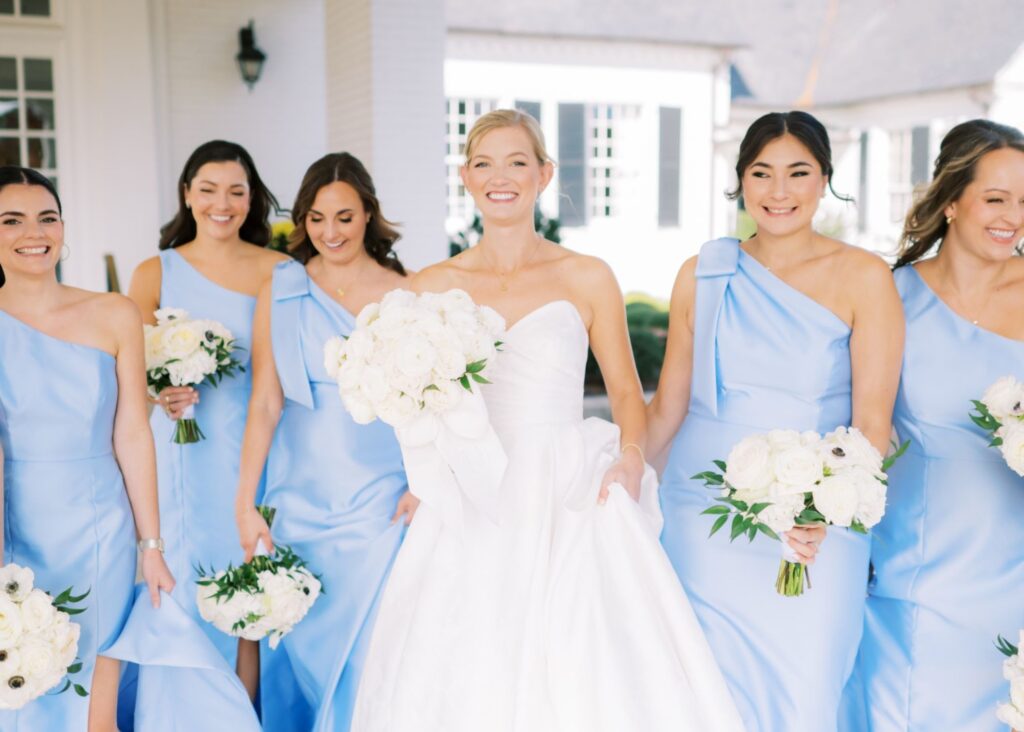
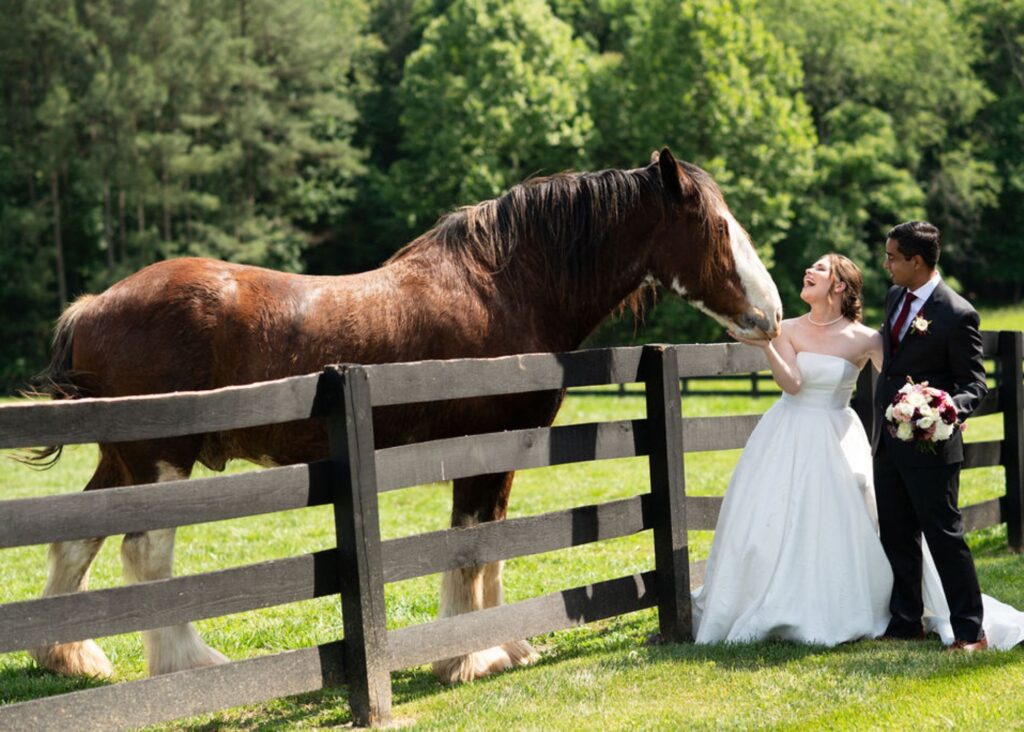
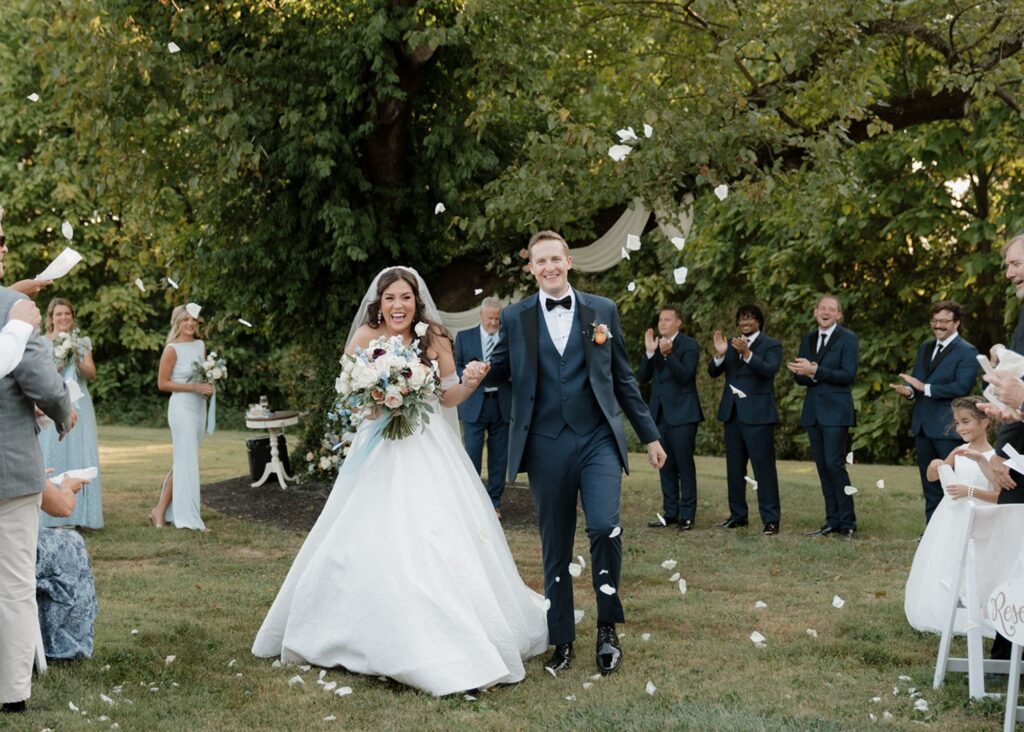
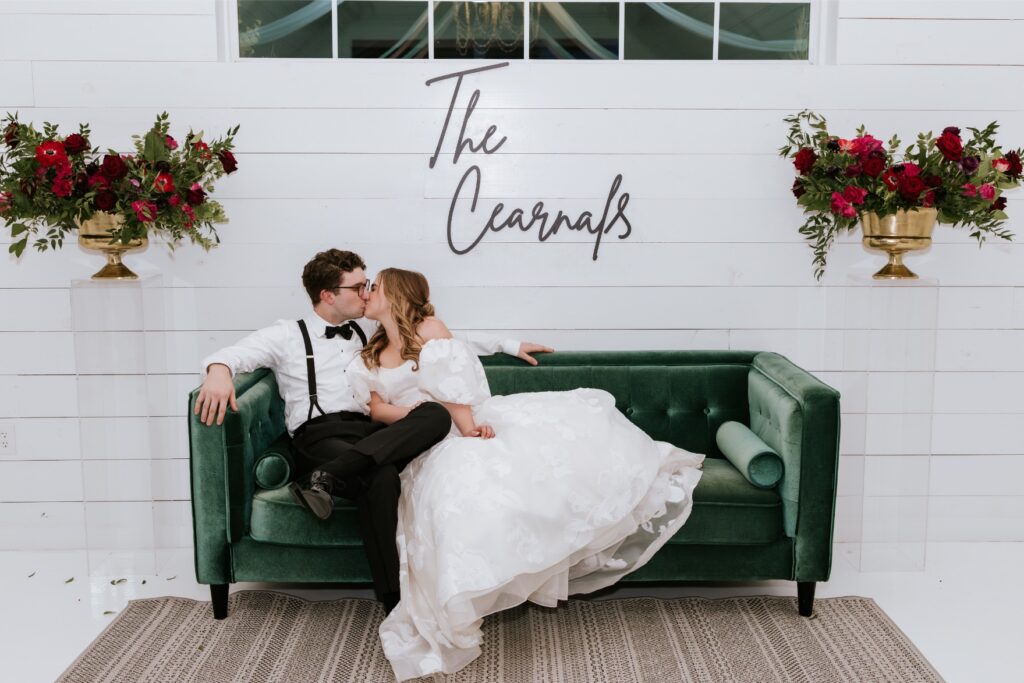
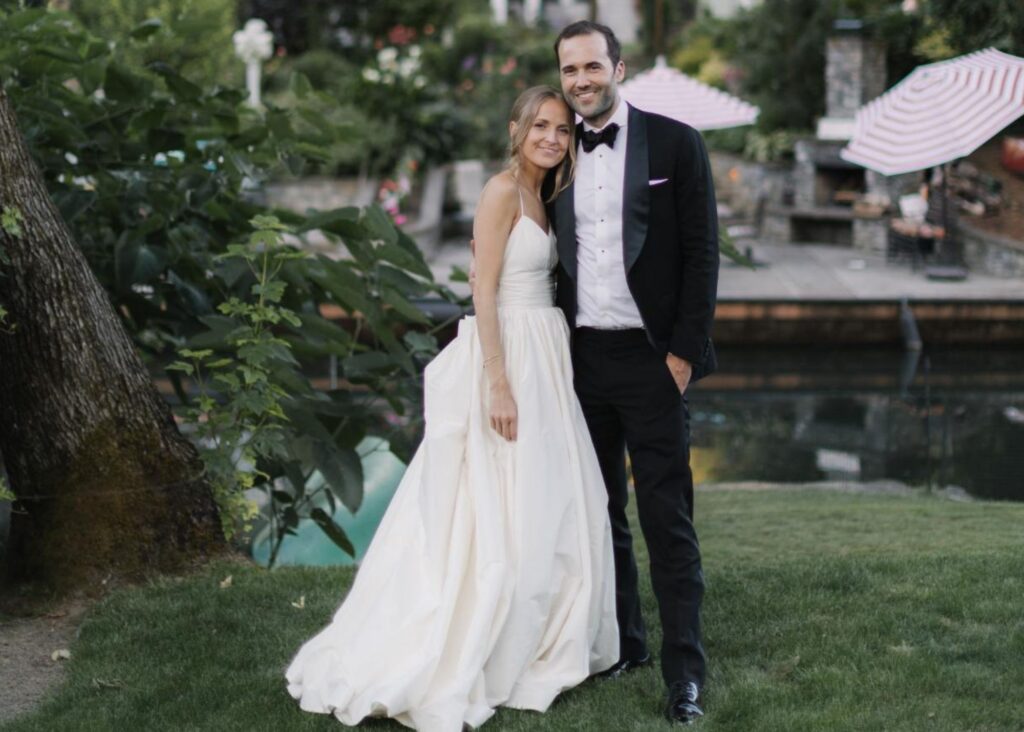
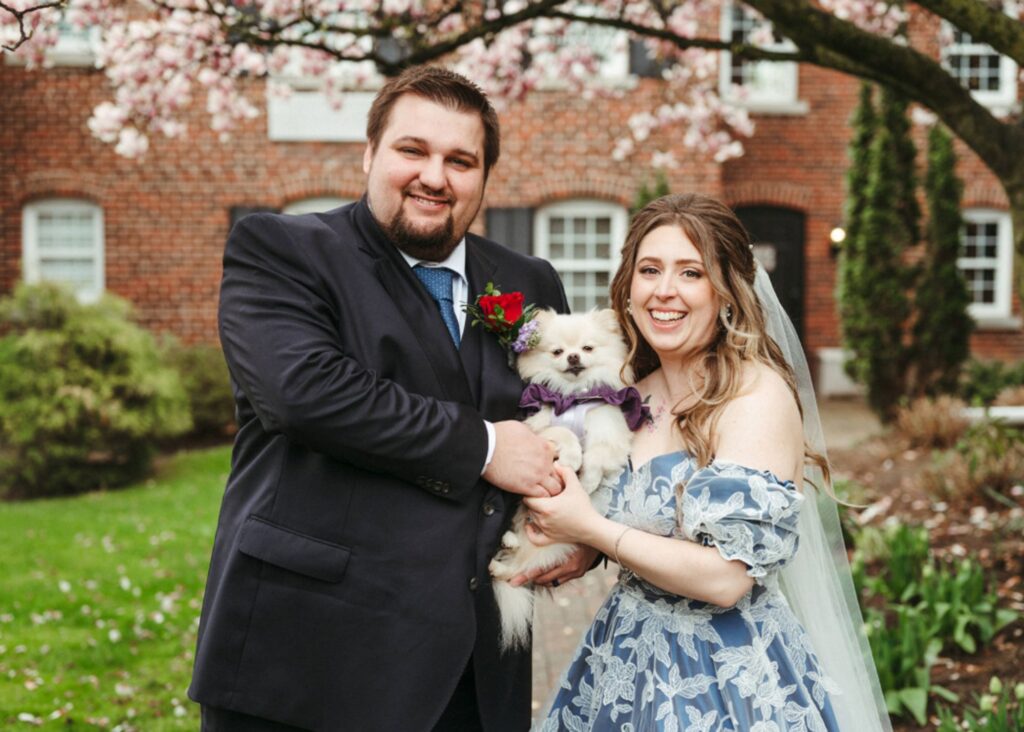
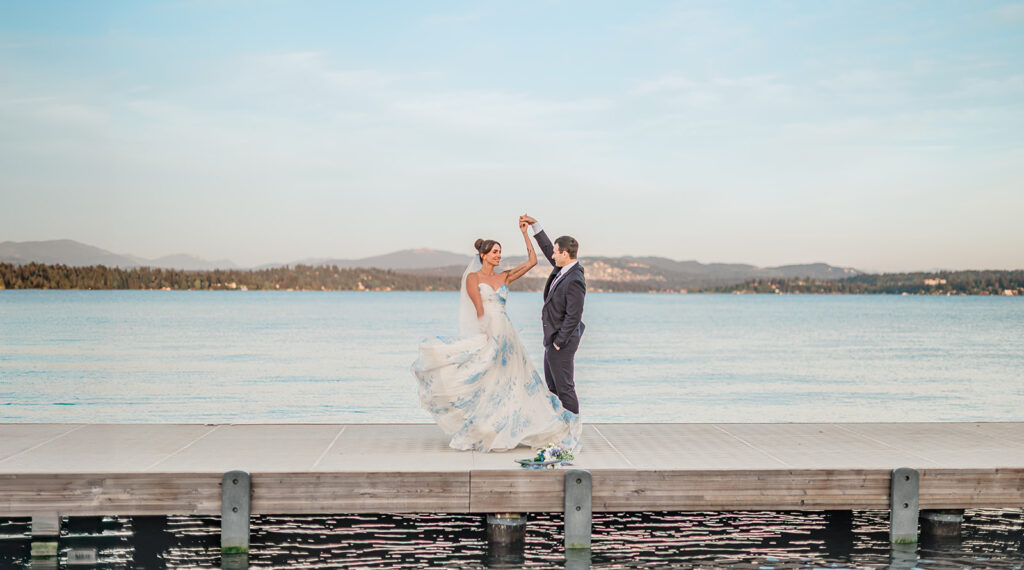
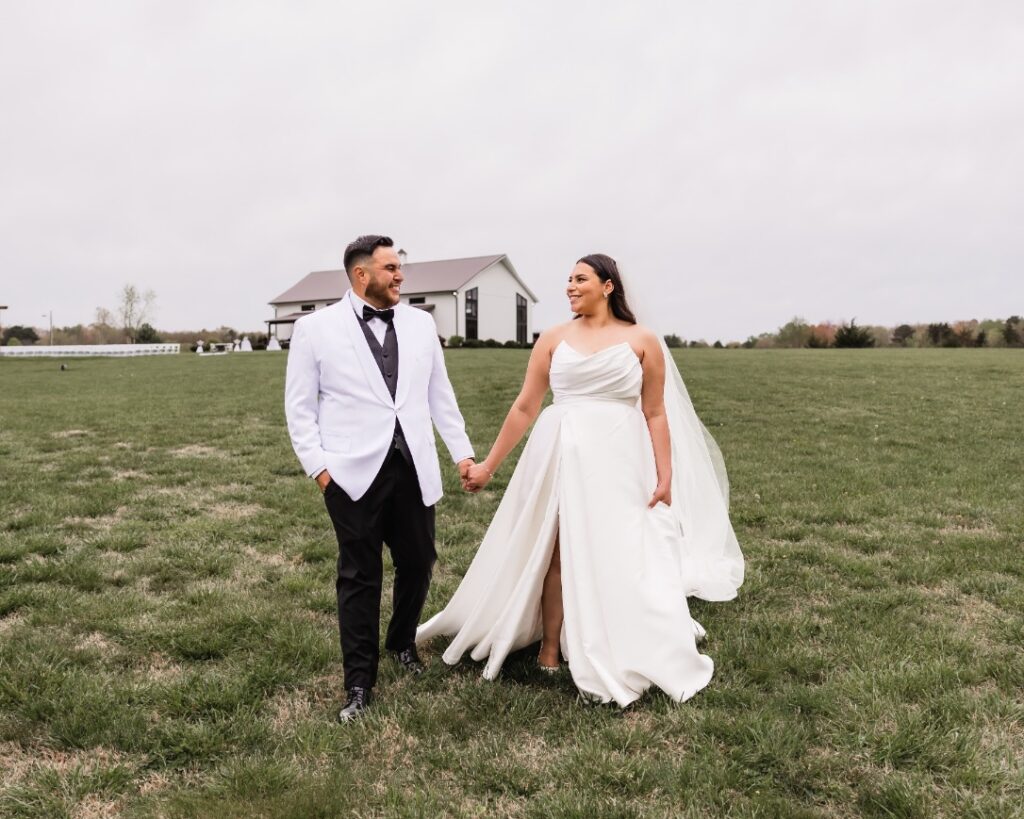
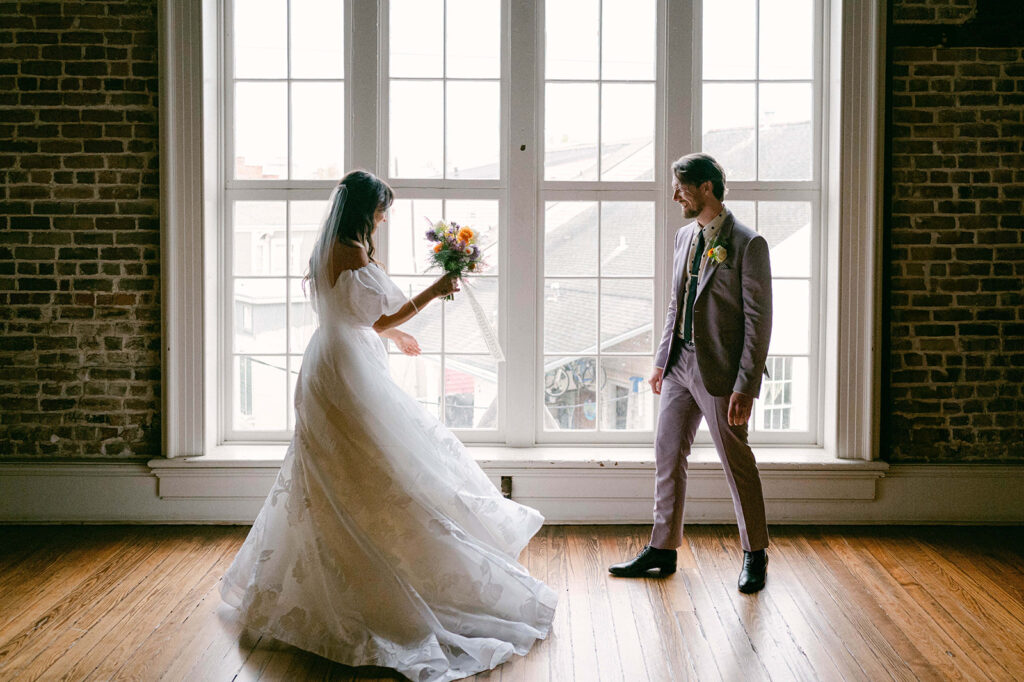
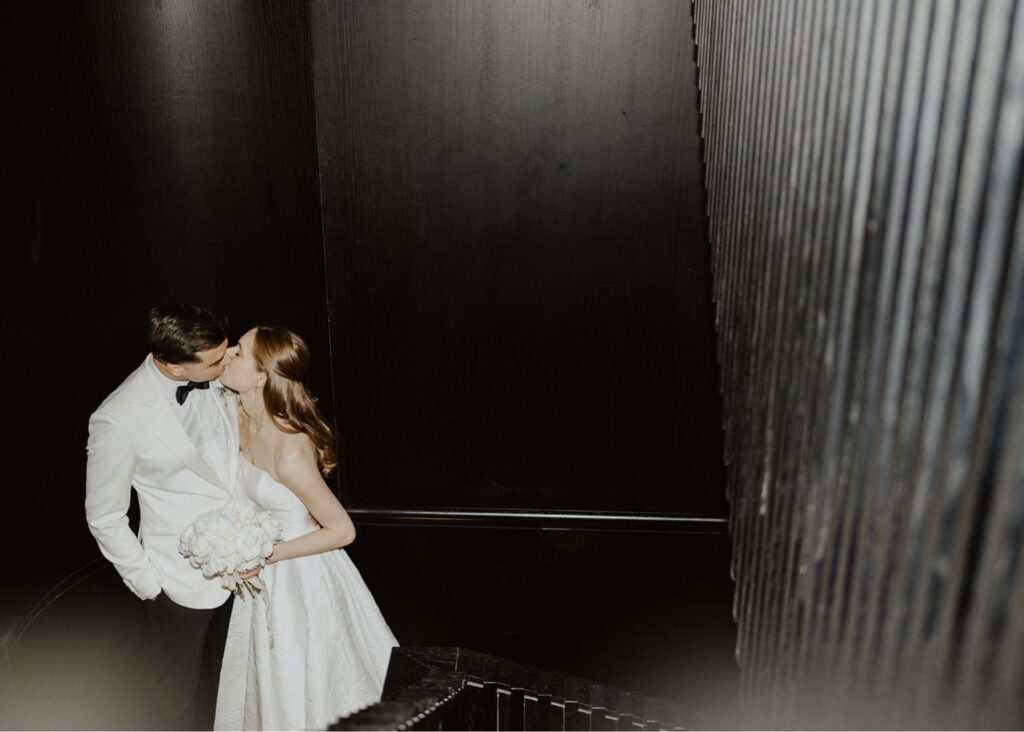
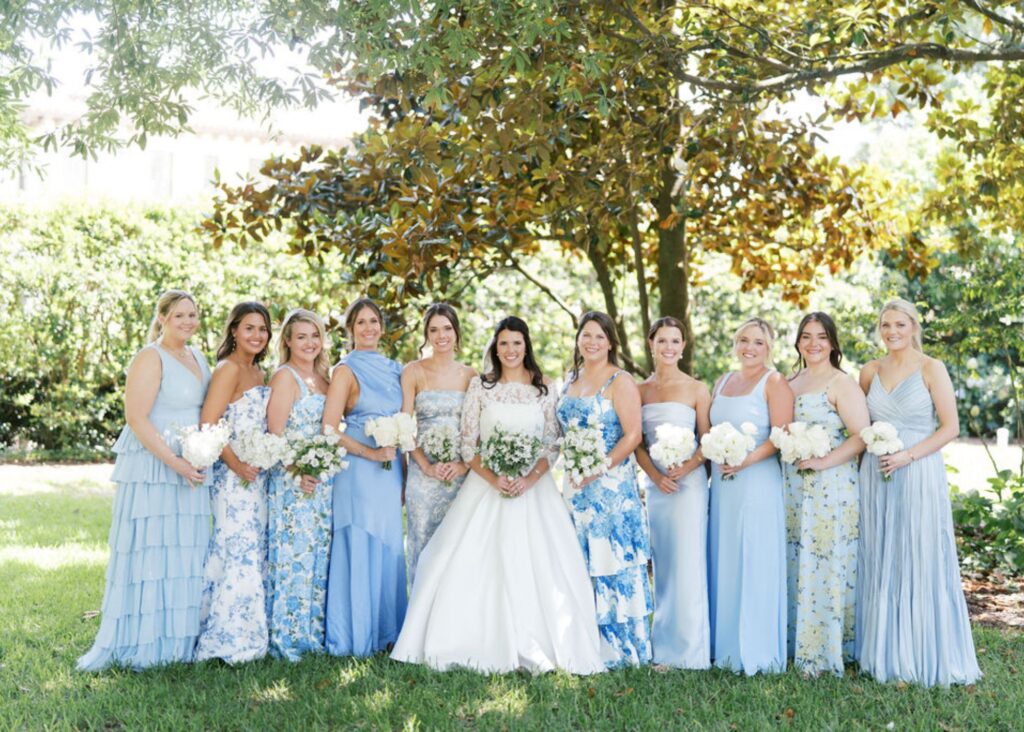
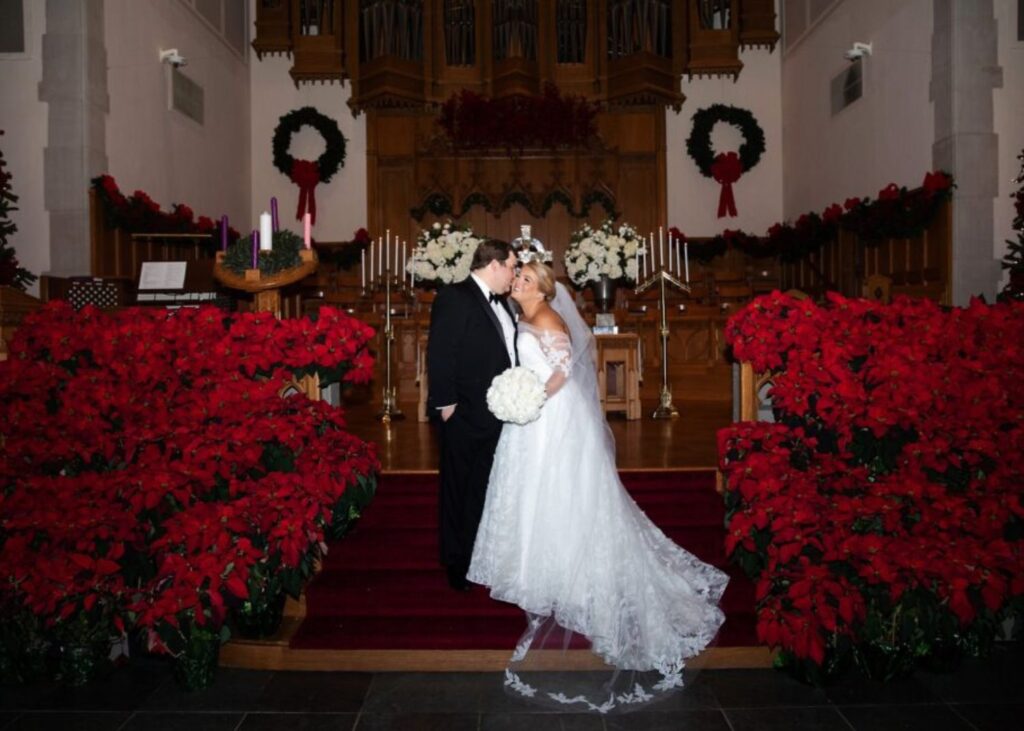
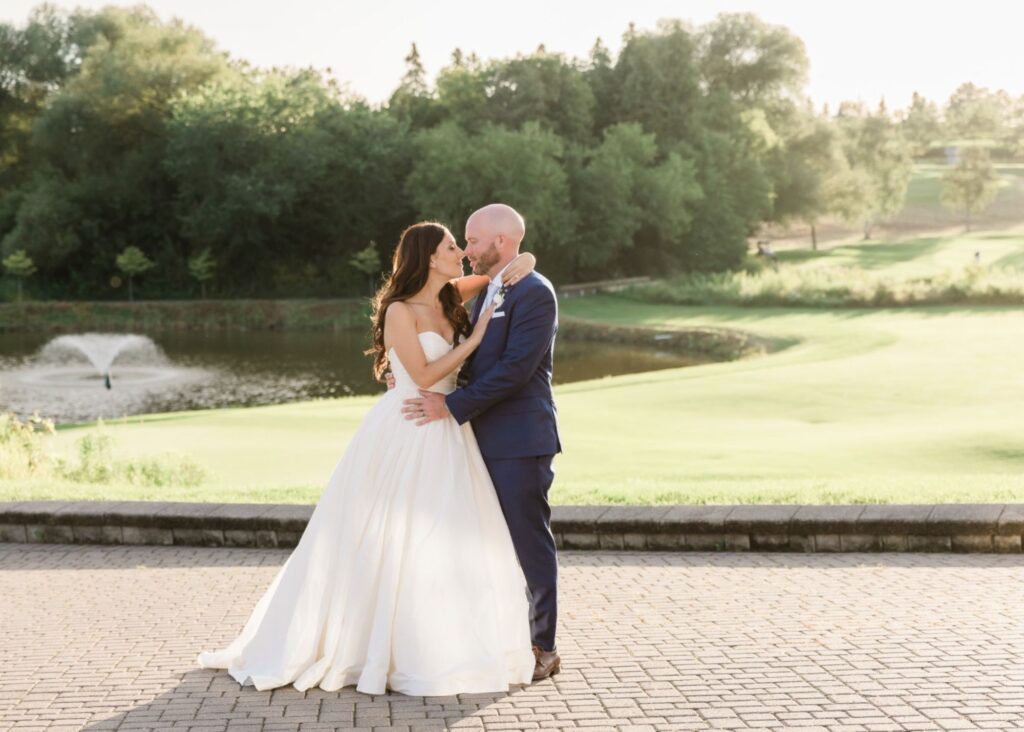
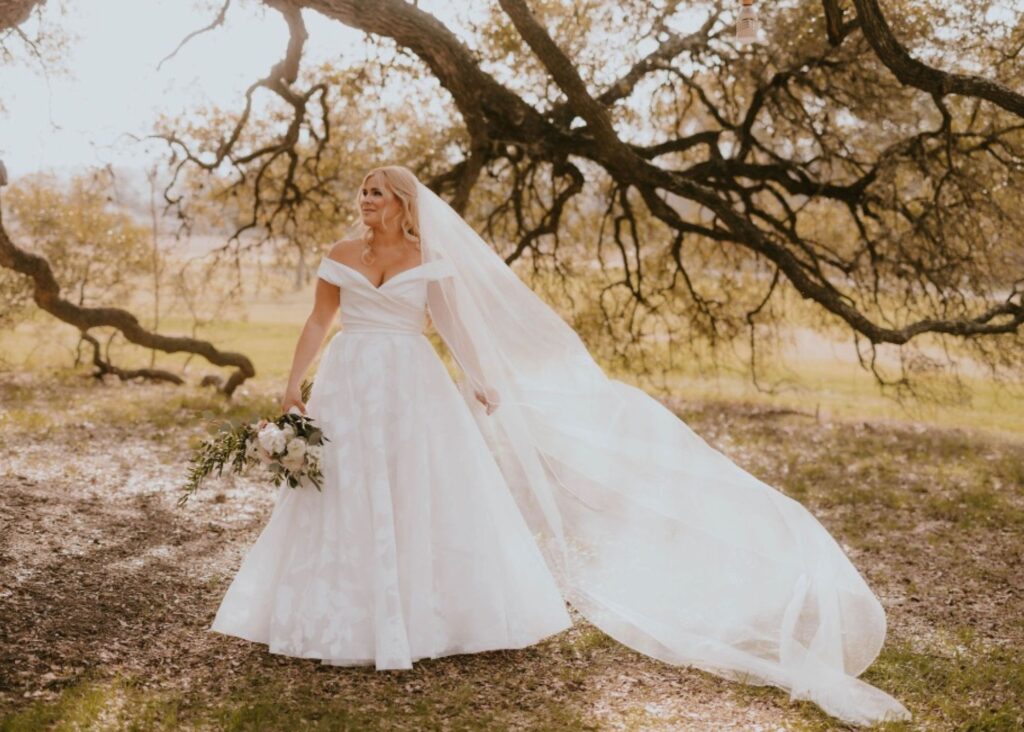
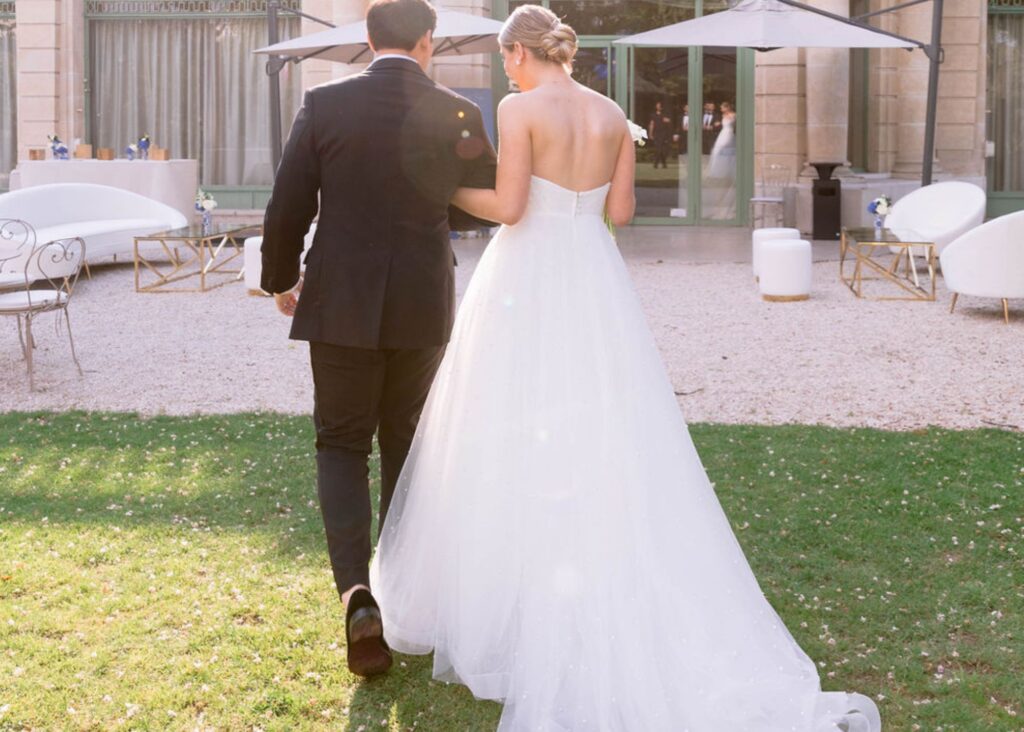
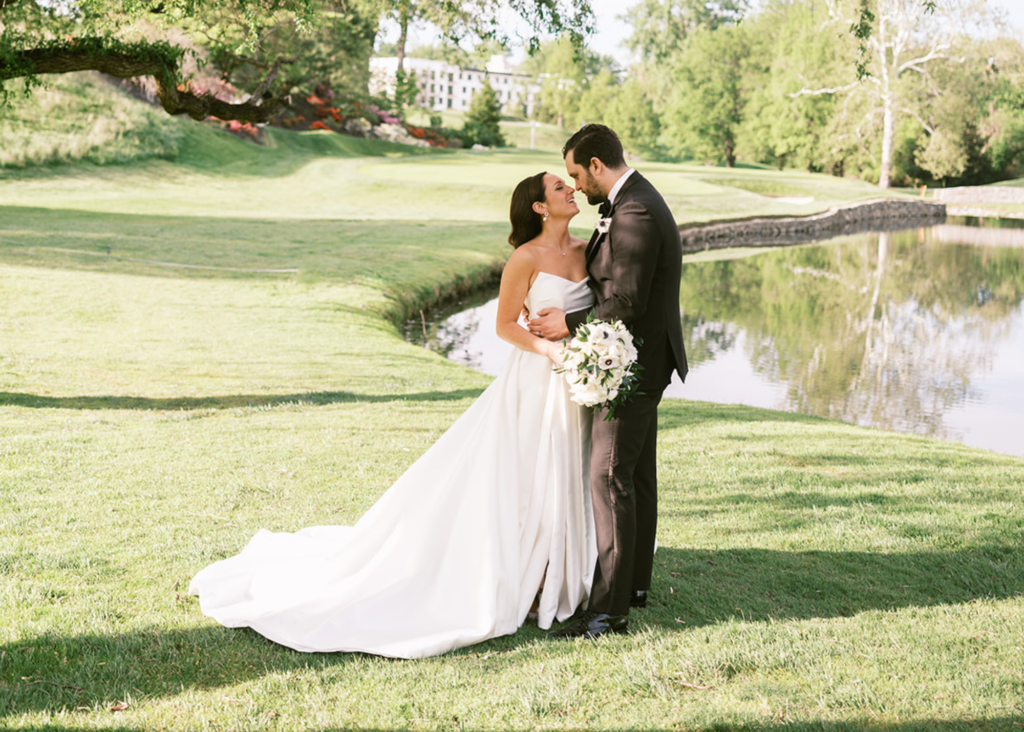
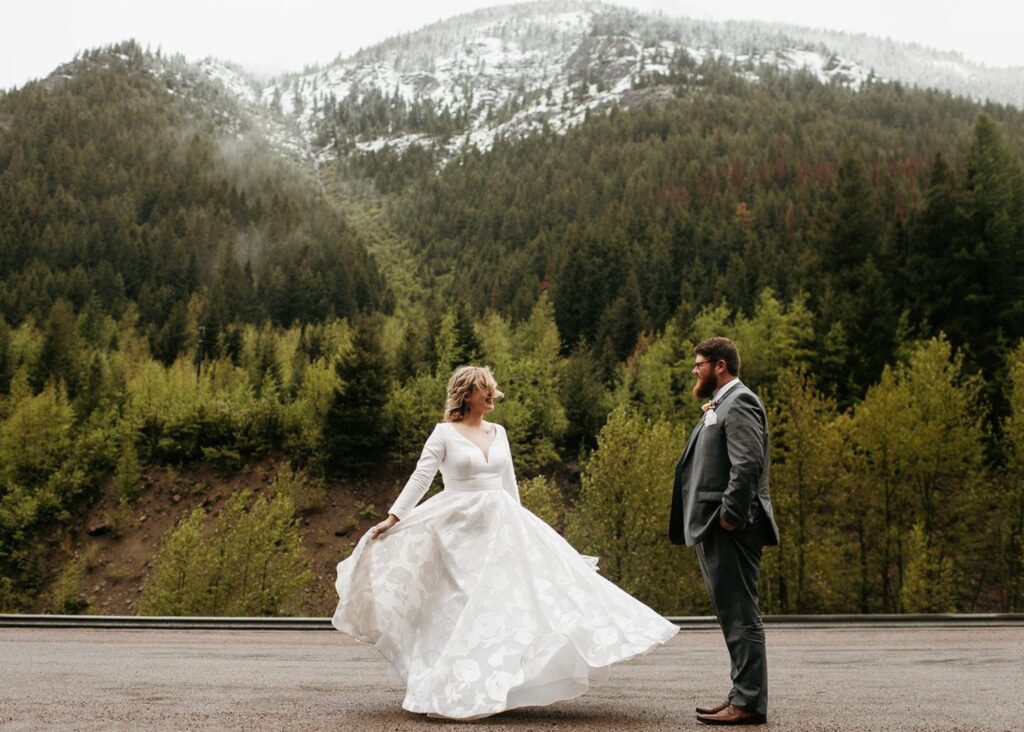
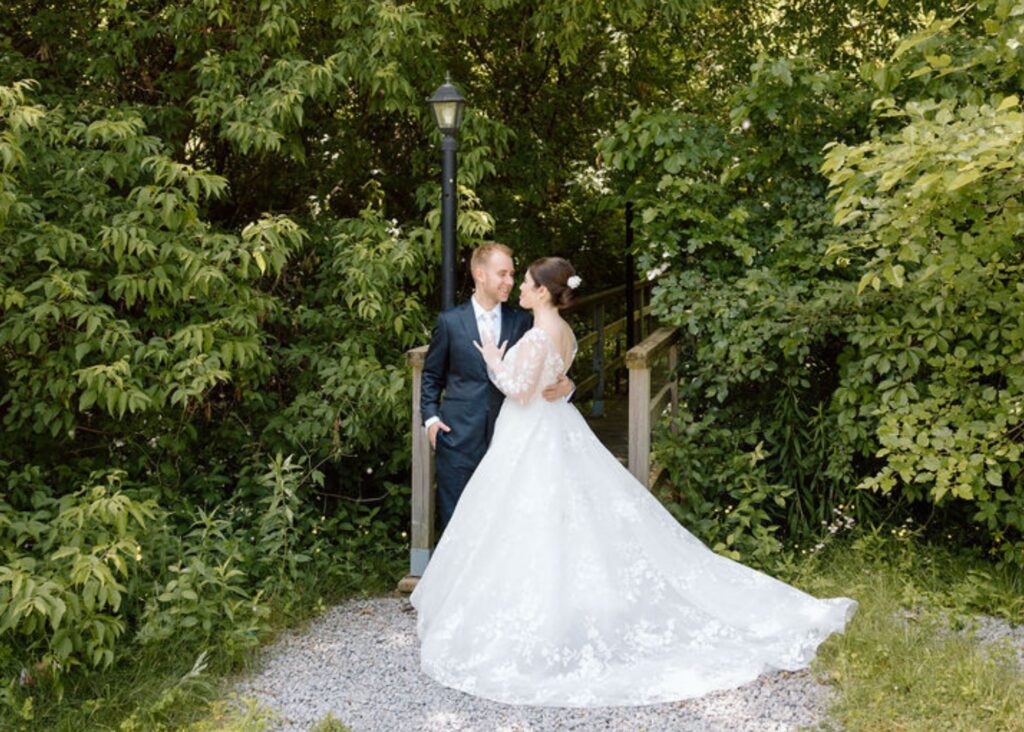
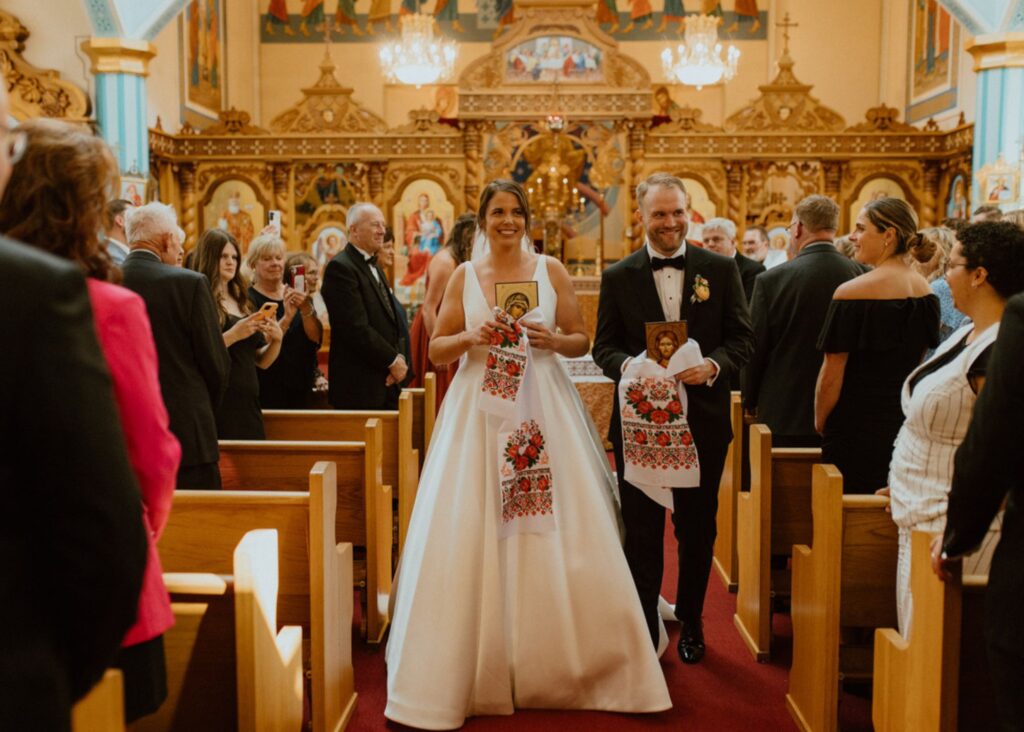
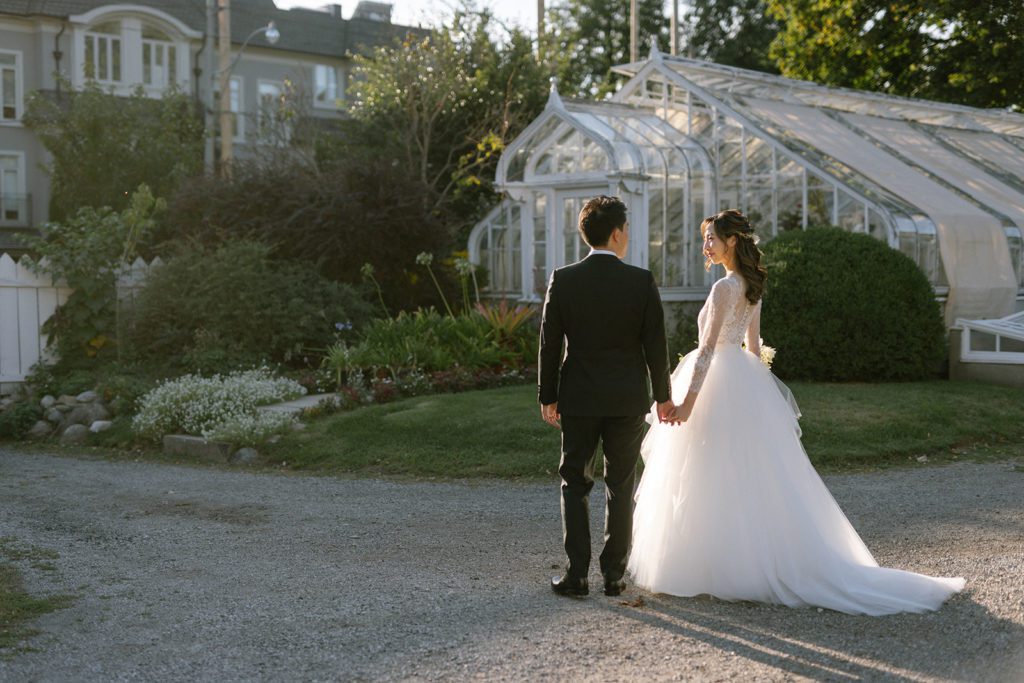
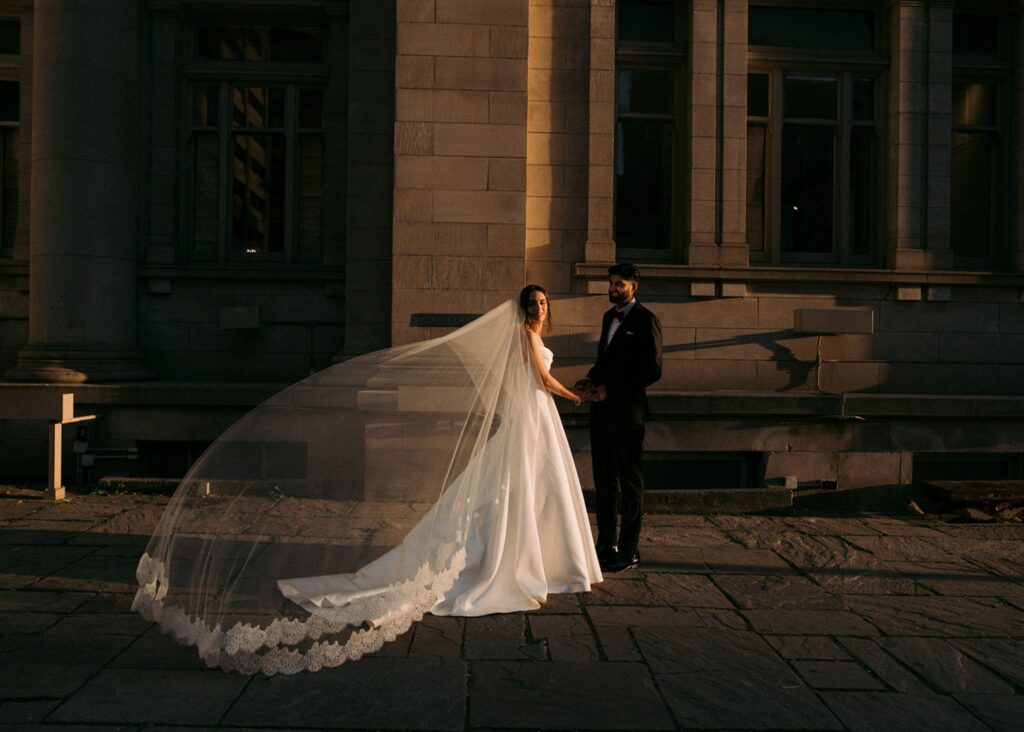
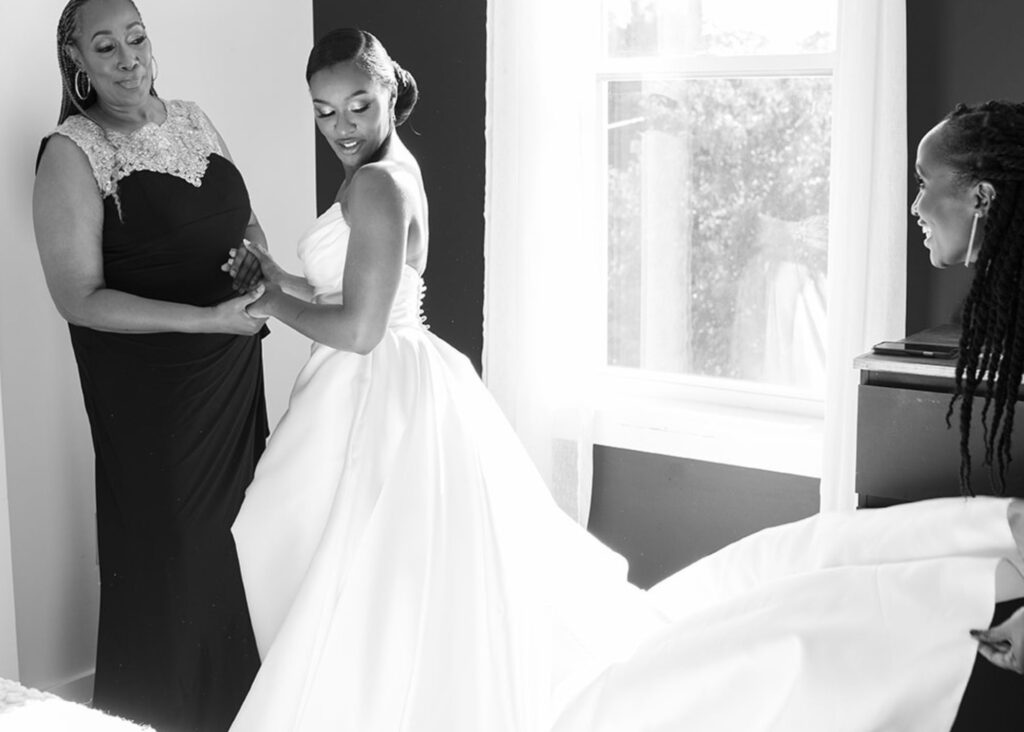
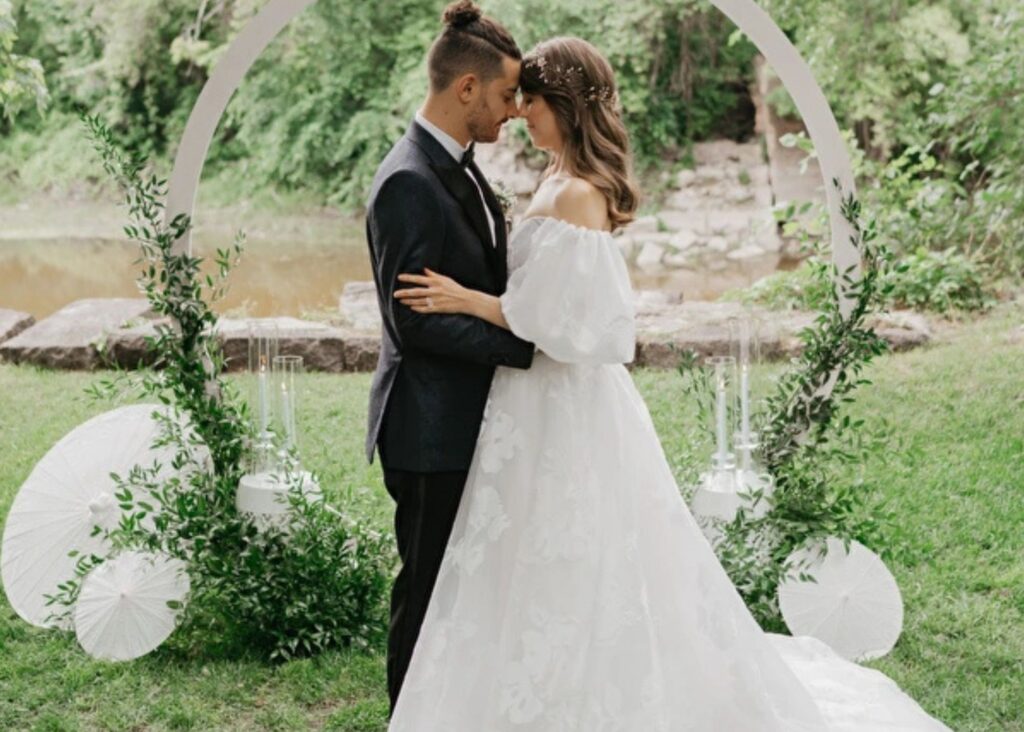
Beloved by brides the world over, this classic dress style has a fitted bodice married to a full skirt. Where the two meet depends on personal taste and what makes you feel the most beautiful. However, a ballgown’s defining characteristic is a skirt with body and structure that makes it stand away from the hips.
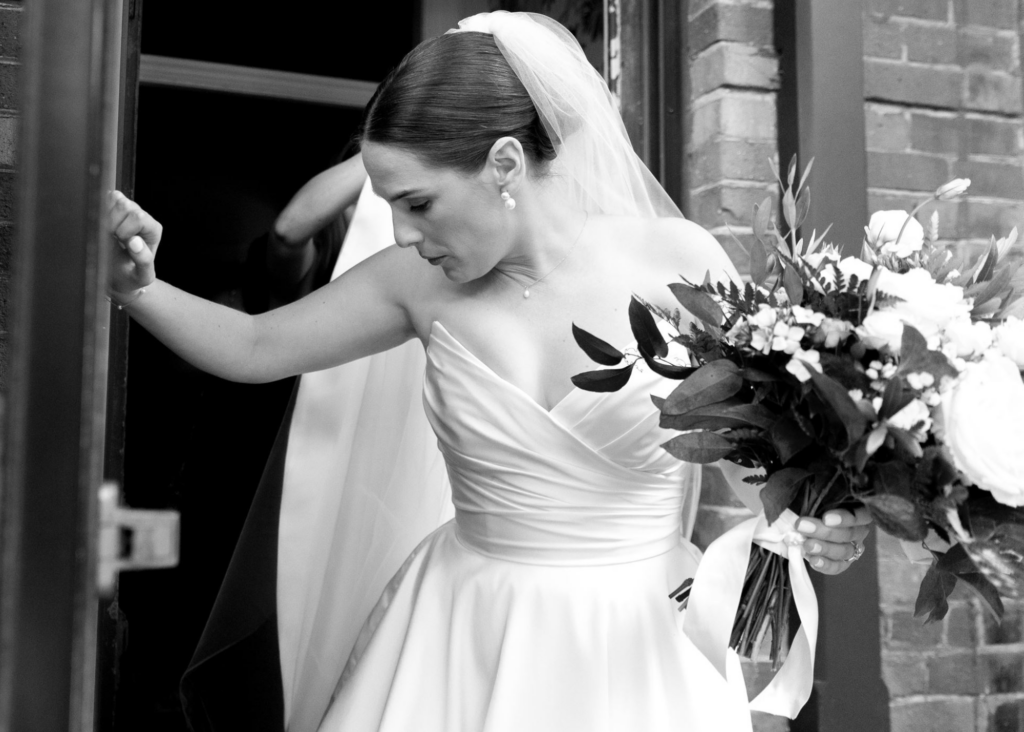
A snug bodice: Fitted through the bust and torso, the bodice is constructed to highlight and enhance your lovely shape. Sometimes, the bodice is a dropped waist, which can mean it stops at the hip, or even a bit past your hip for even more elongation.
In others, it’s a natural waist, which is where the smallest measurement of your torso (typically just below your last rib) lies. The construction of this portion of the gown can be corseted, bustier-style, draped, layers with lace, beaded, or created with minimal seams.
The full skirt: In juxtaposition to a close-fitting bodice is the ballgown’s dramatic skirt. This visual has a magical way of making your waist look even smaller! Rather than simply draping from the waist or hugging through the hips as in a fit and flare wedding dress, a ballgown opens immediately. This effect is achieved through thoughtful construction—layers, structure, or both—and fabric choice. Lightweight fabrics like tulle and organza create airiness and movement, while architectural textiles like silk mikado, brocade, jacquard, or duchess satin give the skirt presence and shape.
The defined waist: Unlike an A-line wedding dress with princess seams from neckline to hem, a ballgown has a clear transition between skirt and bodice. As we’ve mentioned, that skirt can spring from almost anywhere, including a Basque waist, a drop waist, or a natural waist.